
Piston Pump Piston pumps and plunger pumps are reciprocating positive displacement pumps that use a plunger or piston to move media through a cylindrical chamber. They are also called well service pumps, high-pressure pumps, or high viscosity pumps because they can deliver high pump pressures and are capable of handling both viscous and solids containing media. Piston Pump Basics Let's start with the basics of the piston pump! We all use pumps in our daily lives. A pump is a device that converts mechanical into the hydraulic head.
The gear and vane pumps are rotary pumps, while the piston, diaphragm, and plunger pumps are reciprocating pumps. Reciprocating pumps provide fixed discharge at very pressure, while rotary pumps provide low-pressure discharge.
Piston pumps are highly efficient, and they have a long service life. They give a high-pressure rating of up to 500 bar. Hence, these pumps are highly preferred in hydraulic systems. Piston Pump Definition The piston pump is defined as a pump that uses pistons to transfer liquids or gases from one place to another.
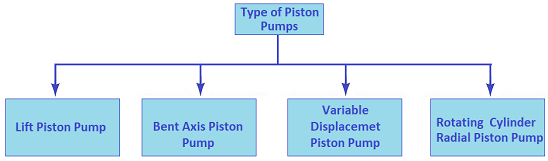
Types of Piston Pumps These pumps are classified into different types: lift pumps, force pumps, axial pumps, and radial piston pumps. From these pumps, lift and force pumps can operate manually otherwise with the help of an engine. Figure 2 below shows a graphic with all piston pump type
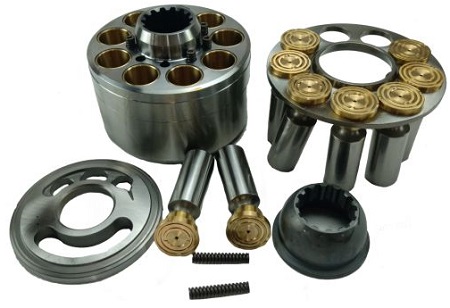
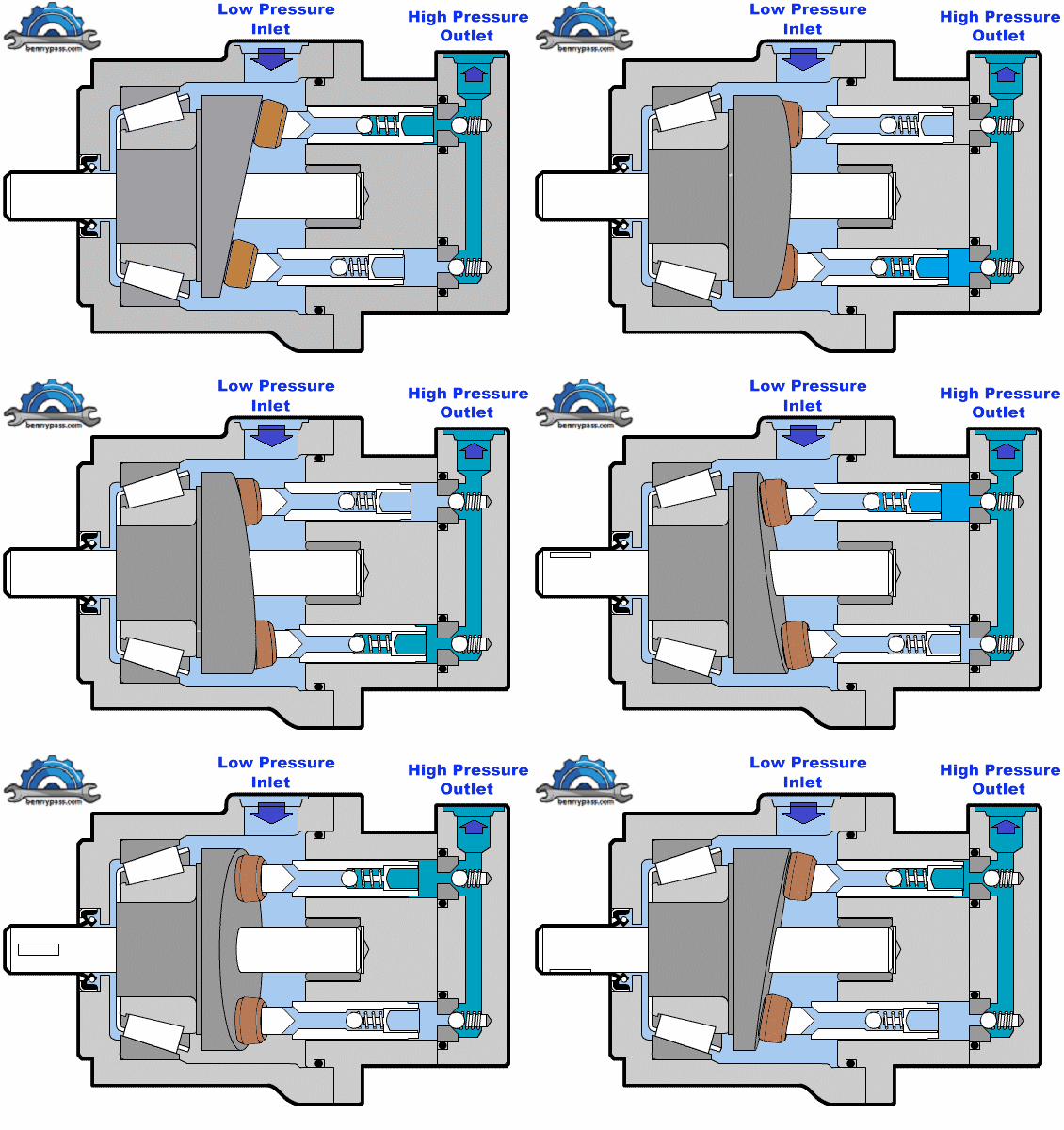
Parts of Piston Pumps This pump is complex in construction; it has significantly fewer clearances between its moving parts. It provides steady discharge at high pressure. Other variants are also the same as this one with minor modifications. Hence it becomes essential to study each of its parts in detail. Let's see the features of the straight axis piston pump widely used. Housing is made of non-rust and robust material, generally steel alloy. It houses parts such as valve plate, cylinder block, piston assembly, shoe plate, swashplate, and driven shaft. Cylinder block It is mounted on the drive shaft, so it rotates at the same speed as the shaft. This part has axial bores in it. They are generally 8 to 12. The piston moves up and down into these bores. This block has tight clearance with housing. This pump gets its name due to its axis. There is a valve plate connected to the inlet and outlet port on one end, and on another, it has a piston and swash plate assembly. Piston assembly Piston moves in the axial bores of the cylinder block. This piston is connected to the shoe plate by the shoe joint. This shoe plate is mounted on a swashplate. Pistons are generally 8 to 12 in number. They are always an even number. They move in the axial direction; they perform reciprocating motion in the axial bores. Rotating Barrel A rotating barrel is used to house the piston assembly. It has slots, and pistons are fitted into it. It is designed so that whenever the rotating barrel rotates, pistons will also rotate. This mechanism helps to displace the fluid in the piston pump. Intake Port That's the part where liquid or gas input is given. Discharge The discharge side. Port Plate The Port plate is another essential part used to separate the fluid from the intake port and discharge port. Whether the working fluid is a liquid or gas, it has to pass through this port plate. Shaft The shaft is the most vital part of piston pumps, like all other pumps. Swashplate The shoe plate is the one to which pistons are connected by a spherical joint/ shoe joint. This shoe plate is then connected to the swashplate. This plate is mounted at a specific angle to the axis of rotation. It provides an angle to the shoe plate, which affects the pump's discharge. So, as we change this angle, the pump's discharge also changes. Importance of swashplate
This is achieved by simply changing angles. Imagine if the swashplate is perpendicular to the axis, then there will be no suction and no discharge. This is because the stroke length of the piston will be minimum, and it will occupy the space of the bore in the cylinder, leaving no space for entry and exit of fluid. So, the piston will remain in the same position, and the whole assembly will keep rotating. When the angle is slightly inclined in such cases, pistons will now reciprocate as their stroke length will keep changing with the rotation of the cylinder block. This creates space in the bore where liquid gets sucked and pushed out through the delivery port. The point to be noted is that the space that got started in the bore is related to the amount of piston moved out of the cylinder connected to the swashplate. Then this space is directly related to stroke length. Stroke length is, in turn, associated with the angle of the swashplate. So as soon as the swashplate has more angle, the piston will move farther away from the bore, creating more space and giving more discharge. Hence angle of the swash plate is of immense importance in this pump.
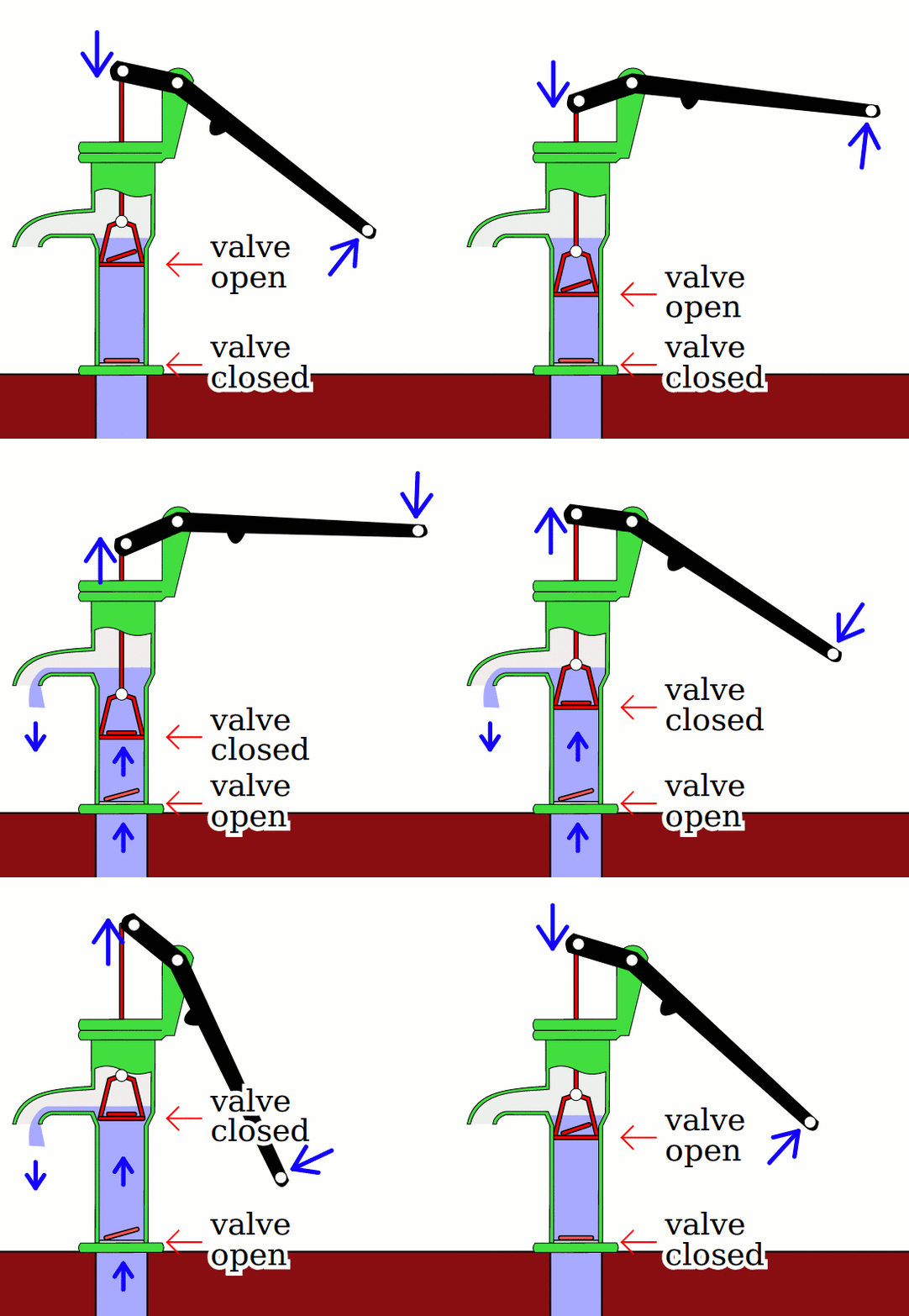
Lift Piston Pump Lift Piston Pump- In this type of pump, the piston displaces the compressed gas or liquid with the help of a control device called a valve. The valve is placed just below the inlet port, as shown in figure 3 below
On the below stroke, fluid flows through control devices arranged in the piston into the higher portion of the cylinder. After that, on the upstroke, can release fluid from the higher portion of the cylinder through a spout. Bent Axis Piston Pump This pump gets its name because the axis of rotation of the cylinder block makes some angle with the axis of rotation of the drive shaft. Figure 4 below shows a Bent Axis Piston Pump
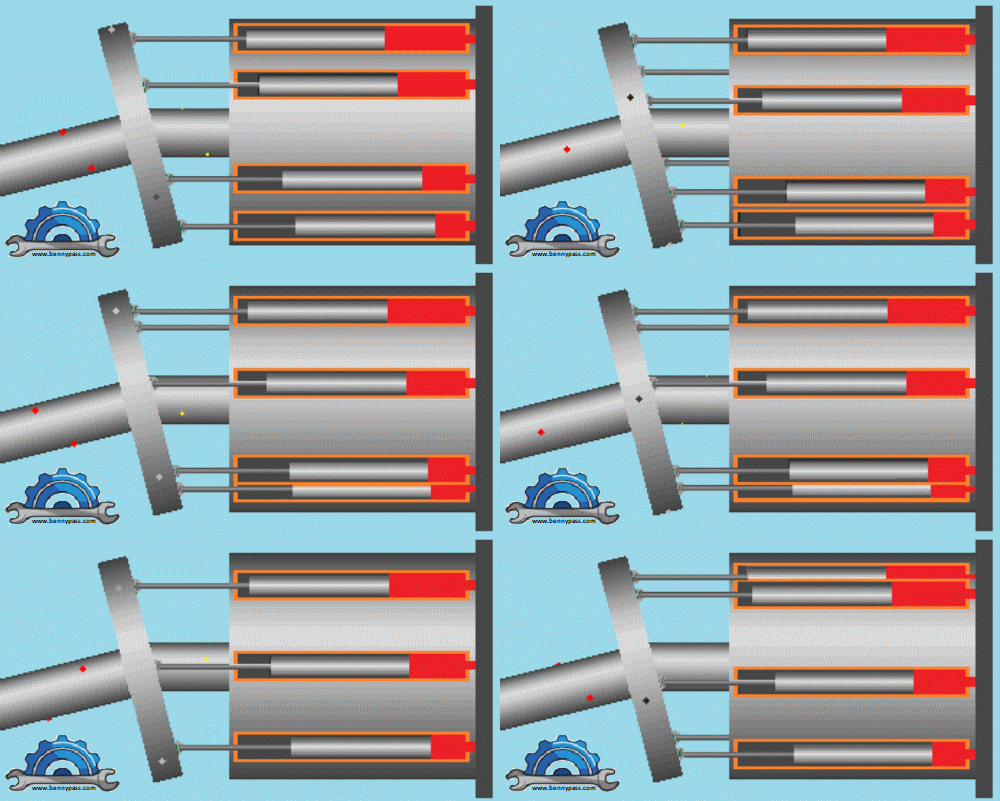
Construction Inside the housing, one side is a port plate, valve plate and cylinder block, while on another side, there is a flange and driveshaft. Both are these connected via a universal joint. Cylinder block It consists of axial bores which are parallel to the cylinder axis. The cylinder block touches the valve plated. It gets its power via a universal joint. The cylinder block rotates around its axis. The piston is placed in these bores. Piston assembly The piston in the cylinder block is connected to the shoe plate by a shoe joint/ spherical joint. Pistons reciprocate in the cylinder bore. It performs suction and discharge due to changes in the position of the rotating shoe plate. There are 8 to 12 pistons, and they are always evenly numbered to get a continuous discharge. Flange assembly The Driveshaft gets its power from the prime mover. The flange is keyed to the same shaft, and hence it rotates at the same speed as that of the shaft. The axis of the drive shaft/flange intersects the cylinder block's axis at some angle. Power is transmitted to the cylinder block by using a universal joint. The shoe plate to which pistons are connected by joint is also mounted on a flange. It also rotates when the drive shaft rotates, causing the reciprocating motion of the piston. Working When the drive shaft starts to rotate, the flange will also turn. The cylinder block will rotate because of the universal joint but at some angle. As the cylinder block is kept at some angle, the piston is still connected to the shoe plate. So, there will be a point where the distance between the plate and the piston will be closest, and at that point, they will be farthest. When they are closest, the piston will occupy space in the cylinder bore, while when they are farthest, the piston will get pulled out of this bore, creating space. When the piston moves out of the bore, the fluid gets sucked into the cylinder bore. When the piston comes inside, the bore piston will push fluid out. For half the rotation, some half part of the cylinder block will be performing suction while the same half part will carry discharge function in the next half rotation. This way, at any point in time, some piston will be performing suction while some piston will be providing discharge. Practically, this allows this pump to give continuous discharge. The angle at which the cylinder block axis meets the central drive axis will determine the stroke length of the piston, which in turn will decide the discharge of the pump. Practically, this is very important to regulate the pump flow. Variable Displacement Piston Pump (Axial) The name axial has been given based direction of liquid or compressed gas to be exhausted. In this case, it is parallel to the axis of the piston. Hence the name axial has been given. Figure 5 below shows an Axial Piston Pump
Construction The majority of the construction is the same as the straight axis piston pump. Inside the casing, the cylinder block is mounted on the drive shaft. The cylinder has axial bores in which the piston reciprocates. The piston is connected to the shoe plate, which is attached to the swashplate. The cylinder block touches the valve plate on one end from where suction and discharge are carried out. Swashplate plays a role in determining discharge, and the more is the angle with the central axis with the drive shaft more will be discharged, while the lesser the angle, the lesser will be the discharge. The swashplate is mounted in a yoke-like mechanism. It is connected to one end by a swashplate valve. This swashplate will push swash plates from one end to the backside due to which angle between the shaft plate and central axis changes, which in turn changes the stroke length of the piston. A change in stroke length affects the discharge of the pump. This yoke can be moved using manual control, servo control, and pressure control. When the drive shaft rotates, the piston starts to reciprocate due to its connection with the swashplate. At some point, the piston will be closest to the swashplate, while it will be the farthest at some point. When it is, the farthest fluid gets sucked in, while when it is, the closest fluid gets pushed out of the cylinder bore.
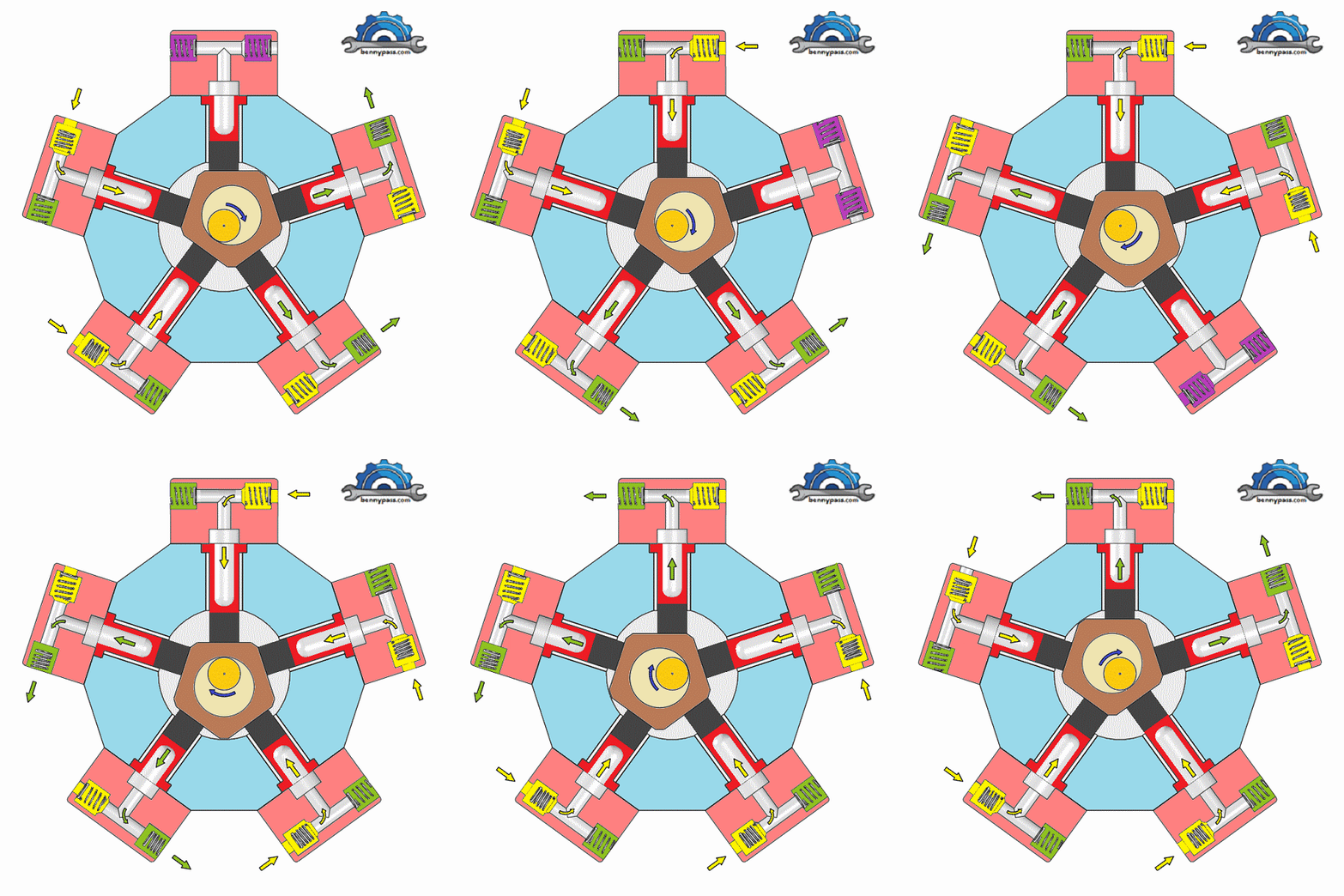
Radial Piston Pump In this piston pump, the flow of liquid is made radial, i.e. it flows outwards the piston. Figure 6 below shows an Axial Piston Pump
Rotating Cylinder Radial Piston Pump (Internal Construction) As the name suggests, this pump has a rotating cylinder block, this block has an axial bore and these bores house pistons. This cylinder block is mounted on the shaft. The shaft gets its power from the prime mover. The whole assembly is inside the reaction ring. The reaction ring is mounted inside the casing, concentric to the casing. While the cylinder block is away from this center it has some eccentricity to achieve the reciprocating motion of the piston. The piston remains in contact with the reaction ring and cylinder. This power is achieved by centrifugal force and pressure of the liquid. Inlet and outlet ports are provided at the center. When the cylinder block rotates, the piston will begin moving outwards due to the centrifugal force, which always acts away from the center. So the rotary motion of blocks makes the piston reciprocates. As the cylinder block is eccentric to the reaction ring, it will change the piston s position in each cylinder. At the start of the rotation, the piston will move out slowly, which will result in the suction of fluid from the inlet port, which is at the center. As the piston moves away, more fluid rushes in. All this happens to till half rotation, and after half rotation reaction ring will push the piston in, and this fluid will get pressurised, and at the end of the revolution, it will be pumped out by the outlet port. This process will go in each piston-cylinder block. That way, the discharge obtained is smooth and continuous. This whole pump assembly looks a bit like a vane pump. But this is not a rotary pump. It is a reciprocating pump. Normally, there are 8 to 12 bores that continuously perform suction and discharge. Stationary Cylinder Radial Piston Pump (Internal Construction) As the name suggests, it has a stationary cylinder in which the piston reciprocates. There is one crank that is connected to all pistons. Consider here there are five-cylinder and five pistons. These cylinders are placed at equal angles and in the same plane, so the whole pump design is balanced. The crank is mounted on the rotating shaft and transmits the same power to the piston via a connecting rod. Thus, rotating motion is getting converted into a reciprocating motion. So, at some point, some pistons will be farthest to crank while some will be closest to crank. Cylinders have suction and discharge valves. When the piston gives an inward stroke, outer fluid gets sucked in, and the same liquid gets pushed out through the delivery port when the piston moves out. So, at the same time, some pistons have inward strokes while others have outward strokes so that supply remains smooth and continuous. Advantages of Piston Pump The advantages of piston pumps shall be as follows:
Disadvantages of Piston Pump The disadvantages of the piston pump shall be as follows:
Applications of Piston Pumps The applications of the piston pump shall be as follows:
Materials of Piston Pump There are different kinds of materials used for piston pumps, and it depends on project requirements and types of applications. Must be two keep things in mind for material selection, all described below:
Below are a few types of materials that have been listed for basic understanding:
Manufacturers of Piston Pumps The manufacturers of the piston pump shall be as follows:
For any information about piston pumps, contact us here on the website. We always recommend the best solution for you. Also, you can click here to identify by yourself which pump is suitable for your purpose
|


+(39) 347 051 5328
Italy - Kazakhstan


09.00am to 18.00pm
About
We offer the best and economical solutions, backed by 27+ years of experience and international standards knowledge, echnological changes, and industrial systems.
Our Services
Marketing Materials


Marketing Materials1


