
|
How to choose a pump? Not all pumps are created equal. While pumps are found everywhere, from swimming pools to chemical vats to fuel depots, each application can have its unique challenges. When selecting a pump, below are a few factors you will want to consider:
These different values allow you to calculate the setup's NPSHa (Net Positive Suction Head available). This will allow you to choose a suitable pump and avoid any risk of cavitation. You will also have to control the efficiency, which must be optimal at 30% more or less than the desired nominal flow rate. What kind of media do I need to pump? The media that needs to be transported is essential when choosing a pump as the characteristics of the pump itself depend on its viscosity (i.e. the fluid’s resistance to a uniform flow), its suction temperature and whether or not there are solid elements in it. To choose the pump designed to operate under these conditions, you will need to determine if the media to be transported is chemically neutral or corrosive. As a general rule, the more viscous the media, the more complex the flow through your pumping system, but be careful. The viscosity of media varies according to operating conditions. As a general rule, the more viscous the media, the more complex the flow through your pumping system, but be careful. The viscosity of media varies according to operating conditions. There are four main groups of fluids according to their viscosity level; in the first group, fluids such as water, oil, or alcohol move in the same way regardless of speed or agitation. You will not have many constraints in choosing your pump for these types of uses. In the second group, there are certain food products such as butter or cream whose viscosity increases with agitation; therefore, in these cases, a standard centrifugal pump will not be suitable for the fluid flow. The third group includes media with a threshold to be exceeded before flowing. Once this point is reached, the viscosity decreases with agitation. Adhesives, paints and greases are part of the fourth group that is very thick at rest, but their viscosity decreases if constant agitation is maintained. Generally, centrifugal pumps are the most suitable for low viscosity fluids (the first and second groups) because the pumping action generates a high fluid shear rate. As the viscosity increases, you will have to consider the additional resistance that the fluid will exert on the shear rate. On the other hand, positive-displacement pumps are the best choice for viscous fluids (the third and fourth group) because they operate at lower speeds, and the sheer energy transferred to the fluids is lower than that of centrifugal pumps. When it is necessary to use one pump instead of another When should you use a Centrifugal Pump?
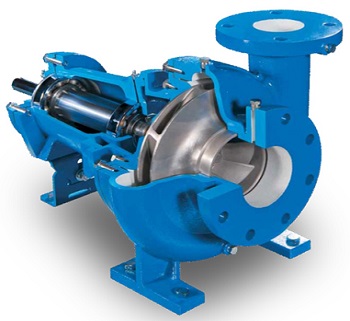
You can consider using a centrifugal pump if you need to pump media with low viscosity and potentially containing solid elements. Centrifugal pumps are robust equipment that generally offers good efficiency. This type of pump can pump large volumes and at a constant flow. Generally, they are not self-priming. Therefore, you must fill the circuit independently before the pump is put into service. You can also consider this type of pump to supply a wastewater treatment plant or thick transport fluids or cleaning fluids, such as in the petrochemical industry. Selection criteria for choosing a centrifugal pump
When should you use a gear pump?
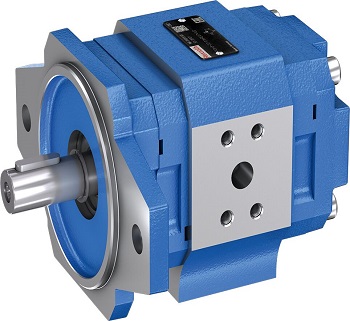
You can use a gear pump to transport viscous liquids at high pressure if they don’t contain any solid particles. They are suitable for pumping highly viscous materials at high temperatures, and they can also reverse their pumping direction. These pumps are characterized by constant flow with very little noise during operation. These pumps are generally reliable and compact with a simple design, so maintenance will not be costly. However, they are not ideal for very high-flow uses. They are used especially in the automotive industry to lubricate all engine parts. They are also often used in plastic processing, automatic presses, foundry, and Oil hydraulic circuits. These pumps can also provide a dosing function. Selection criteria for choosing a Gear Pump
When should you use a piston pump?
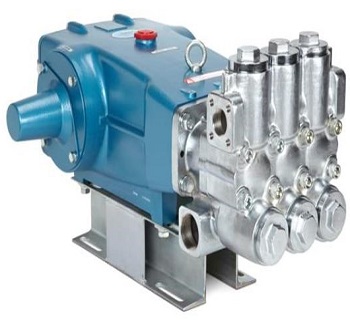
Piston pumps can be used for low viscosity and medium-flow media (80 m³/h). Additionally, pumping solid particles is impossible with this type of equipment because the pump can ensure proper operation only if the seal between the cylinder and the piston is perfect. Consider that it is often used in high-pressure circuits, especially in the injection of methanol or glycol. For high-pressure uses, you can opt for a plunger pump; they differ from piston pumps in that the seal does not move with the piston; it is fixed and therefore able to withstand higher pressures. Several versions of piston pumps are available (duplex, triplex, etc.), ensuring a longer life for the pump because the pressure is distributed over several pistons. In these cases, be careful with the rotation speed because when you choose to reduce the number of pistons and reach the same pressure level, the speed will be higher, and consequently, there could be higher pulsations. These pumps are ideal for reaching high pressures and are thus very suitable for applications such as oil pumping, high-pressure cleaners or dosing applications as an alternative to diaphragm pumps. Selection criteria for choosing a Gear Pump
Note: This type of pump requires a pressure relief valve (mandatory). If there is a total obstruction of the pumping line (downstream pump), the piston pump continues to pump until the destruction of the pump itself. It could be fatal to the personnel working near the pump.
When should you use a Screw Pump?
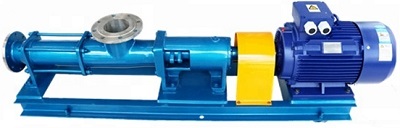
Figure 4. Screw Pump The screw pump can be used (Archimedes) in any application where there is a need to pump a liquid to a higher level. Therefore, there are several systems where the screw pump works, from transporting the cleanest swimming pool water to the most polluted wastewater. A screw pump is a famous type of positive displacement pump. It is also called a water screw pump. A screw pump uses one or more screws to move fluids or water along the axis of the screw. These screws interlock to pressurize the fluid and move it inside the system. These screws are meshed with each other and reciprocate in the cavity of the cylinder. Rotary screw pumps are used in various industries such as power generation, shipping, chemical processing, terminals, refineries, pipelines, and oil and gas production. In the power generation zone, these pumps use for jacking oil, fuel supply, high-pressure fuel injection, gear and bearing lubrication, and water power for applications in the control of the hydroelectric plant. The water screw or screw pump is a machine that needs very low maintenance and has few rotating components. With the help of these pumps, you can effectively pump fixed volume products in a variety of viscosity, pressure, and volume ranges. A screw pump has an easy and reliable construction. It is very easy to design. There are three screw spindles, two of which are driven screws and the other screw is a driver. There is enough clearance between these screws, which is responsible for pumping the water or other fluid. The electric motor supplies the fluid to the screws. |

+(39) 347 051 5328
Italy - Kazakhstan


09.00am to 18.00pm
About
We offer the best and economical solutions, backed by 27+ years of experience and international standards knowledge, echnological changes, and industrial systems.
Our Services
Marketing Materials


Marketing Materials1


