
Identification and Recommendations Autoclave technology (Parker)
Correct installation procedures are further promoted by providing dimensional information associated with a variety of Parker Autoclave Engineers tube connections as well as the torque required to properly seat numerous Parker Autoclave Engineers components. Several tools developed by Parker Autoclave Engineers are presented to help accomplish proper valve, fitting and tubing installation and maintenance. Autoclave Engineers is the leader in the field and provides a great combination of connections, but like all connections, special attention is required to make reliable and safe connections. First of all: Identification of the connection types Autoclave Engineers offers several connections divided by pressure rating; let's see which ones
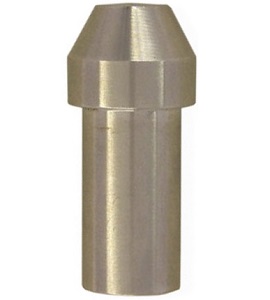
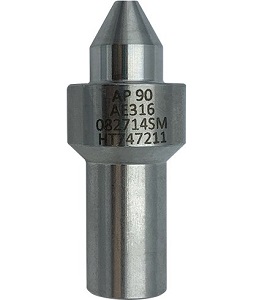
As an example, let's compare two different plugs with different ratings, MP and HP (medium pressure and High pressure)
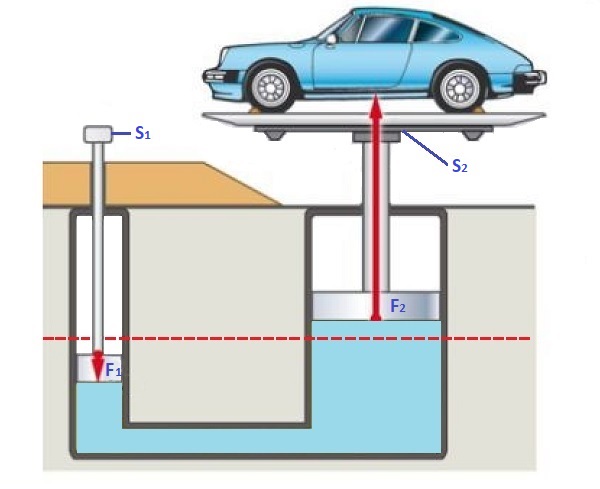
The two plugs look the same; change the conic part only. The OD HP cone is smaller than the MP cone. This is the fundamental basis of an autoclave connection Note: Improper installation can cause a high-pressure leak (Never attempt to secure something that doesn't fit). Improper installation risks damage, such as leaks or component failure, between the tubing and fitting (scratch the cone during installation). When damage occurs to a fitting, will be solved by replacing the fitting or making up new cone and thread of tubing with Autoclave machine. When it occurs on some device like a high-pressure valve where it is impossible to change the internal cone (like the fitting), and requires replacement with result that wasted money, time, and non-production For this reason, before starting any activity, It is mandatory to clarify which type of connection is in place (MP, HP,or LP) Installation procedure The conical seal fittings are for Ultra High Pressure and can reach pressure up to 150,000 psi (10500 bar). This kind of technology was invented by Autoclave Engineers over 90 years ago in the United States. This design set the precedence of quality and reliability found in all Parker Autoclave Engineers products to this day. All-metal sealing and working temperatures from 0° to 600°F (-18° to 315°C), along with a variety of different material options make this connection one of the most versatile ever. Working Pinciple The principle/design of Autoclave connections is based on a metal-to-metal line contact seal between tubing and the fitting surface (cone to cone). A smaller sealing surface (like a cone) often results in a higher pressure rating for a given clamping force because the force is concentrated over a smaller area. A larger surface involves a more significant force, which means the pressure rating will reduce Figure 3 shows a hydraulic lift/jack using a small piston/area to lift a car with a large piston/area, demonstrating Pascal's Principle
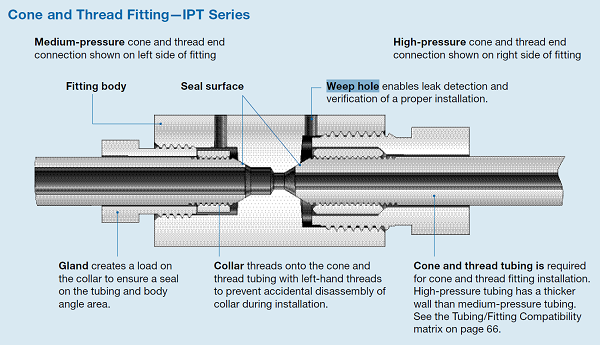
The Weep Holes Figure 4 below shows a standard connection between the tubing and autoclave fitting.
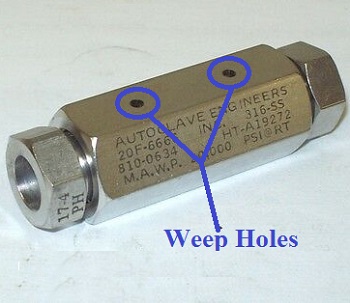
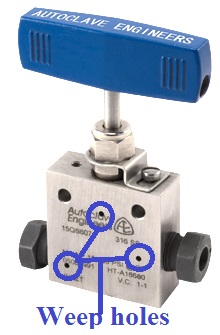
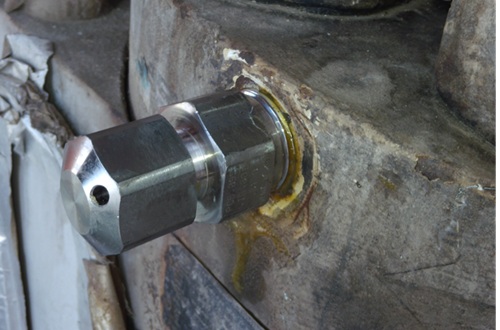
As you can see from Figure 4, the sealing part is only between the tubing cone and the fitting cone. On both sides of any fitting, there are two holes called “Weep Holes”. These holes serve for drainage and visual inspection during installation, allowing immediate identification of leaks (gas or liquid escaping before target pressure is reached) if issues arise, making fault location easier. Normally, weep holes are in most fittings, but sometimes they are missing.Figure 5 shows a grease fitting applied to the injector body valve. For your information, some valve suppliers include a weep hole at the connection point, while others don't, which is a crucial detail to note (Pay attention because this is very important).
Note: The thread of the fitting cannot withstand a pressure of 20,000 psi. The pressure must be only between the fitting cone and the tubing cone, as shown in figure 4 Unfortunately, several types of valves don't have the weep hole, this means that in case the cone gets damaged (metal seal), the Gas or liquid will exit from thread connection. This is one of the reasons for never using any type of seal (teflon, loctite,etc.) on the thread connections. The threads shall always be free from any type of seal to prevent thread pressurization if cone seals fail and no weep holes are available. See Figures 6 and 7.
Figure 7A below shows a body valve of a gate valve with grease injector with loctite on the thread without weep hole. Never use any type of seal on the thread of grease injector, specially when the weep hole are not present.
Figure 7A - Grease Injector Fitting Working Principle Autoclave Engineering (Parker) is the reference in this guide. Many reliable companies provide the same technology, it all depends on what you have available, but the principle of operation remains the same. Figure 6 below shows a standard Autoclave Engineering connection As you can see from Figure 8 above, the seal for this connection is only cone-to-cone (metal-to-metal). Figure 9 below shows all components that are included in a Fitting
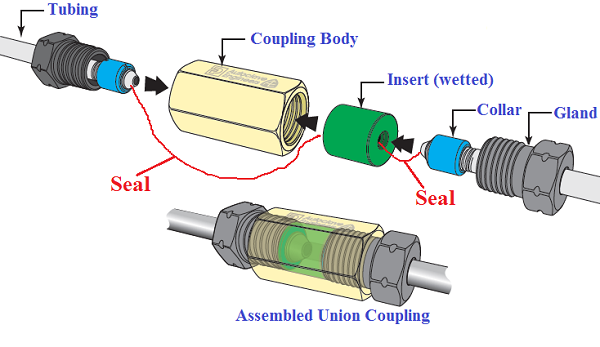
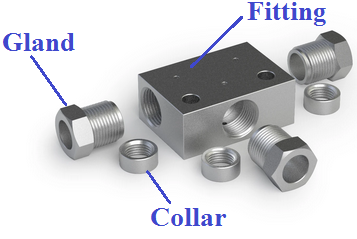
Figure 9 Autoclave Fitting Each of these components has a detailed code which is very important for the correct installation. Tubing's Diameter There are many tubing sizes; the most common lines have diameters of 1", 3/4", 9/16", 3/8", and 1/4" (with 5/16" for ultra-high pressure) Autoclave high-pressure tubing uses a unique metal-to-metal seal where the tube end is coned (shaped) to a specific angle, typically around 59 degrees, to mate perfectly with the fitting's 60-degree cone, the connection creates an incredibly strong, leak-proof seal for extreme pressures (up to 150,000 psi), unlike standard fittings that rely on ferrules or NPT threads.The sealing happens when the precisely angled tube tip presses into the fitting's cone, forming a line contact seal for reliable performance in harsh environments. Tubing ratings are divided into three types Low Pressure Cone An autoclave low pressure cone refers to Parker Autoclave Engineers' SpeedBite fittings, a single-ferrule compression system for tubing (up to 15,000 psi) that provides reliable, Bubble-tight seals for moderate-to-high pressure fluid for oil & gas, and chemical industries, ideal for high-pressure fluid handling in research, oil & gas, and chemical industries, featuring a bite-type action for strong, easy connections. Key Features & Function:
How it Works (Simplified):
In essence, it's a robust, simplified connection for applications needing more than basic fittings but less than complex, high-end coned-and-threaded systems.
Medium Pressure Cone
For more details see Figure 10 below
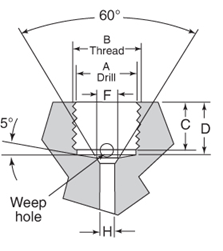
Figure 10 - Cone Angle This 1° to 3° mismatch (the "dissimilar angle") ensures the seal is formed at the tip of the cone, creating a reliable, high-pressure, metal-to-metal line seal.
High Pressure Cone High-pressure Autoclave fittings use a metal-to-metal seal from a 59° tube cone fitting into a 60° fitting cone, creating a leak-proof line seal for extreme pressures (up to 60,000 PSI or more) and temperatures (-423°F to 1200°F), relying on precise angles, not degrees of heat for sealing, though they handle high heat.
In Summary: The "degrees" in an Autoclave high-pressure cone refer to the precise 59° and 60° angles for sealing, allowing operation across a wide range of extreme temperatures and pressures, crucial for heavy-duty industrial applications. Up to today, no other methods can withstand high pressure with tubing diameters greater than 1/4 " except this type of connection When a line is built, the rating depends on the thickness and materials of the tubing. Based on the tubing, it will be applied the proper fitting, valve, etc.(Medium, High, or ultra-pressure). Any line modification, such as a different fitting rating or tubing thickness, even an installation of a pressure gauge with a lower range, entire line will be downgraded. Fittings and Valves
Classic issue when internal cone gets damaged (Possible causes):
If the cone is damaged and a leak appears, never try to solve the issue by applying sealing (Teflon, Loctite) on the thread. The cone and fitting surface are totally different (much bigger). The fitting surface cannot support a pressure of 10K, 20K or more or more. The diameter of injector grease fitting is 9/16" HP (look like 3/4" NPT - see Figure 5 above). Applying sealant like loctite on the fitting, such as Loctite, etc., will result in high clamping force, but could cause excessive stress on the fitting surface, and also on the threads, with the serious risk that the fitting may tear away from the connection. If consider that a 3/4 plug the max pressure is 300/400bar only (depende from materials). Always thinking about KgCm2 and never apply any seal on the Autoclave connections (mandatory). Advantages
Disadvantages Even if metal to metal seal of the fitting and tubing is very reliable in terms of high pressure, they also have problems which should not be underestimated. Below are the considerations:
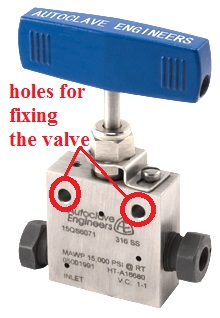
For safety systems, including maintenance, the Autoclave valve must be fixed to support by bolts. The support is mandatory if the valve like in Figure 11 above, is classified as a full seal valve. The problem appears when the valve is closed and under pressure (upstream side only). Let's say the valve supports are missing. In that case, there is a serious possibility that operating the valve could unscrew the upstream gland, causing uncontrolled leakage of liquid or gas. In this case, the best solution is to close everything upstream of the valve. Consider all reccomandation below:
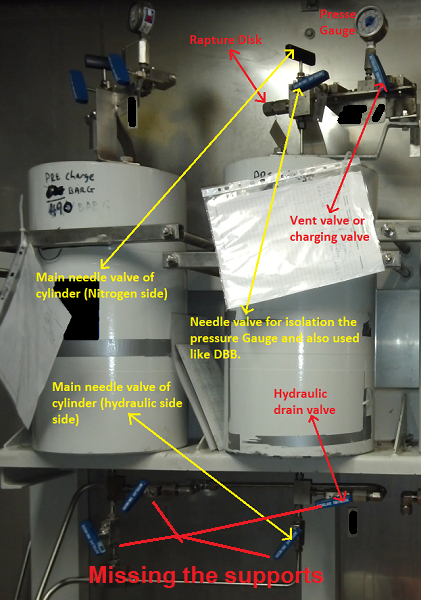
Unfortunately, in some projects, the support is not installed during construction (maybe to save time), but this is very important for the safety system (autoclave Engineering recommendation). For any metal-to-metal fittings, if the fitting gland unscrews due to valve missing the support, even if the gland moving few millimetres can cause a catastrophe. Figure 12 below shows some hydraulic accumulators under high pressure without the supports on the valve. (an essential thing).
Our suggestion: Do not try to unscrew or operate (open or close) an autoclave valve under pressure without support.
Recommendations
Note: FAILURE, IMPROPER SELECTION OR IMPROPER USE OF THE PRODUCTS AND/OR SYSTEMS DESCRIBED HEREIN, OR RELATED ITEMS CAN CAUSE DEATH, PERSONAL INJURY AND PROPERTY DAMAGE. Due to the variety of operating conditions and applications for these products or systems, the user, through its own analysis and testing must identify which is the correct fittings, valves, tubings, etc. If you are not sure always please contact qualified people.
|


+(39) 347 051 5328
Italy - Kazakhstan


09.00am to 18.00pm
About
We offer the best and economical solutions, backed by 27+ years of experience and international standards knowledge, echnological changes, and industrial systems.
Our Services
Marketing Materials


Marketing Materials1


