
|
Titanium Grade 5 / 6Al4V
Titanium Grade 5 has good tensile properties at ambient temperature and a useful creep resistance up to 300oC (570oF). Resistance to fatigue and crack propagation is excellent. Like most titanium alloys, Grade 5 has outstanding resistance to corrosion in most natural and many industrial process environments.
Chemical Composition Titanium Grade 5 / 6Al4V
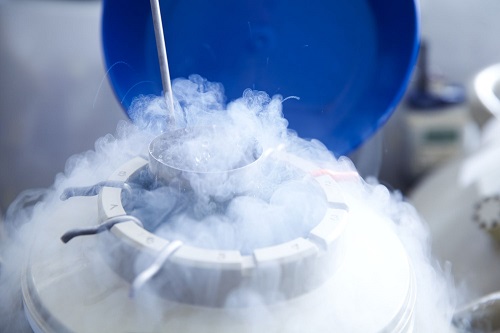
Applications of Titanium Grade 5 / 6Al4V Titanium Grade 5 is a pure alpha-beta titanium with aluminium as the alpha stabilizer and vanadium as the beta stabilizer. This alloy is primarily used for corrosion resistance and is the most widely used specification in all product forms. The alloy features very high strength, good corrosion resistance, excellent strength-to-weight ratio and high strength at cryogenic temperatures. Physical Properties
Titanium Grade 5 / 6Al4V Corrosion Resistance Ti 6Al 4V instantaneously produces a ceramic oxide layer on its surface, which protects it from carrion in all but the most severe of environments. Because of this, grade 5 Titanium is widely used in saltwater applications, as well as humid environments. It is also moderately resistant to highly acid environments though titanium alloys containing palladium are better. Heat Treatment Ti 6Al 4V alloy is widely heat-treated to further improve its properties. It is typically mill-annealed, solution-treated treated or aged. Stress relieving is used on formed and welded parts whilst beta annealing is used to improve the alloy’s strength. Hot Working Ti 6Al 4V is usually hot-worked in order to produce the desired microstructure through the process of recrystallisation. This keeps the alloys yield strength and hardness low and its ductility high. In grade 5 this is done at approximately 870°C to 980° C which stops the growth of excessive alpha phase. Cold Working Ti 6AL 4V is not easily cold-worked due to its low elastic modulus meaning it has a tendency to resume its prior shape. Grade 5 can be cold drawn and extruded though this is typically confined to smaller industrial processing facilities on commercially pure grades of titanium. Titanium Grade 5 / 6Al4V Machining Ti6Al4V parts have good machinability and can be machined as stock parts. The following factors contribute to efficient machining of Ti6Al4V parts: Low cutting speeds, high feed rate, generous quantities of cutting fluid, sharp tools and a rigid setup. You can learn more on our machining page.
Weldability Ti 6Al-4V can be welded using Ti 6Al-4V as a filler metal. The metal has to be shielded with inert gases to prevent the pickup of oxygen in the weld area which can cause embrittlement and failure. Gas tungsten arc welding is the most commonly used welding process for Ti 6Al-4V alloy, though gas metal arc welding is used for welding thicker sections. Ti 6Al-4V can be successfully welded using plasma arc welding, spot welding, electron beam, laser beam, resistance welding and diffusion welding. Conclusion ASTM grade 5 titanium is the most ubiquitous and versatile of titanium alloys. It is comprised of 90% titanium, 6% aluminium and 4% vanadium. It is an alpha-beta titanium alloy with aluminium stabilising the alpha phase and vanadium stabilising the beta phase. Ti 6 Al 4V is widely used because of its optimum blend of properties. It can undergo further processing to become better suited to specific applications.
|
||||||||||||||||||||||||||||||||||||||||||||||||||||||||||||||||||||||||||||||||||||||||||||||||||||||||||||||||||||||||||||||||
tube material
|
Titanium Grade 2
When it comes to the world of titanium alloys, two of the most popular grades are Grade 2 and Grade 5. These two alloys are often compared regarding their strength, durability, and corrosion resistance. In this blog post, we will explore the differences between Grade 2 titanium and Grade 5 titanium to help you decide which alloy is the best for your specific use case. Chemical Composition Titanium Grade 2
ASTM Product Specifications
Applications of Titanium Grade 2
Physical Properties
Titanium Grade 2 Corrosion Resistance It is also important to note that Grade 2 titanium has a higher corrosion resistance than Grade 5 titanium in certain environments. Grade 2 titanium is highly corrosion-resistant in most natural and industrial environments, while Grade 5 titanium may experience galvanic corrosion in certain conditions. Heat Treatment Titanium grade 7 is annealed at 650 – 760°C, still air-cooled. Pickling to remove the alpha case may be needed before further fabrication or machining. Stress relief at 480 – 595°C, air-cooled, may be required to improve dimensional stability for critical components. Cold Working The cold work characteristics of this material is similar to that of a moderately tempered austenitic stainless steel. In multiple cold-forming operations, intermediate stress relief is recommended to prevent tearing or other material damage. Post-work annealing is required to reattain optimum performance characteristics Properties and Applications While Grade 2 and Grade 5 titanium alloys have unique properties and applications, the biggest difference is their strength. Grade 5 titanium is significantly stronger than Grade 2 titanium and has a higher tensile strength. This means that Grade 5 is better suited for applications that require high strength and durability, such as aerospace engineering. Strength In addition to strength, another important factor to consider when choosing between these two titanium alloys is their cost. Grade 5 titanium is typically more expensive than Grade 2 titanium due to its more complex manufacturing process. However, the added cost of Grade 5 titanium is often justified in high-performance applications where strength and durability are paramount. Titanium Grade 2 Machining Titanium grade 2 is readily machinable by conventional methods. It is similar to austenitic stainless steels for machinability. Like stainless steel, titanium has a low thermal conductivity and heat dissipation is poor, so generous use of coolant is recommended. Sharp tools are essential. Cuts should be deep and continuous, with low cutting speeds.
Weldability Titanium grade 2 is readily weldable by GMAW and GTAW processes. Preheat or post-weld heat treatment are not needed. The area immediately surrounding the welds must be CLEAN, free from all grease and shop dirt, including pencil marks. Abrasive cleaning can be used, or solvent cleaning or pickling with a mixture of nitric and hydrofluoric acids. A trailing gas shield must be applied to all areas above 450°C in addition to the normal welding torch gas shield, to prevent heavy oxidation during cooling. Matching filler metal to AWS ERTi-2 is used. The gas shield must be low in hydrogen, oxygen and nitrogen, all of which readily dissolve in titanium and cause embrittlement. Conclusion In conclusion, both Grade 2 titanium and Grade 5 titanium are excellent options for various industrial applications. While Grade 2 is the most commercially pure titanium alloy known for its high corrosion resistance, Grade 5 is significantly stronger and better suited for high-performance applications. When deciding between these two alloys, consider your specific use case and weigh the cost versus the added benefits of each. Working with a reputable titanium supplier is always important to ensure you use the right alloy for your application.
|
||||||||||||||||||||||||||||||||||||||||||||||||||||||||||||||||||||||||||||||||||||||||||||||||||||||||||||||||||||||||||||||||
|
Titanium Grade 1
The presence of small amounts of oxygen and iron influences the mechanical properties of commercially pure titanium alloys. Grade 1 unalloyed Ti ("Pure") 35A alloy contains the lowest oxygen and iron levels, thereby making this grade the most formable of material. This alloy has the highest purity. Chemical Composition Titanium Grade 1
Applications of Titanium Grade 1 Grade 1 unalloyed Ti ("Pure") 35A alloy is used in the following application areas:
Physical Properties
Titanium Grade 1 Corrosion Resistance Titanium has excellent resistance to corrosion in a wide variety of environments including seawater, salt brines, inorganic salts, bleaches, wet chlorine, alkaline solutions, oxidizing acids, and organic acids. Titanium is incompatible with fluorides, strong reducing acids, very strong caustic solutions, and anhydrous chlorine. Due to its combustibility, titanium is not suitable for pure oxygen service. Titanium does not release any toxic ions into aqueous solutions, thus helping to prevent pollution. Titanium Grade 1 Hot Working Hot working enhances the overall ductility of the material. Cold Working Cold working features of this material is the same as that of a moderately tempered austenitic stainless steel. Post-work annealing is recommended to re-attain favourable performance properties. Titanium Grade 1 Machining Grade 1 unalloyed Ti ("Pure") 35A alloy is hard to machine but can be successfully done using slow speeds, high coolant flow, and high feed rates. Tooling should be performed using tungsten carbide designations C1-C4 or cobalt-type high-speed tools.
Forming Grade 1 unalloyed Ti ("Pure") 35A alloy can be hot or cold formed using power brake, hydropress, stretch or drop hammer methods.
Conclusion Titanium alloys are among the most useful and plentiful alloys used in a number of different industries. There are many different grades of titanium alloys that all have their unique strengths. Therefore, it is vitally important that the right grade is chosen to complete the job at hand. Particularly when you are selecting the right alloy in strip form. While it is softer than the other grades of titanium, it is still very useful for a variety of different uses.
|
||||||||||||||||||||||||||||||||||||||||||||||||||||||||||||||||||||||||||||||||||||||||||||||||||||||||||||||||||||||||||||||||

|
Hastelloy˘ X
Hastelloy X is a Nickel-Chromium-Iron-Molybdenum alloy with an exceptional combination of oxidation resistance, ease of fabrication and high-temperature strength. It has also been found to be exceptionally resistant to stress corrosion cracking in petrochemical applications. Chemical Composition Hastelloy˘ X
Applications of Hastelloy˘ X Combustion chambers, gas turbine engine components such as honeycomb seals, compressor vanes and combustor cases. Physical Properties
Hastelloy˘ X Corrosion Resistance Hastelloy X has excellent corrosion resistance against various corrosive media, including sulfuric acid, hydrochloric acid, and nitric acid. It is also resistant to oxidizing media such as seawater and most organic acids. These properties make it an ideal choice for harsh environments with a high risk of corrosion.
Hastelloy˘ X Heat Treatment Hastelloy X can be heat-treated to enhance its strength and toughness. The alloy can be readily annealed by heating it up to 2150°F followed by air-cooling. Tempering can also be done by heating it to 1900°F followed by air-cooling to enhance its toughness. Hastelloy˘ X Machining Hastelloy X has excellent machinability when compared to other nickel-based superalloys. However, due to its high strength, the machining process should be done with appropriate tools and techniques to avoid tool wear and breakage. Coolant is also recommended to prevent overheating, which can lead to work hardening or cracking. Hastelloy˘ X Welding Hastelloy X is weldable by various welding methods, including Gas Tungsten Arc Welding (GTAW), Gas Metal Arc Welding (GMAW), and Submerged Arc Welding (SAW). GTAW is preferred due to its high-quality welds and lower heat input, which reduces the possibility of cracking.
Conclusion In conclusion, Hastelloy X is an outstanding nickel-based superalloy known for its strength, heat, and corrosion resistance. Its excellent properties make it ideal for various industrial applications, including aerospace, gas turbines, furnace hardware, and petrochemical processing equipment. The ability to heat-treat, machine, and weld Hastelloy X gives it a broader range of applications in different industries. However, choosing Hastelloy X requires understanding its properties and carefully considering its application requirements.
|
||||||||||||||||||||||||||||||||||||||||||||||||||||||||||||||||||||||||||||||||||||||||||||||||||||||||||||||||||||||||||||||||

|
Hastelloy˘ C-2000
Hastelloy C-2000 Bars is a nickel-chromium-molybdenum alloy that can be used in extremely corrosive environments. It offers superior resistance to pitting, crevice corrosion and stress corrosion cracking compared to other alloys, such as stainless steel and copper. It maintains good mechanical properties even at high temperatures, making it an ideal choice for processors or chemical plants working with highly corrosive acids and alkalis. ASTM B574 UNS N06200 Round Bar are often used in the aerospace, food processing, nuclear energy, petrochemical and medical industries because they resist oxidation over long periods without losing strength or shape. The alloy is also known for its exceptional formability when it comes to welding applications as well as its impressive dimensional stability during heat treatments.
Chemical Composition Hastelloy˘ C-2000
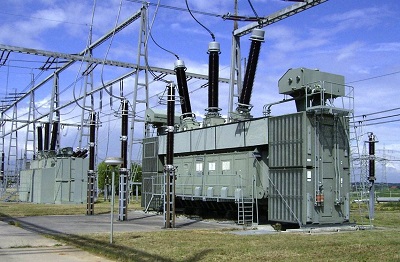
Applications of Hastelloy˘ C-2000 This alloy is recommended for the construction of high-voltage transformers thanks to the resistance of chemicals such as cooling oil
Physical Properties
Hastelloy˘ C-2000 Chemical Resistance Besides being resistant to acids, HASTELLOY® C-2000® alloy strip also stands up to process streams that contain traces of ferric ions and dissolved oxygen. Furthermore, it is exceptionally resistant to chloride solutions that can lead to stress corrosion cracking, something that is common among stainless steels. It can also withstand pitting and crevice attack when it comes in contact with chlorides. Perhaps its greatest strength is that it is still as easy to weld and to form as other Nickel alloys on the market.
Conclusion Hastelloy C-2000 Bars is a nickel-chromium-molybdenum alloy that can be used in extremely corrosive environments. It offers superior resistance to pitting, crevice corrosion and stress corrosion cracking compared to other alloys, such as stainless steel and copper. It maintains good mechanical properties even at high temperatures, making it an ideal choice for processors or chemical plants working with highly corrosive acids and alkalis. ASTM B574 UNS N06200 Round Bar are often used in the aerospace, food processing, nuclear energy, petrochemical and medical industries because they resist oxidation over long periods without losing strength or shape. The alloy is also known for its exceptional formability when it comes to welding applications as well as its impressive dimensional stability during heat treatments.
|
||||||||||||||||||||||||||||||||||||||||||||||||||||||||||||||||||||||||||||||||||||||||||||||||||||||||||||||||||||||||||||||||

+(39) 347 051 5328
Italy - Kazakhstan


09.00am to 18.00pm
About
We offer the best and economical solutions, backed by 27+ years of experience and international standards knowledge, echnological changes, and industrial systems.
Our Services
Marketing Materials


Marketing Materials1


