
|
HASTELLOY X Filler Metal (ERNiCrMo-2) Specification Alloy X is a nickel-chromium-molybdenum “superalloy” used for MIG, TIG or plasma arc welding of similar base metals such as Hastelloy® X to itself or to stainless steel, carbon steel and low alloy steels. This filler metal offers an exceptional combination of oxidation, corrosion and thermal shock resistance. The weld deposits of Alloy X exhibit high-temperature strength and resist weld metal fatigue at temperatures up to 2200°F. Alloy X is commonly used in the aerospace industry for engine tailpipes, turbine blades, nozzle vanes and after-burner components. It is also used in petrochemical applications to combat stress corrosion cracking.
HASTELLOY X Filler Metal
HASTELLOY X Filler Metal HASTELLOY X finds use in petrochemical process equipment and gas turbines in the hot combustor zone sections. Also used for structural components in industrial furnace applications because of its excellent oxidation resistance. HASTELLOY X is recommended especially for use in furnace applications because it has unusual resistance to oxidizing, reducing, and neutral atmospheres. Furnace rolls made of this alloy were still in good condition after operating for 8700 hours at 2150 Deg. F. Furnace trays, used to support heavy loads, have been exposed to temperatures up to 2300 Deg. F. in an oxidizing atmosphere without bending or warping. Alloy X is equally suitable for use in jet engine tailpipes, afterburner components, turbine blades, nozzle vanes, cabin heaters, and other aircraft parts. Gas turbine combustion cans and ducting, heat-treating equipment. Alloy X has wide use in gas turbine engines for combustion zone components such as transition ducts, combustor cans, spray bars and flame holders as well as in afterburners, tailpipes and cabin heaters. It is recommended for use in industrial furnace applications because it has unusual resistance to oxidizing, reducing and neutral atmospheres. Furnace rolls of this alloy were still in good condition after operating for 8,700 hours at 2150 degrees F (1177 degrees C). HASTELLOY X is also used in the chemical process industry for retorts, muffles, catalyst support grids, furnace baffles, tubing for pyrolysis operations and flash drier components. Useful Properties for Aircraft and Furnace Parts - HASTELLOY X is recommended especially for use in furnace applications because it has unusual resistance to oxidizing, reducing, and neutral atmospheres. Furnace rolls made of this alloy were still in good condition after operation for 8,700 hours at 2150 Deg. F (1177 Deg. C).
HASTELLOY X Filler Metal
For more symbols click here
HASTELLOY X Filler Metal
HASTELLOY X Filler Metal
Our Pricing list of HASTELLOY X Filler Metal
Conclusion ErNiCrMo-2 is a nickel-based alloy typically used for welding applications requiring high temperature and corrosion resistance. This alloy, also known as Hastelloy C-276, comes in various forms to suit different welding processes and applications. The most common forms of ErNiCrMo-2 or Hastelloy C-276 include:
HASTELLOY X Filler Metal suppliers
|
||||||||||||||||||||||||||||||||||||||||||||||||||||||||||||||||||||||||||||||||||||||||||||||||||||||||||||||||||||||||||||||||||||||||||||||||||||
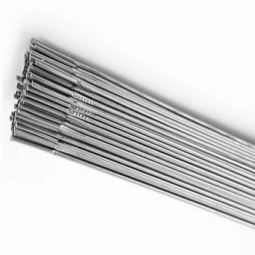 X TIG
X TIG 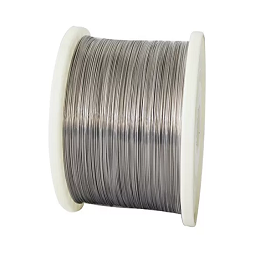
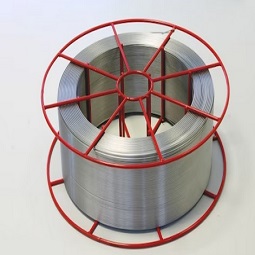






|
Arc welding with coated electrodes: the complete guide
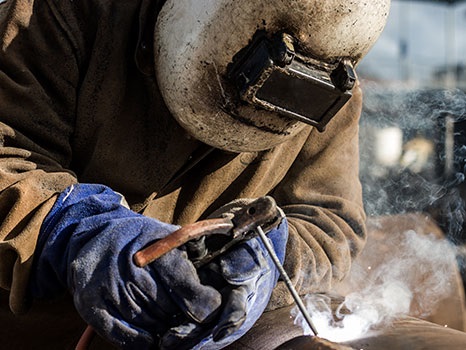
Arc welding with coated electrodes: everything you need to know Introduction Arc welding with coated electrodes is a manual process which the heat source is the electric arc. This striking between the coated electrode (supported by the electrode holder pliers) and the piece to be welded (base material), develops the heat. Overheating causes rapid melting of the base material and the electrode (filler material). As you will have the opportunity to learn more, later you will discover which differences exist between coated electrodes and wire arc welding.
The welding circuit The welding circuit, for the arc welding technique with coated electrodes, is essentially composed of the following elements:
Electricity generator The current generator has the task of powering the electric arc, present between the base material and the electrode, by releasing a quantity of current sufficient to keep it lit. This step is called arc welding with coated electrodes. Electrode welding is based on the principle of constant current: the current supplied by the generator must be constant and never change when the operator moves the electrode relative to the piece. The construction characteristic of the source is to keep the current unchanged during variations length of the arc. These may depend on how the electrode is moving closer or farther away. More constant is the current, and more stable the arc appears, therefore making the operator's work easier. Inside the welder, there is generally a welding current regulation device, which can be mechanical type (magnetic shunt or saturable reactance) or electronic (via SCR systems or inverter systems). It is this distinction that allows us to classify electrode welders into three families based on their construction technology: electromechanical welders, electronic welders (SCR), and inverter welders. The polarity of the generator output current identifies two other categories: AC alternating current generator: The output current of the generator takes the form of a sine wave and, therefore changes its polarity at regular intervals, with a frequency of 50 or 60 Hertz. It is obtained thanks to a transformer, which allows converting the current, with a suitable welding current. It is typical of electromechanical welders. DC (direct current) generator: The current output from the generator has a continuous waveform. The continuous wave is obtained through a device placed downstream of the transformer: the rectifier. This device converts the alternating current to direct current thanks to diode SCR and inverter generators. If the welding circuit consists of a direct current (DC) generator, then a further classification can be introduced, depending on the connection method of the poles from the welding source to the material that should be welded: i) direct polarity connection: The direct polarity connection is verified by connecting the clamp cable (with electrode holder clamp) to the negative (-) pole of the welding source and the mass cable (with mass clamp) to the positive pole (+) of the source. Arc welding with coated electrodes occurs because the electric arc concentrates the heat produced on the piece and promotes its fusion. In this way the core of the electrode deposits as it melts and penetrates the joint to be welded. ii) Reverse Polarity Connection: The reverse polarity connection occurs by connecting the clamp cable (with electrode holder clamp) to the positive (+) pole of the welding source and the mass cable (with mass clamp) to the negative (-) pole of the source. The heat of the electric arc is concentrated more on the end of the electrode. Each type of electrode requires a specific current (AC or DC), and regarding the DC a specific polarity. The choice of electrode is also conditioned by the type of generator used. Incorrect use causes problems in the stability of the arc and consequently quality of the welding.
Electrode holder pliers The electrode holder clamp has the primary function of supporting the electrode, ensuring good electrical contact for the passage of current. Furthermore, it must guarantee sufficient electrical insulation from the welder. Coated electrode The coated electrode is composed of a core and a coating which have different but complementary tasks: the core mainly acts as a current conductor for feeding the arc and as a supply of material for filling the joint, while the coating has the primary function of protecting the melt pool and stabilizing the arc. It is the fundamental element for arc welding with coated electrodes. Earth clamp and cables The ground clamp is a device that ensures, via the ground cable, the closure of the electrical connection between the welding source and the piece to be welded. The clamp cable allows the connection between the electrode holder and the generator. Arc force, Hot Start, Anti stick devices
Characteristics of the coated electrodes
The choice of coating is a part very important and depends on its characteristics, the result of arc welding with coated electrodes. Furthermore, the coating can also contain powdered filler metal, to increase the quantity of the deposited material and therefore the welding speed. In this case, we are talking about high-performance electrodes. Subdivision of electrodes for arc welding There are different types of coated electrodes on the market, and their chemical composition strongly influences the result of arc welding. In fact, the stability of the electric arc, the depth of penetration, the deposition of the material, and the purity of the bath, i.e. their fields of application, depend on the chemical composition of the coated electrodes. Considering the type of coating, the main types of electrodes are: Acid-Coated Electrodes: The coatings of these electrodes are made of iron oxides, manganese ferroalloys and silicon. The choice of these coatings in arc welding with coated electrodes guarantees good arc stability and makes them suitable for both alternating current (AC) and direct current (DC). They have a very fluid bath that does not allow welding in position; furthermore, they do not have great cleaning power on the base material and this can cause cracks. They cannot withstand high drying temperatures, with the consequent risk of residual humidity and therefore hydrogen inclusions in the solder Rutile-Coated Electrodes: The coating of this electrode is essentially composed of a mineral called rutile. They're made up of 95% titanium dioxide, a very stable compound which guarantees excellent stability of the arc and high fluidity of the bath. It also provides an appreciable aesthetic effect on the weld. However, the task of the rutile coating is to guarantee a smooth, easy-to-achieve fusion. This coating facilitates the formation of abundant and viscous slag which allows good smoothness in welding, especially in a flat position. In this case, the cord appears visually beautiful and regular. Unfortunately, even these coatings are not highly effective as cleaners and are therefore recommended where the base material does not contain many impurities. Furthermore, they do not dry well and therefore develop a lot of hydrogen in the welding. In some applications, rutile is combined with another component typical of other coatings, such as cellulose (rutil cellulose electrodes) or fluorite (rutil base electrodes). The aim is usually to obtain an electrode with a stable arc but with higher-performing welding characteristics. The stability of the arc, in arc welding with electrodes, is a prerogative that makes it possible to use this electrode with both alternating current (AC) and direct current (DC) in direct polarity. It is mainly used on reduced thicknesses.
Electrodes with Cellulose Coating The coating of these electrodes consists mainly of cellulose integrated with ferroalloys (magnesium and silicon). The coating gasifies almost completely, thus allowing arc welding with electrodes even in a vertical downward position. This is not allowed with other types of electrodes: the high gasification of cellulose reduces the quantity of slag present in the weld. The high development of hydrogen (deriving from the particular chemical composition of the coating) causes the welding bath to be "hot", with the melting of a considerable quantity of base material. This results in welds that penetrate deeply, with little slag in the bath. The mechanical characteristics of this arc welding are excellent. However, the aesthetic level is quite low due to the total absence of liquid protection offered by the coating prevents the modelling during solidification. The welding current, given the poor stability of the arc, is usually a direct current (DC) with reverse polarity. Basic Coated Electrodes The coating of the basic electrodes is made up of iron oxides, ferroalloys and above all calcium and magnesium carbonates which, by adding calcium fluoride, fluorite is obtained, a mineral suitable for facilitating fusion. They have a high purification capacity of the base material, resulting in quality welds with notable mechanical robustness. Furthermore, these electrodes withstand high drying temperatures, so they do not contaminate the bath with hydrogen. Fluorite makes the arc very unstable: the bath is less fluid, and there are frequent short circuits due to the transfer of the filler material in large drops. The arc must also be kept very short due to the low volatility of the coating itself. All these characteristics require good experience on the part of the welder. They have a hard slag that is difficult to remove and must be completely removed in case of additional passage of welding. These electrodes are suitable for carrying out positional, vertical, overhead welding, etc. Regarding the current to be used, it is advisable to use direct current (DC) generators in reverse polarity. Basic electrodes are known for the very high quantity of material deposited and are suitable for welding thick joints. They are highly hygroscopic, bennypass recommends keeping these electrodes in dry environments and in well-closed boxes. If this is not possible, it is advisable to proceed with drying the electrode again before use. MMA welding of materials If the steel is of an easily recognizable composition, rutile electrodes can be used thanks to their greater ease of welding initiation and the good aesthetics of the seam. Medium and High Carbon Steels Practically, arc welding with coated electrodes of steels with medium and high carbon content (>0.25%) can cause the formation of structural defects. For this reason, the application of the electrode process is recommended, especially for welding joints with medium-large thicknesses and using basic electrodes. In these cases, a high-quality weld is combined with good resistance to breakage. The welding of steel pipes takes place using cellulosic electrodes, where high penetration and good workability of the electrode are required. Chamfering is always recommended, with a chamfer angle sufficient for an almost complete insertion of the electrode into the bevel. Stainless steels, Aluminium and its Alloys, Cast Iron Regarding special materials such as stainless steel, aluminium (and its alloys) and cast iron, electrodes specific to the material treated are used. Stainless steels are welded in direct current (DC) with reverse polarity; Specific electrodes are used, which differ in the metallurgical composition of the material to be welded (presence of chromium (Cr) and nickel (Ni) in variable percentages). Aluminium and light alloys are welded in direct current (DC) with reverse polarity. The machine must be equipped with a rather high trigger dynamic to guarantee the ignition of the electrode. Special electrodes are also used in this case, which differ in the metallurgical composition of the material to be welded (presence of magnesium (Mg) and silicon (Si) in variable percentages). Cast iron is welded in direct current (DC) with reverse polarity; most cast iron structures and mechanical parts are obtained by casting. For this reason, welding is used to correct any casting defects and for repairs. Special electrodes are used and the base material must be adequately heated before use.
|
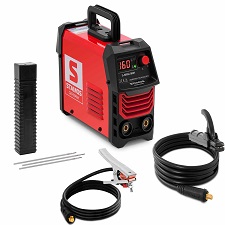
 Saldatrice a elettrodo - 160 A - Elettrodi rivestiti in rutile cellulosa Ø 2.5 x 350 mm - 5 kg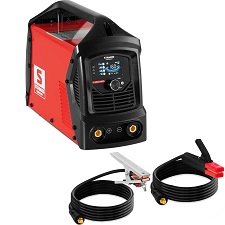
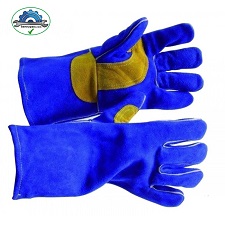
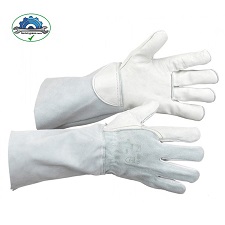 Mix Hi Weld gloves in full grain cowhide leather size 10
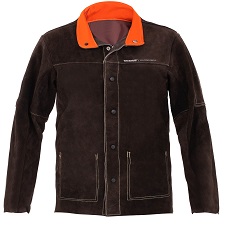
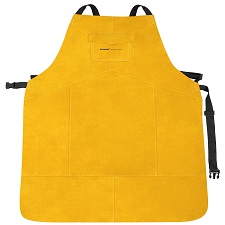 Leather apron for welder
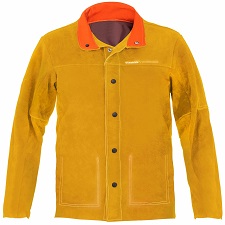


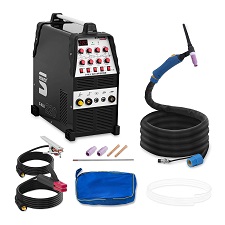
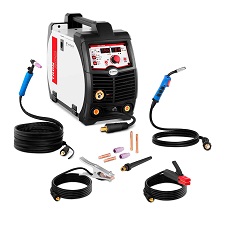
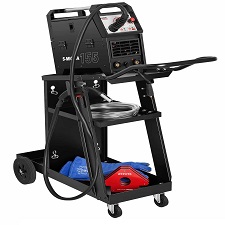 Trolley for welding machine transport - folded - 3 support surfaces - 75 kg
|
Welding for Beginners A welder will be useful in any situation, whether it is repairing a fence, fixing a garden table or building a simple metal support. Which is best for carrying out simple daily tasks? Which is most appropriate for beginners?
How does a welding machine work? If you have no experience with welding you should first take the time to learn how to use the welding machine and learn about its design. This will allow you to choose the right welding machine to get started. How does a welding machine work? Each type of welding machine differs operationally, but between them, they have numerous features in common in terms of design. This includes items such as:
What type of welding machine is best for beginners? Which welding machine should you choose? You can choose between three basic machine types:
What is the best welder for beginners? In this case, MIG/MAG welding machines are recommended. The MIG/MAG method uses an electrode in the form of a wire, which adheres to the welded molten metal when heated. This then forms a weld. In this method, shielding gas is used to protect the weld pool from oxidation, which results in higher quality, stronger weld and increased corrosion resistance. In MIG welding, inert gases such as helium or argon are used. This allows to work on elements made of aluminium, magnesium, copper and other non-ferrous metals. MAG welding is carried out under the shield of active gases or mixtures, for example, carbon dioxide and argon. This allows unalloyed, high-alloyed and low-alloyed steels to be joined. MIG/MAG welding machines are recommended for beginners, as they are relatively easy to use. Using a consumable electrode that doesn't need to be powered externally facilitates the process. Versatility is another advantage. MIG/MAG welding machines are used in industry but are also suitable for domestic use and can also be used to connect thicker metal elements. Another advantage is the low cost of consumables. MMA inverter welders are also recommended for beginners. In this case, the weld is created by joining the electrode core and the material to be welded. The welding arc shield is created as a result of melting the electrode coating. Since the gas comes from the stream, a cylinder is not required, unlike MIG/MAG welders. Once the work is completed, it is necessary to remove the slag layer that forms during welding. Inverter MMA welders are considered even better for beginners than MIG/MAG welders, where the wire feed speed is relatively fast. Working with an MMA welder requires fluidity, but, at the same time, it is a fairly slow process. The creation of welds from this machine is more technical and precise if compared with MIG/MAG method, but errors are less annoying and are suitable for learning the basics and simpler uses. TIG welders are the third most popular type of machine. How do they work? Welding takes place in a shield of inert gas creating an electric arc with a non-consumable electrode. The process also often uses an additional rod-shaped flux. TIG welders allow you to connect even very thin elements and create high-quality welds, including artistic ones. These welds are also more durable. However, in general, beginners are not recommended to use TIG welding machines, as they are quite difficult to master. Before learning TIG welding, it would be good to master the basics using MMA or MIG/MAG welders. Which welding machine is ideal for home use? Before deciding which welding machine to choose, check in advance which electrical system you have at home. The welders are powered by a single-phase 230 V or three-phase 400 V system. Normally, three-phase networks are used where powerful electrical equipment is more common. If you have an induction hob or use electric heat, you may have a 400V installation. Many models of welding machines can switch phases between 230 and 400 V. Which welding machine is suitable for home use? Models with a 230 V single-phase power supply are sufficient and can be easily connected to any socket. 230V welding machines typically have an amperage around 150-250A of range. What does this mean in practice? This is the value of the welding current. The higher the value, the more possibilities you have to connect two elements with big thicker. A household soldering iron can have a welding current of up to 200 A. This is enough for most DIY jobs. The duty cycle is also an important parameter. Shows the percentage of time that can be soldered continuously for more than 10 minutes. For example, if your welding machine has a duty cycle of 60 percent, this means that after 6 minutes you will have to let the device cool down for 4 minutes. Which welding machine is ideal for home use? Even models with lower duty cycle values, in the 15-40% range, will allow you to carry out the simplest jobs. No need to immediately choose models with a 60% duty cycle because they are designed for more professional use. Another important aspect to consider when choosing a welding machine for home is the size of the device. Portable welding machines are the best option, as they are relatively small and therefore easy to store. Not require a transport cart.
What is the best type for beginners? Which MIG/MAG welder you should buy? In addition to the parameters mentioned above, such as welding current, power method or dimensions, it is also necessary for ease of use. If you choose MIG/MAG welders, it is important to evaluate the type of wire feeder. If you are a beginner, choose a model with a built-in power supply rather than an external one, because the price may be higher than the welding machine itself. The internal power supply should have an adjustable feed rate and a shielding gas connection. You should also look for equipment that allows you to change settings easily, even while wearing gloves. This will significantly increase your safety while you work. For similar reasons, machines with an overload indicator are also a great idea, because you'll know when to stop working due to cool down the welding machine A good MIG/MAG welding machine for beginners is one that allows work with FCAW (Flux-Cored Arc Welding). This type of welder uses a special flux-cored wire, also known as flux-cored wire. The flux placed in the wire releases shielding gas when heated. Why is important this machine for domestic use? This will allow you to avoid storing gas cylinders. Which inverter welding machine is ideal for beginners? Before choosing an MMA inverter welder, check the technology used to make it. If it uses IGBT (Insulated Gate Bipolar Transistors) bipolar transistors with insulated gates, it will be lightweight and short-circuit proof. What else should you pay attention to when choosing an inverter welding machine? The Hot Start feature is very useful, as the welding current will temporarily increase when the arc strikes, making it easier to start the arc. The Arc Force also will be an advantage. This function controls the dynamics of the welding arc, helping to prevent short circuits and allowing you to create better welds. Which welding machine should you choose? Summary What is the best welder for beginners? The most recommended choice for beginners is an MMA inverter machine, as it does not require a shielding gas cylinder and will allow you to work at a relaxed pace. Furthermore, MMA inverter welders are relatively cheap. Once you have gained some experience in welding, you can consider purchasing a MIG/MAG welder, which is generally more versatile and offers many possibilities for welding metals.
|
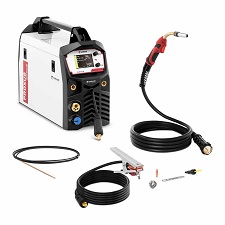
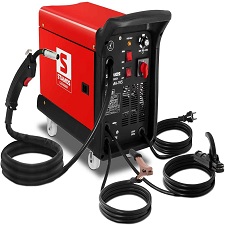 MIG/MAG welding machine – 195 A – 230 V – portable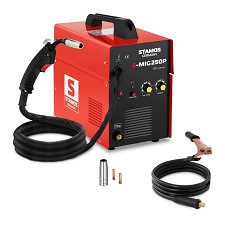
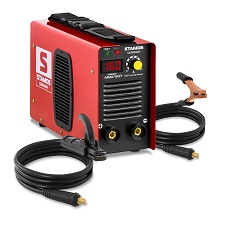
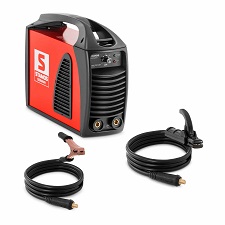 MMA welder - 180 A - 230 V - IGBT - Hot Start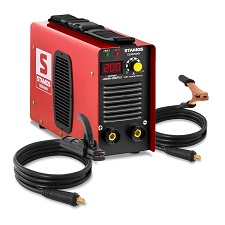
|
TIG welding: description, information and equipment Not sure which welding method to choose? The following article will help you understand the basics of TIG welding. Find out what the most important parameters are, how to choose the right equipment and also read the most common mistakes made by welders. We will also try to answer the following question: when is TIG welding used? TIG welding parameters This method uses a non-consumable tungsten electrode, shielded by inert gases (most often argon and helium) or their mixtures. Tungsten, both in its pure or enriched with oxides, is used for the production of electrodes. Color markings indicate chemical composition:
The electrodes also have different diameters. The thinnest rods are 1 mm thick and the thickest 6.4 mm. The arc strikes between the electrode and the processed material. During the arc welding process, the shielding gas cools the electrode and protects the weld pool from atmospheric gases. Since no flux is used, the joining process does not generate any significant changes in the chemical composition of the materials. There is no splashing either. The most important parameters of TIG welding are:
A welder with many years of professional experience will intuitively know how to set the current. But what happens if you don't have enough experience and find it difficult to estimate the appropriate value? By using the trial and error method, you might just waste a lot of material. In these situations, correlation graphs will definitely be useful. They help you choose the right current and electrode, depending on what you are welding. For example: mild steel with a thickness of 2-3 mm requires an intensity of 60-70 A and the use of an electrode with a diameter of 2 mm. You can easily find these tables by consulting the websites here, electrode manufacturer websites, and technician manuals. For beginners, we recommend welding machines with smooth current regulation. TIG welding joints The TIG method allows for clean, high-quality welds, which is considered by many welders one of the main advantages. However, no matter how careful you are and what connection method you use, the following types are generally used:
Errori comuni nella saldatura TIG Novice welders can make many mistakes. This is perfectly normal and takes some time to learn it. Below is a list of the most common errors:
If you make these mistakes, your weld will be uneven and the sheet metal will overheat. Of course, it is possible to solder this way, but it will definitely not be neat or aesthetically pleasing Always make sure you have the right welding current, gas flow and bond type available. If the weld is still porous despite this, you need to make sure that the material is of good quality. Sometimes steel is difficult to weld and it is almost impossible to make a perfect arc weld. When can TIG welding be used? TIG welding is considered a universal method. It is widespread for welding aluminium and its alloys. An alternating current is used. In addition to aluminium, TIG is also used for other non-ferrous metals such as magnesium, titanium, copper and nickel. It is suitable for all types of weldable steels (including stainless and acid-resistant steels). This method is usually recommended for joining thin sheets, e.g. car chassis. In addition to the automotive sector, it is also used in many other industries, including construction (various pipes and ducts), aviation and even the space industry. TIG welder A TIG welder is used to weld with the TIG method. There are many models available on the market that allow you to use TIG welding with direct and alternating current. These tools also allow welding to be performed with a covered electrode. The tools are very universal and can be used in various welding positions. Before buying a welding machine, it is important to check for additional features that will later make your work easier. At the beginning of the article we mentioned smooth current regulation, which makes setting this parameter easier for novice welders. Being able to choose between 2T and 4T mode can also be useful.
The most important thing is experience with welding Knowing the basics of inert gas welding with a non-consumable electrode, you can start stocking up on the necessary equipment: a TIG welder, electrodes and other necessary TIG accessories. Welders gain experience over many years, so don't be discouraged by early failures: uneven welds or overheated material. It is important to know the most common errors so that you can correct your own more easily. Continuously improving yourself is part of becoming an expert welder. Not only acquire new skills but also make the most of the ones you already have. |
|
ENiCrMo4T1-1/T1-4 Stoody C276-T1 Specification Pinnacle Alloys ENiCrMo4T1-1/4 has a nominal composition (wt.-%) of 57 Ni, 16 Mo, 15.5 Cr, 5.5 Fe, 4 W, with low carbon. Electrodes of this classification are used for welding low-carbon nickel-chromium-molybdenum alloys to steel or other nickel-base alloys, and for clad side of joints in steel clad with low-carbon nickel-chromium-molybdenum alloys. Typical specifications for the nickel-chromium-molybdenum base metals are ASTM B574, B575, B619, B622, and B626, all of which have a UNS Number of N10276. Pinnacle Alloys ENiCrMo4T1-1/4 has excellent resistance to crevice corrosion and pitting. It is used in pipelines, pressure vessels, chemical processing plants, offshore oil and gas facilities, and marine environments. It delivers superb performance characteristics in all positions, has little spatter, and easy-to-remove slag. Minimal weaving is required to achieve a flat, well-washed bead.
ENiCrMo4T1-1/T1-4 Stoody C276-T1 Details
Application Chart of ENiCrMo4T1-1/T1-4 Stoody C276-T1 This filler metal is frequently used for welding the clad side of joints on steel in the chemical, petrochemical and petroleum industries. Alloy C276 offers excellent resistance to a wide range of chemicals including the corrosive effects of wet chlorine gas, hypochlorite and chlorine dioxide solutions. Other uses would include hot contaminated mineral acids, solvents, solutions (organic and inorganic) contaminated by chlorine or chlorides, dry chlorine acetic or ferric acids, seawater and brine solutions ENiCrMo4T1-1/T1-4 Stoody C276-T1Chemical Composition
For more symbols click here
Mechanical Properties of ENiCrMo4T1-1/T1-4 Stoody C276-T1
Typical Welding Parameters of ENiCrMo4T1-1/T1-4 Stoody C276-T1
Our Pricing list of ENiCrMo4T1-1/T1-4 Stoody C276-T1
Conclusion In conclusion, Stoody C276-T1 is a gas-shielded flux-cored wire that can be used for welding in all positions using 100% CO2 or Argon/CO2 mixtures. The wire possesses excellent weldability and can be used in a wide variety of similar and dissimilar welding and cladding applications.
ENiCrMo4T1-1/T1-4 Stoody C276-T1 Wire suppliers
|
|||||||||||||||||||||||||||||||||||||||||||||||||||||||||||||||||||||||||||||||||||||||||||||||||||||||||||||||||||||||||
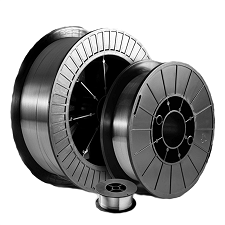 C276-T1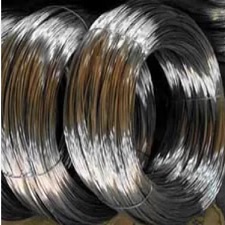

+(39) 347 051 5328
Italy - Kazakhstan


09.00am to 18.00pm
About
We offer the best and economical solutions, backed by 27+ years of experience and international standards knowledge, echnological changes, and industrial systems.
Our Services
Marketing Materials


Marketing Materials1


