|
The Discoverers of the Elements
| |
1A |
2A |
|
|
|
|
|
|
|
|
|
|
|
3A |
4A |
5A |
6A |
7A |
8A |
| |
(1) |
(2) |
|
|
|
|
|
|
|
|
|
|
|
(13) |
(14) |
(15) |
(16) |
(17) |
(18) |
| |
|
|
3B |
|
4B |
5B |
6B |
7B |
— |
8B |
— |
1B |
2B |
|
|
|
|
|
|
| |
|
|
(3) |
|
(4) |
(5) |
(6) |
(7) |
(8) |
(9) |
(10) |
(11) |
(12) |
|
|
|
|
|
|
| 1 |
H |
|
|
|
|
|
|
|
|
|
|
|
|
|
|
|
|
|
He |
| 2 |
Li |
Be |
|
|
|
|
|
|
|
|
|
|
|
B |
C |
N |
O |
F |
Ne |
| 3 |
Na |
Mg |
|
|
|
|
|
|
|
|
|
|
|
Al |
Si |
P |
S |
Cl |
Ar |
| 4 |
K |
Ca |
Sc |
|
Ti |
V |
Cr |
Mn |
Fe |
Co |
Ni |
Cu |
Zn |
Ga |
Ge |
As |
Se |
Br |
Kr |
| 5 |
Rb |
Sr |
Y |
|
Zr |
Nb |
Mo |
Tc |
Ru |
Rh |
Pd |
Ag |
Cd |
In |
Sn |
Sb |
Te |
I |
Xe |
| 6 |
Cs |
Ba |
La |
|
Hf |
Ta |
W |
Re |
Os |
Ir |
Pt |
Au |
Hg |
Tl |
Pb |
Bi |
Po |
At |
Rn |
| 7 |
Fr |
Ra |
Ac |
|
Rf |
Db |
Sg |
Bh |
Hs |
Mt |
Ds |
Rg |
Uub |
— |
Uuq |
— |
— |
— |
— |
| |
|
|
|
|
|
|
|
|
|
|
|
|
|
|
|
|
|
|
|
| 6 |
|
|
|
|
Ce |
Pr |
Nd |
Pm |
Sm |
Eu |
Gd |
Tb |
Dy |
Ho |
Er |
Tm |
Yb |
Lu |
|
| 7 |
|
|
|
|
Th |
Pa |
U |
Np |
Pu |
Am |
Cm |
Bk |
Cf |
Es |
Fm |
Md |
No |
Lr |
|
Discoverers of the Naturally-Occurring Elements
|
Atomic
Number
|
Symbol
|
Name
|
Discoverer
|
City and Country
|
Year
|
| 79 |
Au |
Gold |
Known since ancient times |
|
|
| 47 |
Ag |
Silver |
Known since ancient times |
|
|
| 29 |
Cu |
Copper |
Known since ancient times |
|
|
| 80 |
Hg |
Mercury |
Known since ancient times |
|
|
| 82 |
Pb |
Lead |
Known since ancient times |
|
|
| 26 |
Fe |
Iron |
Known since ancient times |
|
|
| 50 |
Sn |
Tin |
Known since ancient times |
|
|
| 16 |
S |
Sulfur |
Known since ancient times |
|
|
| 6 |
C |
Carbon |
Known since ancient times |
|
|
| 51 |
Sb |
Antimony |
Known since ancient times in the form of antimony sulfide (stibium, Sb2S3); it is not certain when metallic antimony was first prepared, but it was known to the alchemists in the Middle Ages |
|
|
| 33 |
As |
Arsenic |
Known since ancient times in the mineral orpiment (arsenic sulfide, As2S3); first isolated as an element by the alchemist Albertus Magnus (Albert the Great) |
|
1250 |
| 30 |
Zn |
Zinc |
Known since ancient times in various ores and alloys; isolated as a pure metal in the 1500s |
|
1500s |
| 83 |
Bi |
Bismuth |
Discovered in the 1400s, but often confused with tin and lead (Claude François Geoffroy showed in 1753 that this metal is a distinct element) |
|
1400s |
| 15 |
P |
Phosphorus |
Hennig Brandt |
Hamburg, Germany |
1669 |
| 27 |
Co |
Cobalt |
Georg Brandt |
Stockholm, Sweden |
1735 |
| 78 |
Pt |
Platinum |
Known to the pre-Columbian South Americans; first reported in Europe by Don Antonio de Ulloa in 1735 |
South America |
1735 |
| 28 |
Ni |
Nickel |
Baron Axel Fredrik Cronstedt |
Stockholm, Sweden |
1751 |
| 12 |
Mg |
Magnesium |
Joseph Black; first isolated in the metallic form by Sir Humphrey Davy in 1808 |
Edinburgh, Scotland |
1755 |
| 1 |
H |
Hydrogen |
Henry Cavendish
Hydrogen had been produced earlier by Theophratus Bombastus von Hohenheim (Paracelsus) and later by Robert Boyle, but Cavendish was the first to recognize it as being an element) [see entry on Oxygen]. The name "hydrogen" was given by Antoine Lavoisier in 1789, in recognition of the fact that it burned to make water (hydro + genes = "water forming").
|
London, England |
1766 |
| 7 |
N |
Nitrogen |
Daniel Rutherford
Rutherford referred to the gas as "noxious air" or "fixed air." It was also investigated by Scheele, Cavendish, and Priestly, who referred to it as "phlogisticated air." When Lavoisier correctly interpreted the process of combustion (see entry for Oxygen), nitrogen was recognized as a pure elemental substance.
|
Edinburgh, Scotland |
1772 |
| 8 |
O |
Oxygen |
Joseph Priestly (independently by Carl Wilhelm Scheele in Uppsala, Sweden, probably before 1773) [Priestly's results were published first, so he is usually given credit for the discovery.]
The discovery of oxygen, nitrogen, and hydrogen is a very tangled story, because it is mixed up with the now-defunct phlogiston theory of combustion. The theory was proposed by Johann Joachim Becher in 1667, and extended by Georg Ernst Stahl in the early 1700s, and was the first attempt by chemists to try to make since of combustion, repiration, and calxing of metals (now known as oxidation). In this theory, phlogiston was released when a substance burned or when respiration occurred in living organisms, or when metals rusted. When nitrogen was discovered, it was believed to be "phlogisticated air," which would not support combustion because it had already absorbed the maximum possible amount of phlogiston. Scheele and Priestly independently discovered a gas (later called oxygen) that supported combustion much more readily than normal air, which was referred to as "dephlogisticated air" because it was able to pull phlogiston out of other substances. Hydrogen was thought to be phlogiston itself, or "inflammable air." There were a number of problems with the phlogiston theory, however, not least of which was the fact that while wood and other organic compounds lost mass then burned (i.e., when phlogiston was lost), metals gained weight when phlogiston was lost to form calxes (oxides), which meant that phlogiston would either have to have "negative weight" or be extremely buoyant.
Antoine Lavoisier (Paris, France) reinterpreted the results of these experiments by realizing that combustion, respiration, and rusting all involved the combination of substances with oxygen. Lavoisier named the gas "oxygen" from the Latin words for "acid forming" (oxy + genes), because he believed it to be an essential component of all acids (although this later turned out not to be the case).]
|
Leeds, England |
1774 |
| 17 |
Cl |
Chlorine |
Carl Wilhelm Scheele |
Uppsala, Sweden |
1774 |
| 25 |
Mn |
Manganese |
Johan Gottlieb Gahn |
Stockholm, Sweden |
1774 |
| 24 |
Cr |
Chromium |
Nicholas Louis Vauquelin |
Paris, France |
1780 |
| 42 |
Mo |
Molybdenum |
Peter J. Hjelm |
Uppsala, Sweden |
1781 |
| 52 |
Te |
Tellurium |
Baron Franz Joseph Müller von Reichenstein |
Sibiu, Romania |
1783 |
| 74 |
W |
Tungsten |
José and Fausto Elhuijar |
Vergara, Spain |
1783 |
| 92 |
U |
Uranium |
Martin Heinrich Klaproth |
Berlin, Germany |
1789 |
| 40 |
Zr |
Zirconium |
Martin Heinrich Klaproth; first isolated as a pure metal by Jöns Jakob Berzelius (1824) |
Berlin, Germany (University of Berlin) |
1789 |
| 38 |
Sr |
Strontium |
Adair Crawford; first isolated as a pure metal by Sir Humphrey Davy (1808) |
Edinburgh, Scotland |
1790 |
| 22 |
Ti |
Titanium |
William Gregor; first isolated as a pure metal by Lars Fredrick Nilson (1887) |
Creed, Cornwall, England |
1791 |
| 39 |
Y |
Yttrium |
Johan Gadolin |
Abo, Finland |
1794 |
| 4 |
Be |
Beryllium |
Nicholas Louis Vauquelin; first isolated as a pure metal by Friedrich Wöhler and Antoine A. Bussy (independently) in 1828 |
Paris, France |
1797 |
| 41 |
Nb |
Niobium |
Charles Hatchett
Hatchett's name for the element was "columbium" (Cb), but he was not able to isolate the pure metal, and his claim was disputed, because of the element's close similarity to tantalum. Heinrich Rose and Jean Charles Galissard de Marignac "rediscovered" the element in 1846, and named it "niobium." The IUPAC accepted "niobium" as the official name in 1950, but the element is still referred to as "columbium" by some metallurgists and metal-supply companies.
|
London, England |
1801 |
| 23 |
V |
Vanadium |
Andrés Manuel del Río
del Río's notes of his research were lost in a shipwreck, and many European chemists thought that the metal he had found was just another sample of chromium. When the metal was "rediscovered "by Nils Gabriel Sefström (Falun, Sweden, 1831), Friedrich Wöhler concluded that del Río's original finding had been correct.
|
Mexico City, Mexico |
1801 |
| 73 |
Ta |
Tantalum |
Anders Ekeberg |
Uppsala, Sweden |
1802 |
| 58 |
Ce |
Cerium |
Jöns Jakob Berzelius and Wilhelm von Hisinger; first isolated as a pure metal by William F. Hillebrand and Thomas H. Norton in 1875 |
Vestmanland, Sweden |
1803 |
| 77 |
Ir |
Iridium |
Smithson Tennant |
London, England |
1803 |
| 76 |
Os |
Osmium |
Smithson Tennant and William Hyde Wollaston |
London, England |
1803 |
| 46 |
Pd |
Palladium |
William Hyde Wollaston |
London, England |
1803 |
| 45 |
Rh |
Rhodium |
William Hyde Wollaston |
London, England |
1803 |
| 11 |
Na |
Sodium |
Sir Humphrey Davy |
London, England |
1807 |
| 19 |
K |
Potassium |
Sir Humphrey Davy |
London, England |
1807 |
| 20 |
Ca |
Calcium |
Sir Humphrey Davy |
London, England |
1808 |
| 56 |
Ba |
Barium |
Sir Humphrey Davy |
London, England |
1808 |
| 5 |
B |
Boron |
Joseph Louis Gay-Lussac and Louis Jacques Thénard (Paris); Sir Humphrey Davy (London) [independently] |
London, England and Paris, France |
1808 |
| 44 |
Ru |
Ruthenium |
Jędrzej Śniadecki (Poland, University of Vilno, 1808), however his findings could not be confirmed at the time; the metal was "rediscovered" by Gottfried W. Osann (University of Tartu, Russia) in 1828, and was first isolated as a pure metal by Karl Klaus (Russia) in 1844 |
Poland, University of Vilno |
1808 |
| 53 |
I |
Iodine |
Bernard Courtois |
Dijon, France |
1811 |
| 48 |
Cd |
Cadmium |
Friedrich Strohmeyer |
Göttingen, Germany |
1817 |
| 3 |
Li |
Lithium |
Johan August Arfvedson; first isolated as a pure metal by Robert Bunsen and Augustus Mathhiesen in 1855 |
Stockholm, Sweden |
1817 |
| 34 |
Se |
Selenium |
Jöns Jakob Berzelius |
Stockholm, Sweden |
1817 |
| 14 |
Si |
Silicon |
Jöns Jakob Berzelius |
Stockholm, Sweden |
1824 |
| 13 |
Al |
Aluminum |
Hans Christian Ørsted |
Copenhagen, Denmark |
1825 |
| 35 |
Br |
Bromine |
Antoine J. Balard (France); C. Löwig (Germany) |
Montpellier, France; Heidelberg, Germany |
1826 |
| 90 |
Th |
Thorium |
Jöns Jakob Berzelius |
Stockholm, Sweden |
1829 |
| 57 |
La |
Lanthanum |
Carl Gustav Mosander |
Stockholm, Sweden |
1839 |
| 68 |
Er |
Erbium |
Carl Gustaf Mosander |
Stockholm, Sweden |
1842 |
| 65 |
Tb |
Terbium |
Carl Gustaf Mosander |
Stockholm, Sweden |
1843 |
| 55 |
Cs |
Cesium |
Robert Bunsen and Gustav R. Kirchhoff |
Heidelberg, Germany (University of Heidelberg) |
1860 |
| 37 |
Rb |
Rubidium |
Robert Bunsen and Gustav R. Kirchhoff |
Heidelberg, Germany (University of Heidelberg) |
1861 |
| 81 |
Tl |
Thallium |
William Crookes |
London, England |
1861 |
| 49 |
In |
Indium |
Ferdinand Reich and Hieronymous Richter |
Freiberg, Germany |
1863 |
| 2 |
He |
Helium |
Pierre Janssen (the yellow spectral line due to this element was found by Janssen during a solar eclipse he observed from India); Norman Lockyer and Edward Frankland |
The Sun |
1868 |
| 31 |
Ga |
Gallium |
Paul Émile Lecoq de Boisbaudran |
Paris, France |
1875 |
| 67 |
Ho |
Holmium |
Marc Delafontaine and Jacques-Louis Soret (Switzerland); Per Teodor Cleve (Sweden) |
Geneva, Switzerland; Uppsala, Sweden |
1878 |
| 70 |
Yb |
Ytterbium |
Jean Charles Galissard de Marignac |
Geneva, Switzerland |
1878 |
| 62 |
Sm |
Samarium |
Paul Émile Lecoq de Boisbaudran |
Paris, France |
1879 |
| 21 |
Sc |
Scandium |
Lars Fredrick Nilson |
Uppsala, Sweden |
1879 |
| 69 |
Tm |
Thulium |
Per Teodor Cleve |
Uppsala, Sweden |
1879 |
| 64 |
Gd |
Gadolinium |
Jean Charles Galissard de Marignac |
Geneva, Switzerland |
1880 |
| 59 |
Pr |
Praseodymium |
Baron Carl Auer von Welsbach (see entry below on Neodymium) |
Vienna, Austria |
1885 |
| 60 |
Nd |
Neodymium |
Baron Carl Auer von Welsbach
The elements praseodymium and neodymium were originally found by Carl Gustav Mosander in 1841 as a mixture of the two elements; because the new substance was so chemically similar to lanthanum, he called it "didymium" because it was a "twin" of lanthanum, which he had discovered in 1839. In 1882, Bohuslav Brauner, using atomic spectroscopy, showed that "didymium" was a mixture of two elements. The elements were finally separated by von Welsbach in 1885, and rechristened as "praseodymium" ("green twin") and neodymium ("new twin").
|
Vienna, Austria |
1885 |
| 66 |
Dy |
Dysprosium |
Paul Émile Lecoq de Boisbaudran |
Paris, France |
1886 |
| 9 |
F |
Fluorine |
Henri Moissan |
Paris, France |
1886 |
| 32 |
Ge |
Germanium |
Clemens A. Winkler |
Freiberg, Germany |
1886 |
| 18 |
Ar |
Argon |
John William Strutt (3rd Baron Rayleigh) and Sir William Ramsay
Argon had been observed by Henry Cavendish in 1785, but had not recognized it as a new element.
|
London, England |
1894 |
| 36 |
Kr |
Krypton |
Sir William Ramsay and Morris Travers |
London, England |
1898 |
| 10 |
Ne |
Neon |
Sir William Ramsay and Morris Travers |
London, England |
1898 |
| 88 |
Ra |
Radium |
Pierre and Marie Curie |
Paris, France |
1898 |
| 84 |
Po |
Polonium |
Marie Curie |
Paris, France |
1898 |
| 54 |
Xe |
Xenon |
Sir William Ramsay and Morris Travers |
London, England |
1898 |
| 89 |
Ac |
Actinium |
André-Louis Debierne |
Paris, France |
1899 |
| 86 |
Rn |
Radon |
Friederich Ernst Dorn |
Halle, Germany |
1900 |
| 63 |
Eu |
Europium |
Eugène-Antole Demarçay |
Paris, France |
1901 |
| 71 |
Lu |
Lutetium |
Georges Urbain (France); Charles James (USA, University of New Hampshire) |
Paris, France; Durham, New Hampshire, USA |
1907 |
| 91 |
Pa |
Protactinium |
Otto Hahn and Lise Meitner (Germany, 1918); Kasimir Fajans and O. H. Göhring (Pa-234, Germany, 1913); Frederick Soddy, John Cranston, and Alexander Fleck (Pa-231, UK, 1917) |
Germany; United Kingdom |
1913 |
| 72 |
Hf |
Hafnium |
Dirk Coster and Georg von Hevesey |
Copenhagen, Denmark |
1923 |
| 75 |
Re |
Rhenium |
Walter Noddack, Ida Tacke, and Otto Berg |
Berlin, Germany |
1925 |
Discoverers of the Artificially Produced Elements
Atomic
Number |
Symbol |
Name |
Discoverer |
City and Country |
Institution |
Method of Production |
Year |
| 43 |
Tc |
Technetium |
Carlo Perrier and Emilio Segrè |
Palermo, Sicily |
University of Palermo |
bombardment of molybdenum with deuterium |
1937 |
| 87 |
Fr |
Francium |
Marguerite Perey |
Paris, France |
Curie Institute |
alpha-decay product of actinium |
1939 |
| 85 |
At |
Astatine |
Dale R. Corson, K. R. MacKenzie, and Emilio Segrè |
Berkeley, California, USA |
University of California |
bombardment of bismuth with alpha particles |
1940 |
| 93 |
Np |
Neptunium |
Edwin M. McMillan and Philip H. Abelson |
Berkeley, California, USA |
University of California |
bombardment of U-238 with neutrons |
1940 |
| 94 |
Pu |
Plutonium |
Glenn T. Seaborg, Arthur C. Wahl, and Joseph W. Kennedy |
Berkeley, California, USA |
University of California |
bombardment of uranium with deuterium |
1940 |
| 95 |
Am |
Americium |
Glenn T. Seaborg, Ralph A. James, Leon O. Morgan, and Albert Ghiorso |
Chicago, Illinois, USA |
University of Chicago |
bombardment of Pu-240 with neutrons |
1944 |
| 96 |
Cm |
Curium |
Glenn T. Seaborg, Ralph A. James, and Albert Ghiorso |
Berkeley, California, USA |
University of California |
bombardment of Pu-239 with alpha-particles |
1944 |
| 61 |
Pm |
Promethium |
Jacob A. Marinsky, Lawrence E. Glendenin and Charles D. Coryell |
Oak Ridge, Tennessee, USA |
Oak Ridge National Laboratory |
fission product of uranium |
1945 |
| 97 |
Bk |
Berkelium |
Stanley G. Thompson, Albert Ghiorso, and Glenn T. Seaborg |
Berkeley, California, USA |
University of California |
bombardment of americium-241 with alpha particles |
1949 |
| 98 |
Cf |
Californium |
Stanley G. Thompson, Kenneth Street, Jr., Albert Ghiorso, and Glenn T. Seaborg |
Berkeley, California, USA |
University of California |
bombardment of Cm-242 with alpha-particles |
1950 |
| 99 |
Es |
Einsteinium |
Gregory R. Choppin, Stanley G. Thompson, Albert Ghiorso, and Bernard G. Harvey |
Berkeley (CA), Los Alamos (NM), USA |
University of California / Los Alamos National Laboratory |
first isolated from the residue of the "Mike" hydrogen bomb test on Elugelab Island (Marshall Islands) |
1952 |
| 100 |
Fm |
Fermium |
Gregory R. Choppin, Stanley G. Thompson, Albert Ghiorso, and Bernard G. Harvey |
Berkeley (CA), Los Alamos (NM), USA |
University of California / Los Alamos National Laboratory |
first isolated from the residue of the "Mike" hydrogen bomb test on Elugelab Island (Marshall Islands) |
1952 |
| 101 |
Md |
Mendelevium |
Albert Ghiorso, Bernard G. Harvey, Greogory R. Chopin, Stanley G. Thompson, and Glenn T. Seaborg |
Berkeley, California, USA |
University of California |
bombardment of Es-253 with alpha-particles |
1955 |
| 102 |
No |
Nobelium |
Albert Ghiorso, Torbjorn Sikkeland, John R. Walton, and Glenn T. Seaborg |
Berkeley, California, USA |
University of California |
bombardment of Cm-246 with C-12 |
1958 |
| 103 |
Lr |
Lawrencium |
Albert Ghiorso, Torbjorn Sikkeland, Almon Larsh, and Robert M. Latimer |
Berkeley, California, USA |
University of California |
bombardment of Cf-250 with B-10 |
1961 |
| 104 |
Rf |
Rutherfordium |
Credit shared by researchers at the JINR and Albert Ghiorso, et. al. (UC Berkeley) |
Dubna, Russia; Berkeley (CA), USA |
JINR; University of California |
bombardment of Cf-249 with C-12, or Cm-248 with O-18 |
1964 |
| 105 |
Db |
Dubnium |
Credit shared by researchers at the JINR and Albert Ghiorso, et. al. (UC Berkeley) |
Dubna, Russia; Berkeley (CA), USA |
JINR; University of California |
bombardment of Cf-249 with N-15, or Bk-249 with O-18 |
1967 |
| 106 |
Sg |
Seaborgium |
Albert Ghiorso, et. al. |
Berkeley, California, USA |
University of California |
bombardment of Cf-249 with O-18 |
1974 |
| 107 |
Bh |
Bohrium |
Peter Armbruster, Gottfried Münzenberg, et. al. |
Darmstadt, Germany |
GSI |
cold fusion of Bi-209 and Cr-54 |
1981 |
| 109 |
Mt |
Meitnerium |
Peter Armbruster, Gottfried Münzenberg, et. al. |
Darmstadt, Germany |
GSI |
cold fusion of Bi-209 and Fe-58 |
1982 |
| 108 |
Hs |
Hassium |
Peter Armbruster, Gottfried Münzenberg, et. al. |
Darmstadt, Germany |
GSI |
cold fusion of Pb-208 and Fe-58 |
1984 |
| 110 |
Ds |
Darmstadtium |
Jorge Rigol, et. al. |
Darmstadt, Germany |
GSI |
bombardment of lead-208 with nickel-62 |
1994 |
| 111 |
Rs |
Roentgenium |
Peter Armbruster, Gottfried Münzenberg, et. al. |
Darmstadt, Germany |
GSI |
fusion of bismuth-209 and nickel-64 |
1994 |
| 114 |
Uuq |
Ununquadium |
|
Dubna, Russia |
JINR |
bombardment of plutonium-244 with calcium-48 |
1998 |
| 112 |
Uub |
Ununbiium |
|
Darmstadt, Germany |
GSI |
fusion of zinc-?? with lead-?? |
2000 |
JINR = Joint Institute for Nuclear Research in Dubna, Russia
GSI = Institute for Heavy Ion Research (Gesellschaft für Schwerionenforschung) in Darmstadt, Germany
References
John Emsley, The Elements, 3rd edition. Oxford: Clarendon Press, 1998.
John Emsley, Nature's Building Blocks: An A-Z Guide to the Elements. Oxford: Oxford University Press, 2001.
James L. Marshall, Discovery of the Elements, 2nd ed. Boston: Pearson Custom Publishing, 2002.
|

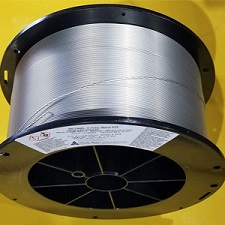
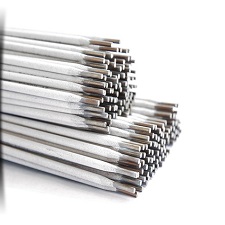
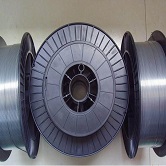
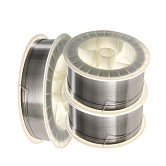 Nickel Alloy ERNiFeCr-1 MIG Welding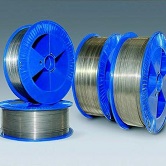
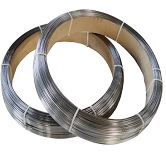
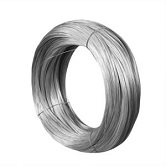




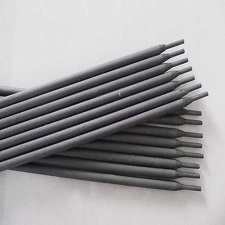
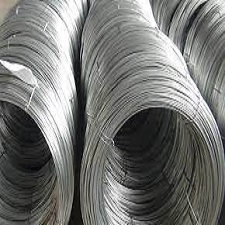 ENiCrFe-7 Filler Wire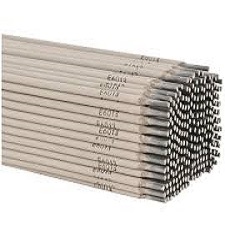
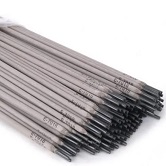
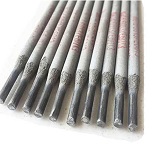
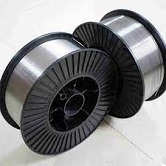 Aws A5.14 ENiCrFe-7 Welding Wire for