
|
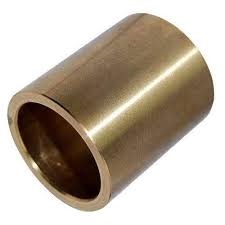
Manganese Bronze UNS-C86500
High-strength yellow brass–copper casting alloy UNS C86500 is a cast alloy consisting mainly if copper and zinc. UNS C86500 is preferred by architects for its color and longevity. The lead in the alloy gives it a golden color where as the manganese gives chocolate brown color. Chemical Composition Manganese Bronze UNS-C86500
For more details consult the datasheet below
Other Designations
Applications of Manganese Bronze UNS-C86500 Commercial applications for this engineering material include:
UNS-C86500 Corrosion Resistant
C86500 is a high-strength and hardness copper-zinc alloy. It has low tensile strength but good corrosion resistance. Also known as C12A, this alloy does well under high speeds and loads. This alloy contains 58% copper and 38% zinc.
Advantages
Manganese bronze is often specified over other bronzes for its exceptional longevity. It can withstand wear and corrosion better than most other bronzes thanks to its added manganese, and while not heat-treatable, it boasts an impressive strength profile. It is resistant to seawater corrosion (though less so than silicon bronzes), and is both hot forgeable and castable, if desired. Its main disadvantage is its price tag, as it is one of the more complex bronzes to fabricate. Also, it must be reliably lubricated to work optimally, as abrasive conditions will weaken the alloy’s integrity.
Conclusion Manganese Bronze is a high-strength European bronze alloy that is meant to be used at high-speed loads. Alloys of manganese bronze possess perfect mechanical properties and good corrosive resistance. Nevertheless, they need a reliable lubricant. Such bronze alloys are high-workable. The following alloys relate to this group: C86100, C86200, C86300, C86400, C86700, C86500, C86800.
Limitation of Liability and Disclaimer of Warranty Limitation of Liability and Disclaimer of Warranty: In no event will our team, be liable for any damages arising from the use of the information included in this document or that it is suitable for the 'applications' noted. We believe the information and data provided to be accurate to the oest of our knowledge but, all data is considered typical values only. It is intended for reference and general information and not recommended for specification, design or engineering purposes. Our team assumes no implied or express warranty in regard to the creation or accuracy of the data provided in this document.
|
|
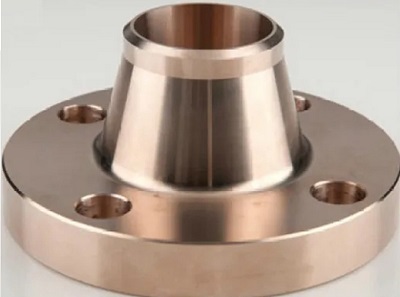
Copper-Nickel UNS-C70600
Cu-Ni alloys have a single-phase structure throughout the complete range of compositions and many standard alloys are available with small variations in their element composition for special applications. The earliest application of Cu-Ni alloy was for marine condenser tubes and presently it has many uses. Apart from their usage in coinage and wire mesh, Cu-Ni alloys containing 10 to 30% nickel with iron and manganese additions (C70600 and C71500) are also used for marine applications. Chemical Composition Copper-Nickel UNS-C70600
For more details consult the datasheet below
Other Designations
Applications of Copper-Nickel UNS-C70600 Commercial applications for this engineering material include:
UNS-C70600 Corrosion Resistant
UNS C70600 is renowned for its excellent resistance to corrosion in seawater, brine solutions, and other aggressive chemical environments. It has a low biofouling rate, meaning it does not support marine organism growth on its surface. The material also has excellent resistance to stress corrosion cracking, making it ideal for long-term service in marine environments.
Advantages
UNS C70600 is stable and reliable at any temperature. It has good strength at moderate and elevated temperatures. At low temperatures, it maintains good mechanical properties, weldability and high resistance to hydrogen. The great resistance to stress and erosion, excellent fabrication, high tensile strength, and accurate dimensions make it largely used in seawater, aerospace, oil, chemical and gas industries.
Below are some features:
Conclusion C46400 is a lead-free naval brass designed for primary forming into wrought products. C46400 is the UNS designation while CW712R is the EN designation. Offering good strength and rigidity, the addition of tin gives the alloy improved corrosion resistance and resistance to dezincification. Therefore, C46400 is far less susceptible to the effects of saltwater corrosion. With other notable benefits such as wear, fatigue and galling resistance, the alloy also provides good resistance to stress corrosion cracking (SCC).
Limitation of Liability and Disclaimer of Warranty Limitation of Liability and Disclaimer of Warranty: In no event will our team, be liable for any damages arising from the use of the information included in this document or that it is suitable for the 'applications' noted. We believe the information and data provided to be accurate to the oest of our knowledge but, all data is considered typical values only. It is intended for reference and general information and not recommended for specification, design or engineering purposes. Our team assumes no implied or express warranty in regard to the creation or accuracy of the data provided in this document.
|
|
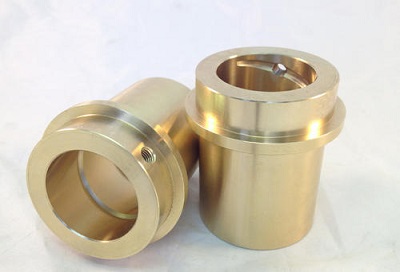
UNS C62500 Aluminum-Iron Bronze
Aluminium bronze is an alloy, which consists of about 6% of nickel and iron, and 9 to 12% of aluminium. It has a golden color. The UNS C62500 copper alloy has high corrosion resistance, and good strength, and can be heat treated to improve/modify their properties.
Chemical Composition Aluminum-Iron Bronze UNS C62500
For more details consult the datasheet below
Equivalent Alloy Specifications
Applications of Aluminum-Iron Bronze UNS C62500 Commercial applications for this engineering material include:
Aluminum-Iron Bronze UNS C62500 Corrosion Resistant
Aluminum Bronze is a part of copper-based alloys containing 4 to 15 per cent of aluminium and small amounts of other metals. The advantage is that aluminium bronze also possesses excellent corrosion resistance. It is that strength that gave rise to the early use of aluminium bronze. The UNS C62500 copper alloy has good corrosion resistance which is used to make many machine parts and tools. Because of their golden colour and high tarnish resistance, the alloys are also used for jewellery and architecture. Other properties of Aluminum Bronze is strength, hardness, resistance to wear and galling, low magnetic permeability, resistance to cavitation, erosion, softening, and oxidation at elevated temperatures.
Conclusion UNS C62500 aluminium bronze alloy is a fantastic metal for industrial and electrical applications. The alloy’s superb mechanical and physical properties make it an excellent alternative to leaded-bronze alloys, and its resistance to seawater and corrosion makes it perfect for marine environments. Maintaining the right welding procedures and matching filler metals is critical to avoid significant rework or damage to the final product. Regardless of the specific type of manufacturing, UNS C62500 aluminium bronze is a great choice for creating high-quality, reliable products.
Limitation of Liability and Disclaimer of Warranty Limitation of Liability and Disclaimer of Warranty: In no event will our team, be liable for any damages arising from the use of the information included in this document or that it is suitable for the 'applications' noted. We believe the information and data provided to be accurate to the oest of our knowledge but, all data is considered typical values only. It is intended for reference and general information and not recommended for specification, design or engineering purposes. Our team assumes no implied or express warranty in regard to the creation or accuracy of the data provided in this document.
|
|
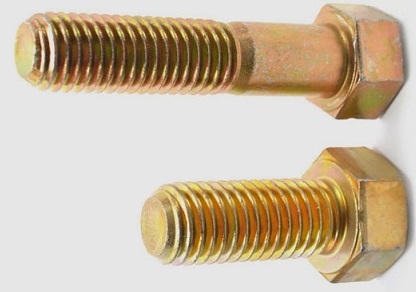
Phosphor Bronze UNS-C52100
CuSn8 - UNS.C52100 Phosphor Bronze Alloys, which is an 8% tin bronze distinguished by a very good combination of strength and electrical conductivity. It is used for connectors and current-carrying springs in contacts. Among the 4-8% tin bronze C52100 exhibits the lowest electrical conductivity, and the highest reachable strength is significantly higher than C51100 C51000 and C51900. By means of additional tempering after the cold-forming process, the bendability can be further improved. Chemical Composition Phosphor Bronze UNS-C52100
For more details consult the datasheet below
Equivalent Alloy Specifications
Applications of Phosphor Bronze UNS-C52100 Commercial applications for this engineering material include:
UNS-C52100 Corrosion Resistant
C52100 has a good resistance to seawater, different agents and industrial atmosphere and has an excellent resistance to tarnishing. Largely insensitive to stress corrosion cracking
Conclusion Phosphor bronze alloys were of great significance in the Bronze Age. The addition of phosphor in bronze alloys increases wear resistance, fatigue resistance and hardness, thus allowing the usage of phosphor bronze alloys in shafts, fasteners, valve spindles, masonry fixings, bearings, springs and gears.
Limitation of Liability and Disclaimer of Warranty Limitation of Liability and Disclaimer of Warranty: In no event will our team, be liable for any damages arising from the use of the information included in this document or that it is suitable for the 'applications' noted. We believe the information and data provided to be accurate to the oest of our knowledge but, all data is considered typical values only. It is intended for reference and general information and not recommended for specification, design or engineering purposes. Our team assumes no implied or express warranty in regard to the creation or accuracy of the data provided in this document.
|
|
Naval Brass UNS-C46400
Copper can be formed into alloys more freely than most metals. It can also be combined with a broad range of alloying elements. There are 400 types of copper alloys with each consisting of many properties that are suitable for various applications, manufacturing processes, and environments. Chemical Composition Naval Brass UNS-C46400
For more details consult the datasheet below
Equivalent Alloy Specifications
Applications of Naval Brass UNS-C46400 Commercial applications for this engineering material include:
UNS-C46400 Corrosion Resistant
C46400 Naval Brass is suitable for welding using various techniques such as gas tungsten arc welding, gas metal arc welding, and brazing. However, caution should be taken to avoid overheating, which can lead to cracking and porosity. The material is highly corrosion-resistant in seawater and brackish water environments, making it ideal for marine applications.
Advantages
Therefore, C46400 is far less susceptible to the effects of saltwater corrosion. With other notable benefits such as wear, fatigue and galling resistance, the alloy also provides good resistance to stress corrosion cracking (SCC). C46400 benefits from good overall strength.
Below are some features:
Conclusion C46400 is a lead-free naval brass designed for primary forming into wrought products. C46400 is the UNS designation while CW712R is the EN designation. Offering good strength and rigidity, the addition of tin gives the alloy improved corrosion resistance and resistance to dezincification. Therefore, C46400 is far less susceptible to the effects of saltwater corrosion. With other notable benefits such as wear, fatigue and galling resistance, the alloy also provides good resistance to stress corrosion cracking (SCC).
Limitation of Liability and Disclaimer of Warranty Limitation of Liability and Disclaimer of Warranty: In no event will our team, be liable for any damages arising from the use of the information included in this document or that it is suitable for the 'applications' noted. We believe the information and data provided to be accurate to the oest of our knowledge but, all data is considered typical values only. It is intended for reference and general information and not recommended for specification, design or engineering purposes. Our team assumes no implied or express warranty in regard to the creation or accuracy of the data provided in this document.
|

+(39) 347 051 5328
Italy - Kazakhstan


09.00am to 18.00pm
About
We offer the best and economical solutions, backed by 27+ years of experience and international standards knowledge, echnological changes, and industrial systems.
Our Services
Marketing Materials


Marketing Materials1


