
|
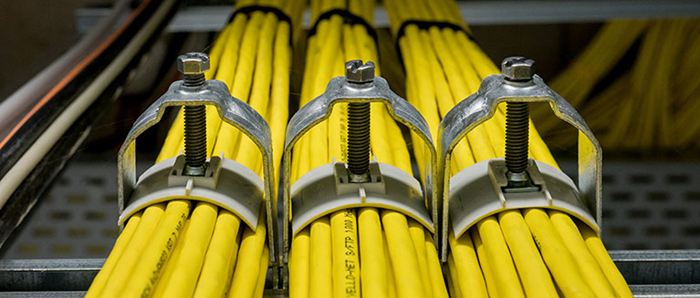
Cable Management: Ducts and supports for wire organization - Working Principle
Cable management systems—primarily ducts, trays, and various supports—act as a structured, protective pathway for electrical, data, and communication cabling. Their fundamental working principle is to organize, secure, and isolate wires, preventing physical damage, heat accumulation, and safety hazards. They transform chaotic "spaghetti cabling" into a managed, accessible infrastructure, which simplifies maintenance, enhances airflow for cooling, and provides scalability for future upgrades. 1. Working Principle of Cable Ducts (Trunking)
Cable ducts, often called wire trunking or raceways, are enclosed, usually rectangular channels.
2. Working Principle of Cable Supports (Trays and Ladders)
Cable trays and supports are generally open structures designed to support large quantities of cables, typically in ceilings or under floors.
3. Key Working Principles and Benefits
Summary of Differences
|
|
Terminal Blocks: For organized wiring connections - Working Principle A terminal block is a modular, insulated component that secures two or more wires together, acting as a pivotal hub for organizing, connecting, and distributing electrical signals or power. It functions by creating a safe, mechanically secure, and electrically conductive pathway without the need for traditional soldering or splicing. Working Principle
The fundamental working principle of a terminal block involves three main stages:
Upon inserting a wire, the tightening mechanism ensures a low-resistance joint, preventing pull-out and ensuring stable electrical connectivity Key Components
Common Clamping Types
Typical Applications
Installation and Usage Steps
Advantages
|
|
Limit Switches/Sensors: Inputs for automation sequences - Working Principle
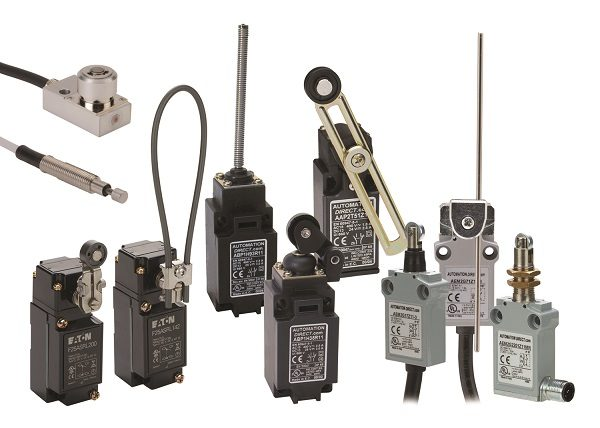
Limit switches and sensors serve as critical, often foundational, inputs for automation sequences, providing real-time feedback on the physical position or presence of objects to PLCs (Programmable Logic Controllers) or relay systems. While modern proximity sensors offer non-contact detection, mechanical limit switches are preferred in heavy-duty environments for their ruggedness, high current handling, and reliability. Working Principle of a Limit Switch
A limit switch operates on the principle of mechanical, physical contact. It acts as a rugged "on/off" button that a moving machine part presses.
Note: Many industrial limit switches use "snap action" to ensure the contacts change state instantly regardless of how slowly the object moves, reducing arcing. Key Components
Types of Limit Switches
Function in Automation Sequences
Limit switches are essential for:
Advantages in Industrial Environments
Limit switches are favored because they provide:
Working Principle: Step-by-Step
Common Actuator Types
Core Functions in Automation
|
Super User
Electrical
|
PLC/Remote I/O: Programmable Logic Controller - Working Principle
A Programmable Logic Controller (PLC) is an industrial computer that operates in a continuous, high-speed scan cycle—reading input signals, executing user-programmed logic, and updating output devices—to automate machinery. Remote I/O expands this by placing I/O modules away from the main CPU, connecting to the PLC via communication networks for distributed control. Core Working Principle: The Scan Cycle
A PLC operates through four main, repeating steps to manage industrial processes:
Remote I/O modules allow sensors and actuators to be located far from the main PLC cabinet, transmitting data over industrial networks (e.g., Ethernet, Profibus) rather than direct wiring to the CPU. This reduces cabling costs, enables modular expansion, and allows for easier maintenance in large, distributed systems.
Key Benefits
1. PLC Working Principle: The Scan Cycle
The PLC operates in a continuous, repetitive loop known as the Scan Cycle, which typically completes in milliseconds to ensure real-time response.
2. Remote I/O: The Principle of Decentralization
Remote I/O modules act as a "communication bridge" between field devices and a distant PLC.
3. Comparison of I/O Types
|

|
Digital Meters for measuring voltage, current, and power - Working Principle Digital meters (including Digital Multimeters - DMMs, and Digital Power Meters) operate by converting analog electrical quantities (voltage, current, power) into discrete numerical values displayed on an LCD or LED screen. They replace the moving needle of analog meters with electronic, high-impedance circuitry, providing higher precision and automatic ranging. The core principle involves sampling the signal, converting it via an Analog-to-Digital Converter (ADC), processing the data with a microcontroller, and displaying it. 1. Basic Components of Digital Meters
2. Working Principle for Voltage Measurement (Voltmeter)
Digital voltmeters measure the potential difference between two points.
Note: High input impedance (typically 10 MΩ) ensures the meter does not load the circuit, maintaining accuracy. 3. Working Principle for Current Measurement (Ammeter)
Digital ammeters measure the flow of charge (amperes) in series.
4. Working Principle for Power Measurement (Wattmeter/Energy Meter)
Digital power meters measure power ( P = V x I) by measuring both voltage and current simultaneously.
Summary of Working Components
Accuracy and AC Measurement
For alternating current (AC) signals, digital meters often use True RMS (Root Mean Square) conversion. This method accurately measures the effective value of both standard sine waves and distorted, non-sinusoidal waveforms by sampling the signal multiple times per cycle.
Advantages of Digital Meters
|

+(39) 347 051 5328
Italy - Kazakhstan


09.00am to 18.00pm
About
We offer the best and economical solutions, backed by 27+ years of experience and international standards knowledge, echnological changes, and industrial systems.
Our Services
Marketing Materials


Marketing Materials1


