
|
Working Principle of a Circuit Breaker Contact Pressure System
The contact pressure system in a circuit breaker ensures reliable electrical connection between fixed and moving contacts during normal operation by applying mechanical pressure (via springs or pressurized mechanisms) to keep them closed. It prevents overheating, minimizes resistance, and allows rapid separation to extinguish arcs when a fault occurs. Key Components and Working Principle
Working Principle The system operates by converting stored mechanical energy into a continuous clamping force. Its function can be broken down into three phases:
Why Contact Pressure is Critical
Common Components:
|
|
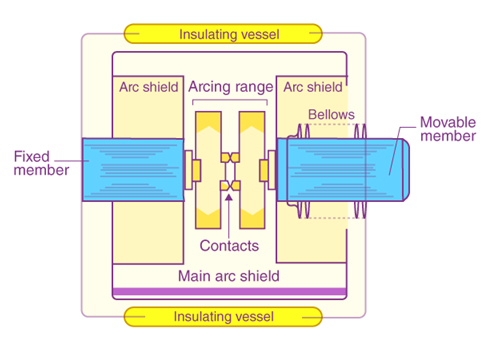
Main Contacts of a Circuit Breaker - Working Principle
Circuit breaker main contacts—comprising fixed and moving metallic electrodes—conduct normal current while held together by spring pressure. Under fault conditions (overload/short circuit), the operating mechanism releases stored energy to separate these contacts rapidly, breaking the circuit and extinguishing the resulting arc to prevent damage. Key Aspects of Main Contacts:
Working Principle in Detail
The main contacts of a circuit breaker are the primary conductors designed to carry the full rated load current of an electrical system during normal operation. In power circuit breakers, they work alongside arcing contacts to protect the breaker's internal components from damage during the switching process. Working Principle: Opening & Closing Sequence To prevent electrical arcs (sparks) from damaging the main contacts, they operate in a specific sequence relative to the arcing contacts:
Design and Material Features
In some smaller breakers, like Miniature Circuit Breakers (MCB) or Vacuum Circuit Breakers, there may only be one set of contacts that handle both the load current and the arc.
|
|
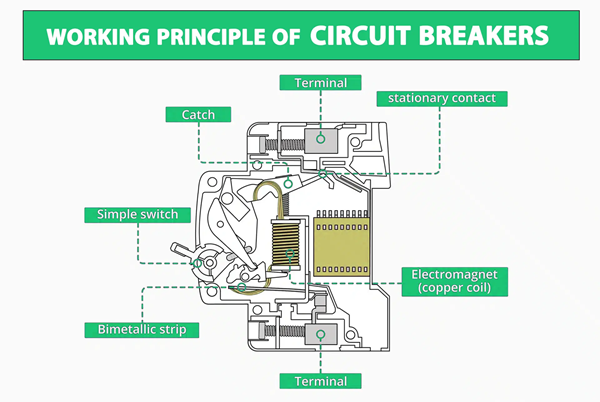
Arcing contacts of a circuit breaker Arcing contacts in a circuit breaker are specialized, high-temperature-resistant, tungsten-coated components that separate after the main contacts to manage and extinguish the electrical arc formed during circuit interruption. They prevent damage to the main contacts by guiding the arc into a quenching chamber, ensuring safe, rapid circuit disruption. Working Principle and Function
Key Aspects
In a circuit breaker, arcing contacts are secondary contacts specifically designed to handle the intense heat and erosion of the electrical arc formed during the opening and closing of a circuit. Their primary purpose is to protect the main contacts, which are made of high-conductivity materials (like silver-plated copper) and carry the continuous load current. Working Principle The system operates on a "make-first, break-last" sequence to ensure the arc never touches the delicate main contacts.
Key Characteristics Material: Arcing contacts are typically made from Copper-Tungsten alloys. Tungsten provides a very high melting point (approx. 3,422°C) to resist erosion, while copper provides the necessary electrical and thermal conductivity to dissipate heat. |
|
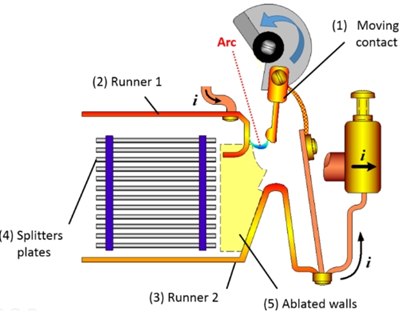
Magnetic Protection Circuit breaker - Working Principle
A magnetic circuit breaker (often part of a thermal-magnetic MCB/MCCB) provides instantaneous protection against short circuits by using an electromagnetic coil to detect massive current surges. When a short circuit occurs, the high current creates a strong magnetic field in the coil, which immediately pulls a plunger to trip the mechanism and break the circuit within milliseconds. Key Aspects of the Magnetic Protection Mechanism
Differences from Thermal Protection
A magnetic protection circuit breaker (often referred to as a thermal-magnetic circuit breaker in standard residential and commercial use) utilizes two distinct electromechanical mechanisms to protect electrical systems from damage. Core Working Principles The device monitors the current flowing through a circuit and intervenes in two specific fault scenarios:
Why Both Are Needed
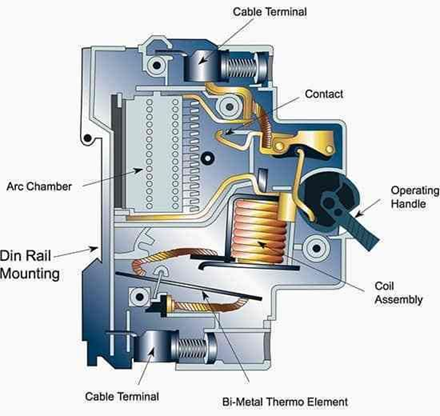
Summary of Internal Components
|
|
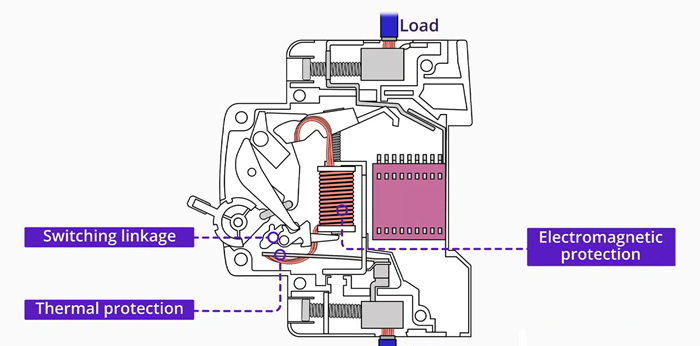
Thermal Protection Circuit breaker - Working Principle
A thermal protection circuit breaker protects circuits from overloads (slow, prolonged excess current) using a bimetallic strip that heats up and bends, triggering a trip mechanism to cut power when current exceeds set limits. It acts as a safety device that triggers slowly—taking seconds or minutes—to prevent wiring from melting or catching fire. Core Working Principle Components
Key Characteristics
Thermal protection is the mechanism within a circuit breaker designed to safeguard electrical systems against overloads—conditions where a circuit carries more current than it is rated for over a prolonged period. Working Principle: The Bimetallic Strip The core of a thermal circuit breaker is a bimetallic strip, which consists of two different metals bonded together, each with a different coefficient of thermal expansion.
Key Characteristics
Thermal vs. Magnetic Protection Most modern units are thermal-magnetic circuit breakers, combining two separate mechanisms to provide complete protection.
|

+(39) 347 051 5328
Italy - Kazakhstan


09.00am to 18.00pm
About
We offer the best and economical solutions, backed by 27+ years of experience and international standards knowledge, echnological changes, and industrial systems.
Our Services
Marketing Materials


Marketing Materials1


