
|
Voltage Uniformity Busbar System - Working Principle A Voltage Uniformity Busbar System works by using a large, solid, low-resistance, and low-impedance conductor (usually copper or aluminum) to distribute electrical power, ensuring nearly identical voltage levels along its entire length. It acts as a central hub to collect and distribute current, minimizing voltage drop and heat, and providing consistent potential to multiple connected loads. Key Working Principles
This system is crucial in substations, switchgears, and industrial setups to ensure stable power delivery to all connected equipment without significant voltage differences Core Working Principles
System Components
Key Benefits for Stability
|
|
High-Capacity Conduction Busbar System - Working Principle
A High-Capacity Conduction Busbar System works as a central, low-resistance, and rigid conductor—typically copper or aluminum—that collects high-amperage electricity from sources and distributes it to multiple circuits. It operates on the principle of passive, efficient current conduction via a large cross-sectional area, reducing voltage drops and allowing superior heat dissipation compared to cables, making it ideal for substations, industrial plants, and EV battery systems Key Working Principles and Design Aspects
In industrial applications, this system replaces traditional cable-based distribution, providing a more scalable, reliable, and efficient solution for power distribution, as highlighted in the Delta Wye Electric article
Core Working Principle The system operates as a central node (passive conductor) where power from a main source, such as a transformer or generator, is received and then distributed to multiple outgoing circuits or loads.
Key Components
Thermal Management (Heat Dissipation) Unlike round cables that trap heat inside insulation, busbars utilize their shape for cooling:
Arrangement Schemes To ensure reliability, systems are configured in specific layouts:
|

|
Centralized Distribution Busbar System - Working Principle
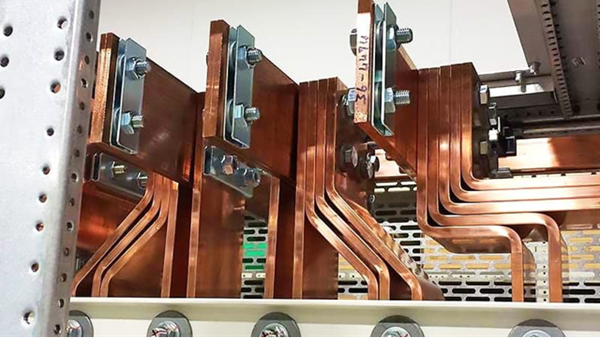
A centralized distribution busbar system uses rigid conducting bars (copper or aluminum) as a common, central junction point to collect power from a main source and distribute it to multiple outgoing circuits. It works by feeding electricity into the busbar, which then supplies various loads through tap-off units along its length, providing high efficiency, flexibility, and easy maintenance compared to traditional cabling. Key Working Principles
The system functions as a central node or junction point where incoming power (from a transformer or generator) is collected and then distributed to multiple outgoing circuits.
In a centralized protection scheme, the system utilizes a single central relay to monitor the entire busbar zone.
Key Benefits over Traditional Cabling
|
|
Double Busbar System - Working Principle
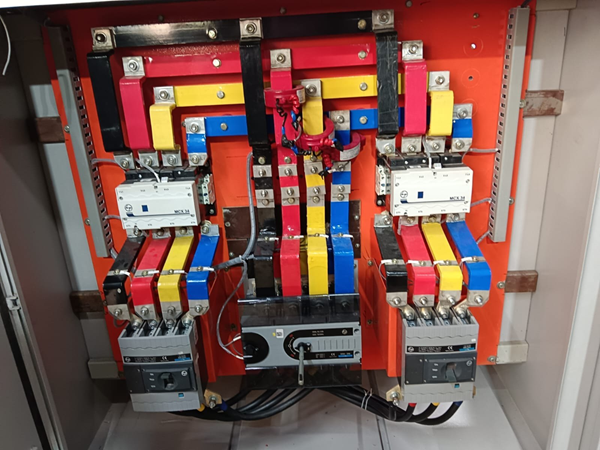
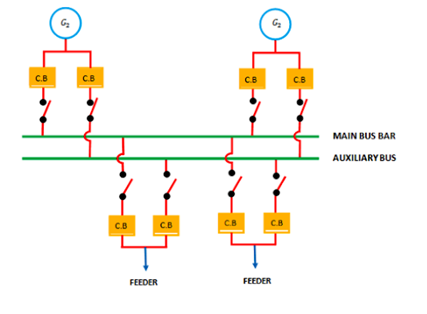
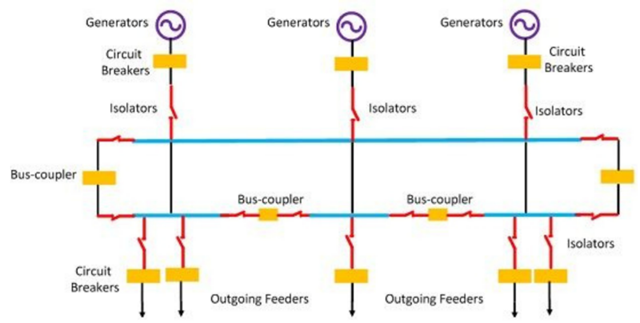
A Double Busbar System consists of two independent busbars (main and spare/auxiliary), with each feeder connected to both via isolators and a single common circuit breaker. It ensures high reliability by allowing loads to be transferred between buses via a bus coupler for maintenance or in case of a fault without interrupting power. Key Working Principles and Features
Working Principle The system allows any incoming or outgoing circuit (feeder) to be connected to either busbar via a set of isolators (disconnecting switches).
For more details see Figure below
Key Components
Typical Transfer Sequence (without power interruption) To move a feeder from Bus I to Bus II:
Applications This system is primarily used in high-voltage substations (often 33kV and above) where downtime is critical, such as in large industrial plants or major grid nodes. Advantages
Disadvantages
|
|
Ring Main System Busbar - working principle
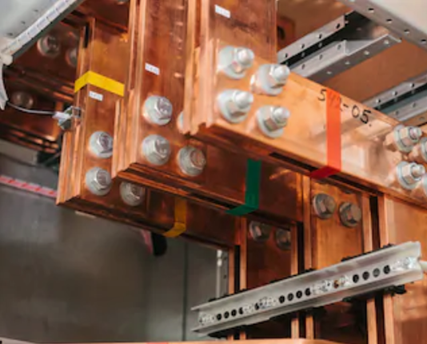
A Ring Main System (RMS) busbar operates by forming a closed-loop (ring) configuration, where electricity flows from the source in two directions to feed multiple distribution nodes. Each load connects to the ring via a Ring Main Unit (RMU) containing switches, allowing any node to receive power from either side if a section fails, ensuring high reliability and continuous supply Key Working Principles
This system is commonly used in medium-voltage (MV) distribution, especially in urban areas or industrial sites where supply reliability is paramount Working Principle The core principle is bidirectional power flow, allowing electricity to reach any load point from two different directions.
For more details see Figure below
Key Components & Functions
Summary of Benefits
|

+(39) 347 051 5328
Italy - Kazakhstan


09.00am to 18.00pm
About
We offer the best and economical solutions, backed by 27+ years of experience and international standards knowledge, echnological changes, and industrial systems.
Our Services
Marketing Materials


Marketing Materials1


