
|
UPS Pulse Width Modulation (PWM) - Working Principle
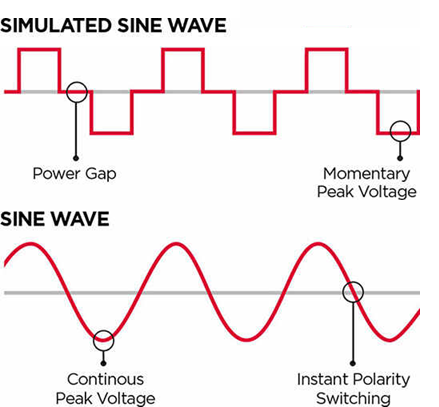
A Pulse Width Modulation (PWM) UPS uses high-frequency switching to control the DC-to-AC inverter stage, adjusting the pulse width (duty cycle) of the waveform to regulate the output voltage, improve efficiency, and minimize harmonic distortion. By rapidly switching on/off, PWM produces a high-quality sine wave suitable for sensitive electronics. Core Working Principle Components Rectifier: Converts incoming AC power from the grid into Direct Current (DC) to charge the batteries and supply the inverter. Key Characteristics of PWM UPS Systems
Advantages
Common Applications
A Pulse Width Modulation (PWM) UPS is an uninterruptible power supply that uses pulse width modulation technology in its inverter to produce an AC output waveform that is a stepped or modified sine wave. This design is a cost-effective and efficient method for basic power backup needs. How It Works The core of a PWM UPS system is its inverter, which converts DC battery power into AC power for connected devices during a power outage.
Key Characteristics
Applications PWM technology is widely used in power electronics. Specific applications for PWM UPS systems include:
|
|
UPS Energy Conversion - Working Principle
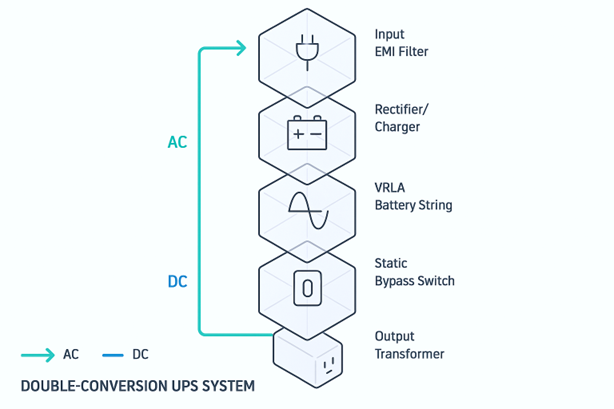
An Energy Conversion UPS (specifically Online/Double Conversion) operates by continuously converting incoming AC utility power to DC to charge batteries and run an inverter, which then converts the DC back into clean, regulated AC for connected equipment. This double-conversion process ensures zero transfer time during power failures. Core Working Principle Components
Operational Modes
An Uninterruptible Power Supply (UPS) is an electrical device that Core Working Mechanism The fundamental principle of a UPS involves a multi-stage energy conversion process:
Types of UPS Principles The exact operation varies depending on the unit's topology:
Key Performance Functions Beyond simple backup, modern UPS systems perform critical power conditioning:
|
|
UPS Rectification & Charging
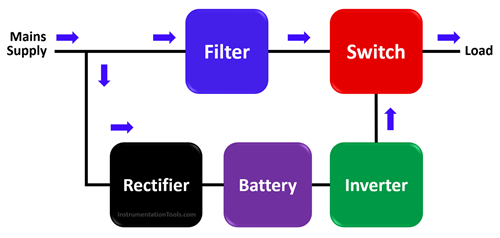
A UPS (Uninterruptible Power Supply) uses a rectifier to convert incoming AC utility power into DC to charge batteries and power the inverter, ensuring continuous power to equipment. When utility power is lost, the inverter instantly converts the stored battery DC power back into AC power. Rectification & Charging Working Principle
Key Components
UPS Operating Modes
In summary, the rectifier acts as the "input converter," charging batteries and feeding the inverter, while the inverter acts as the "output converter" for the load. In an Uninterruptible Power Supply (UPS), the Rectification and Charging stage is the first critical step in ensuring continuous, clean power. Here is how this principle works:
The UPS rectifier acts as a gateway that converts incoming Alternating Current (AC) from the utility grid into Direct Current (DC).
Once the power is converted to DC, it follows two parallel paths:
The beauty of this principle is seen during a power failure:
Key Components Involved
|
|
UPS Boost/Fast Charging - Working Principle
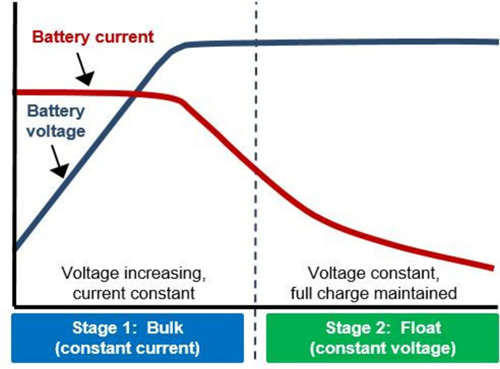
Boost/Fast Charging UPS systems utilize a high-voltage, constant-current, or intelligent multi-stage charging process to rapidly replenish battery capacity after power outages. Unlike standard float charging, this method, often used to activate battery chemicals, temporarily raises the voltage to quickly restore energy levels, ensuring the battery is prepared for subsequent outages, often in 1-2 hours instead of 8-10 hours. Core Working Principles of Boost/Fast Charging UPS
Key Stages of Operation
Key Advantages
In an Uninterruptible Power Supply (UPS), Boost Charging (often referred to as Fast Charging) is a specific high-voltage operational mode designed to rapidly restore battery capacity after a discharge event.
The fundamental principle of boost charging is to temporarily increase the charging voltage above the standard maintenance (float) level. Because battery internal resistance naturally limits current flow, raising the voltage creates a larger potential difference, which forces more current into the battery for a faster recharge.
Technical Considerations & Safety Modern UPS units, such as those from Schneider Electric or specialized manufacturers like Su-vastika, use intelligent microprocessors to manage this process.
|
|
Constant Voltage (Float) Charging in a UPS - Working principle
Constant Voltage (Float) Charging in a UPS maintains batteries at full capacity by applying a steady voltage (typically 2.25–2.30V per cell) just below the gassing limit. It prevents self-discharge and overcharging, ensuring the battery is instantly ready for backup. The current tapers off as the battery charges. Core Working Principle
Key Advantages
Typical Float Voltage Levels (at 25°C/77°F)
This method ensures the UPS is always prepared, reducing the risk of failure during critical power interruptions. In an Uninterruptible Power Supply (UPS) system, Constant Voltage (Float) Charging is the primary method used to maintain batteries in a fully charged, standby state. Working Principle The core principle is to apply a steady, regulated voltage to the battery terminals that is exactly equal to the battery's Open Circuit Voltage (OCV) plus a small "adder" (typically +0.12V to +0.15V per cell).
Key Benefits
Critical Considerations
|

+(39) 347 051 5328
Italy - Kazakhstan


09.00am to 18.00pm
About
We offer the best and economical solutions, backed by 27+ years of experience and international standards knowledge, echnological changes, and industrial systems.
Our Services
Marketing Materials


Marketing Materials1


