
|
An AVR (Automatic Voltage Regulator) in a UPS
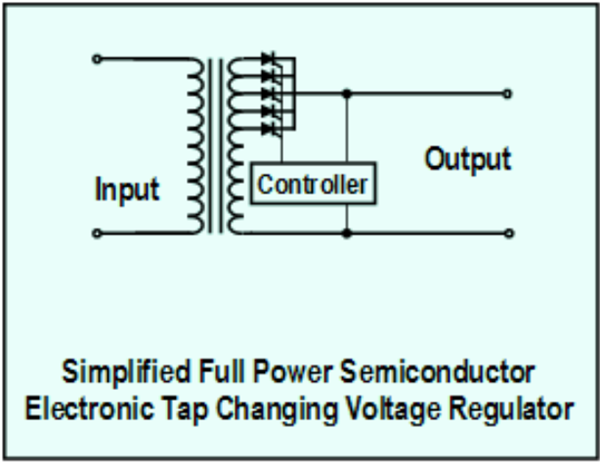
An AVR (Automatic Voltage Regulator) in a UPS uses an internal autotransformer to stabilize voltage without relying on battery power. By automatically switching between transformer taps (boosting or bucking), it corrects low/high input voltages to a safe range. It acts as a line-interactive buffer to protect electronics, prolonging battery life by only using them during complete power failures. Key Working Principles of AVR in a UPS
Components & Operation
Types of AVR in UPS
In a Line-Interactive UPS, the Automatic Voltage Regulator (AVR) uses an autotransformer to stabilize incoming power without draining the battery.
Working Principle
The AVR works as a "smart switch" that monitors utility voltage and adjusts it to a safe range by changing the turns ratio of the autotransformer.
Key Benefits Extended Battery Life: By correcting minor fluctuations using the transformer instead of the battery, the UPS preserves battery cycles for actual outages. |
|
Output Waveform UPS - Working Principle
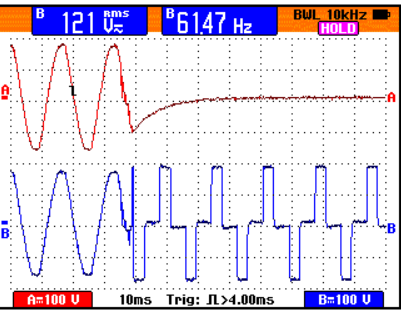
An Output Waveform UPS (Uninterruptible Power Supply) works by Key Working Principles
Output Waveform Types
The method of generating these waveforms varies by UPS topology:
|
|
Transfer Time UPS working principle
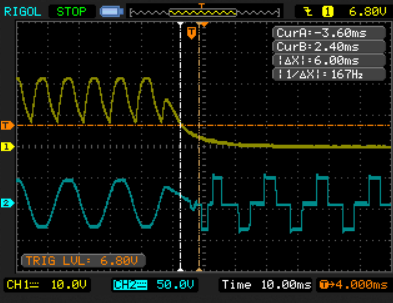
Transfer time in a UPS is the brief, critical duration (typically 0–12 ms) taken to switch from utility power to battery backup during a failure, ensuring continuous operation for connected equipment. It involves sensing a power loss and activating the inverter, with faster times preventing equipment reboots or data loss. Key Aspects of Transfer Time Working Principle
Why It Matters: The "Hold-Up Time" Every electronic device has a hold-up time—the amount of energy stored in its own internal capacitors to keep it running during a tiny power dip. If Transfer Time > Hold-Up Time, your device will reboot or crash. |
|
Normal Mode (Standby) UPS working principle
A Standby (Offline) UPS operates in normal mode by passing utility AC power directly to connected equipment through a surge suppressor, while simultaneously charging the battery via a charger. The inverter remains idle, switching on only when power fails or fluctuates outside set tolerances, with a typical 2–10 millisecond transfer time. Key Aspects of Normal Mode Working
When the input voltage fails or falls outside, the transfer switch rapidly (typically 2-10ms) switches the load to the battery-powered inverter. In Normal Mode (also known as Line Mode), a Standby (Offline) UPS operates by passing utility power directly from the wall outlet to the connected devices. Working Principle in Normal Mode Direct Path: The AC power from the grid flows through a transfer switch directly to your equipment.
Why "Standby"? It is named "Standby" because the battery-to-AC conversion path is only engaged when a power failure or significant voltage drop is detected.
|
|
Battery Mode (Backup) UPS working principle
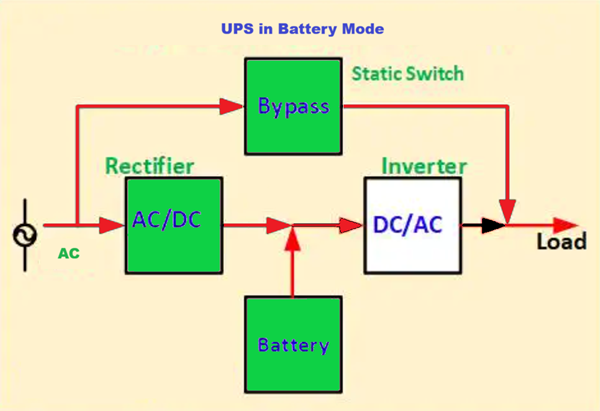
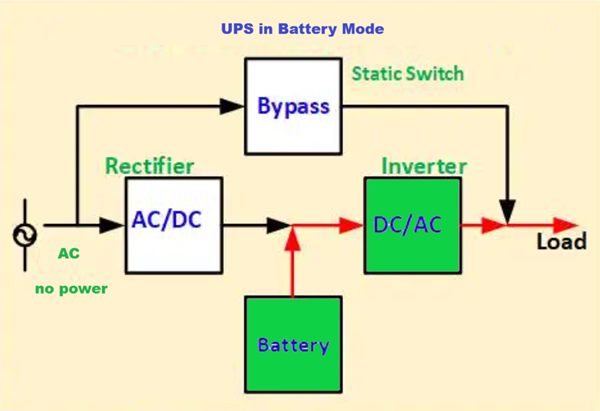
A Battery Mode (Backup) UPS works by immediately switching to internal battery power when AC mains fail, ensuring uninterrupted operation for connected devices. It uses an inverter to convert DC power from the battery into AC power, typically taking 4–10ms in offline/standby modes. Once power returns, the charger recharges the battery, while the inverter stops. Key Components in Battery Mode
Working Steps during Battery Mode
Battery mode is designed for short-term, critical power, allowing users to save work or safely shut down equipment. Working Steps during Battery Mode
Note: In Line-Interactive UPS, an AVR (Automatic Voltage Regulator) tries to correct voltage before switching to battery, reducing battery usage.
In Battery Mode (also known as Backup or Discharge Mode), an Uninterruptible Power Supply (UPS) functions as the primary power source when the main utility electricity fails or becomes unstable.
Core Working Principle
When the UPS detects a power interruption or significant voltage drop (e.g., below ~170V), it activates a high-speed transition to battery power. The internal process follows these steps:
Variation by UPS Topology The "seamlessness" of the working principle depends on the UPS design:
Key Components Involved
Once utility power is restored, the UPS automatically switches back to Normal Mode, using the grid to power the load and recharging the batteries simultaneously. Are you looking for a backup time calculation for a specific device, or do you need help troubleshooting a UPS that won't enter battery mode? Ask Questions and will answare you |

+(39) 347 051 5328
Italy - Kazakhstan


09.00am to 18.00pm
About
We offer the best and economical solutions, backed by 27+ years of experience and international standards knowledge, echnological changes, and industrial systems.
Our Services
Marketing Materials


Marketing Materials1


