
|
Droop control enables two parallel generators
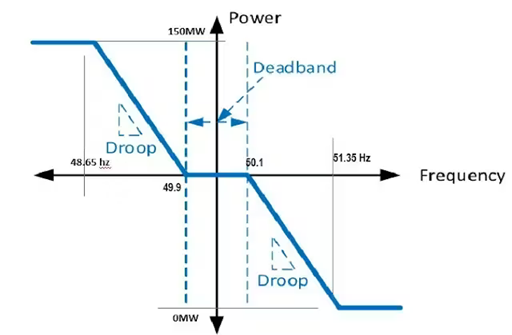
Droop control enables two parallel generators to share active (P) and reactive (Q) loads proportionally by allowing frequency (f) and voltage (V) to decrease slightly as load increases. This method eliminates "hunting" (fighting) between governors, where (f) and (V) are inversely proportional to load. Generators with equal droop settings share load equally; if unequal, the unit with the smaller droop provides a larger share. Key Aspects of Droop Control Between Two Generators
Droop Control vs. Isochronous Mode
Droop control is a decentralized strategy used to balance load sharing between two or more parallel generators by allowing their frequency and voltage to decrease slightly as the load increases. It prevents generators from "fighting" each other by enabling them to operate at a common system frequency and voltage without the need for high-speed communication links. Core Mechanisms
How Load Sharing Works Between Two Units
Droop vs. Isochronous Mode
Key Considerations for 2026 Digital Integration: Modern systems increasingly use digital controllers (e.g., Woodward, DEIF) to automate the transition between droop and isochronous modes during synchronization. |
|
Load Sharing between two generators
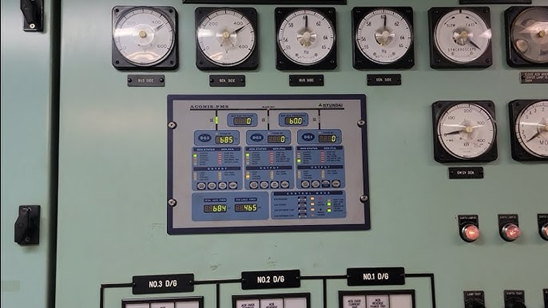
Load sharing between two generators in parallel distributes electrical demand (kW and kVAR) proportionally based on capacity, preventing overload and ensuring system stability. It is achieved by paralleling units to a common bus, using engine governors for speed/active power and AVRs for voltage/reactive power, commonly through droop control or active load-sharing controllers Key Principles and Methods
Methods of Load Sharing
Operational Sequence
Components Needed
Load sharing between two generators is the proportional distribution of electrical demand (load) between units operating in parallel. For successful load sharing, generators must first be synchronized matching their voltage, frequency, phase angle, and phase sequence. Key Mechanisms of Load Sharing Load sharing involves managing two distinct types of power:
Common Methods
Benefits of Load Sharing
|
|
Parallel between two Generators
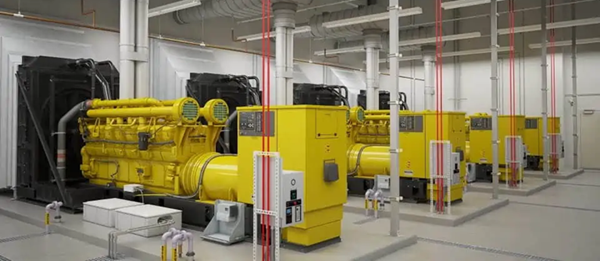
Paralleling two generators involves synchronizing their voltage, frequency, phase angle, and phase rotation to connect them to a common bus, effectively combining their power output to increase capacity and improve reliability. This process allows for load sharing, increased power capacity, and better maintenance flexibility without power disruption. Key Requirements for Paralleling Generators
Benefits of Parallel Operation
How to Parallel Generators
Operating two generators in parallel involves connecting their outputs to a common electrical bus so they function as a single power source. This is widely used in facilities requiring high reliability, such as hospitals and data centers. Essential Synchronization Conditions Before connecting generators in parallel, their electrical outputs must be perfectly matched to avoid catastrophic failure or equipment damage:
Key Benefits
Synchronization Methods Modern systems use automatic synchronization controllers that manage these parameters digitally. Manual methods include:
Load Sharing Once synchronized, the system must equitably distribute the electrical load.
Considerations for Portable Generators For home or RV use, many modern inverter generators are "parallel-ready". You must typically use a manufacturer-approved parallel kit to connect them safely.
|
|
Electromagnetic Interaction
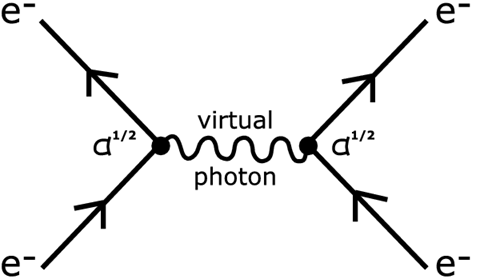
Electromagnetic interaction is one of the four fundamental forces of nature, governing interactions between electrically charged particles via electromagnetic fields and the exchange of massless photons. It is responsible for atomic structure, molecular bonds, electricity, magnetism, and light. This infinite-range force causes attraction between opposite charges and repulsion between similar charges. Key Aspects of Electromagnetic Interaction
Electromagnetic interaction is one of the four fundamental forces of nature, occurring between all particles that possess an electric charge. As of 2026, it remains the dominant force governing the structure and behavior of atoms, molecules, and nearly all phenomena observed in daily life. Core Principles
Scientific Theories
Key Manifestations
|
|
Synchroscope working principle
A synchroscope is an electrodynamic instrument used to synchronize two AC power sources (generators and busbars) by comparing their frequencies and phase angles. It acts as a small two-phase motor, where one source supplies the stator and the other the rotor, causing a pointer to rotate clockwise (fast) or counter-clockwise (slow) based on the frequency difference, stopping at the 12 o'clock position when in phase. Key Working Principles
Components
A synchroscope is an instrument used to determine the exact instant when two AC power systems (typically an incoming generator and a live busbar) are in phase and operating at the same frequency. Core Working Principle The synchroscope operates as a small split-phase AC motor. Its fundamental principle relies on the interaction between two magnetic fields:
If there is a difference in frequency between these two systems, the magnetic fields rotate at different speeds. This speed mismatch creates a resultant torque that causes the synchroscope's pointer to rotate.
Key Indicators
The movement of the pointer provides real-time data to operators:
Types of Synchroscopes
Synchronization Procedure Operators adjust the speed of the incoming generator's prime mover until the synchroscope pointer rotates very slowly in the clockwise ("Fast") direction. The breaker is typically closed just before the pointer reaches the 12 o'clock position (around the 11 o'clock mark) to account for the mechanical delay of the circuit breaker and ensure the generator does not act as a motor upon connection. |


+(39) 347 051 5328
Italy - Kazakhstan


09.00am to 18.00pm
About
We offer the best and economical solutions, backed by 27+ years of experience and international standards knowledge, echnological changes, and industrial systems.
Our Services
Marketing Materials


Marketing Materials1


