
|
Regulating Relays
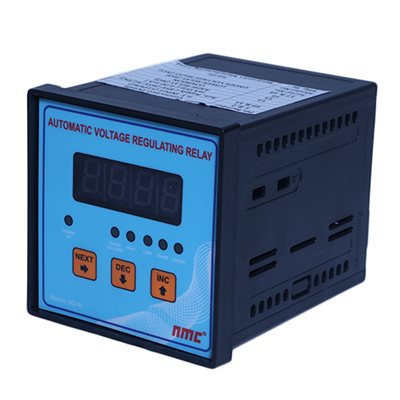
Regulating relays use a low-power control signal to operate an electromagnetic switch, allowing a small current to control a larger one by energizing a coil, creating a magnetic field that pulls an armature to open or close contacts in a separate, higher-power circuit, providing isolation and automatic switching for devices like voltage stabilizers or protection systems. The core principle is electromagnetic induction, where current creates magnetism, but "regulating" relays specifically adapt this for voltage control by sensing deviations and switching taps or windings to maintain a stable output. Electromechanical Relay Principle (General)
How it Applies to "Regulating"
Key Concepts
A regulating relay is a specialized protective relay that operates when a specific electrical parameter (such as voltage or current) deviates from predetermined limits. Unlike simple on/off switches, it acts to maintain a system parameter within a safe or functional "window".
Core Working Principle
The working principle varies based on the relay's technology:
Solid-State (Electronic) Type: Uses semiconductors (like thyristors or triacs) to monitor and switch without moving parts. Microprocessors analyze the input data and trigger the semiconductor switch immediately when a deviation occurs. Key Applications
Comparison of Regulating vs. Protective Relays
|
|
Monitoring Relays
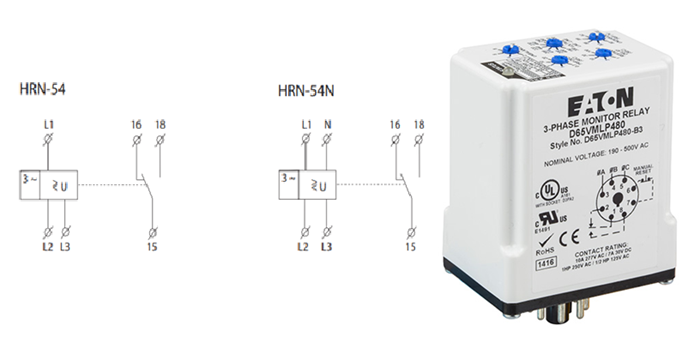
Monitoring relays work by continuously sensing an electrical parameter (like voltage or current) against user-set thresholds, and if a deviation occurs, they trigger a timed response, like opening contacts to shut down equipment, to prevent damage, using internal comparators and output switches to protect systems from over/under-voltage, current, phase loss, or sequence issues. Core Working Principle
Key Parameters Monitored
Example: Voltage Monitoring Relay When voltage drops below the set minimum (e.g., due to a blown fuse), the relay detects the deviation, starts its timer, and after the delay, trips its contacts to stop the connected motor from running inefficiently or burning out, protecting it from damage. Monitoring relays are automated sensing devices that continuously supervise electrical parameters—such as voltage, current, or phase—and trigger a response when conditions deviate from preset safe limits
Core Working Principle AI
The fundamental operation of a monitoring relay follows a four-step process:
Key Monitoring Types Relays are categorized by the specific parameter they supervise:
Advanced Features (2026 Standards) Modern monitoring relays incorporate digital "smart" features for Industry 4.0 applications:
. |
|
Magnetic Latching Relays
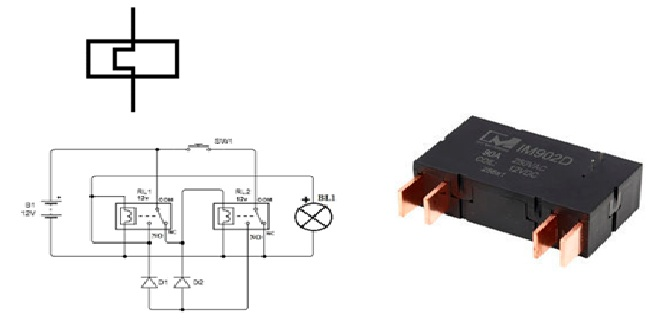
Magnetic latching relays work by using a brief electrical pulse to create a magnetic field that shifts internal contacts, which are then held in place by a permanent magnet or magnetic latching element, eliminating the need for continuous power to maintain the state, thus saving energy and reducing heat. A second, reversed pulse (or sometimes a mechanical action) is needed to switch them back, providing a memory function for the last position This video provides a basic introduction to how a latching relay works: Working Principle Steps
Watch this video to see how a latching relay works with a pulse:
This video demonstrates the working principle of a latching relay in action:
Key Components & Concepts
Benefits
This video explains the advantages and applications of latching relays:
A magnetic latching relay is a bistable switch that uses a combination of electromagnetism and permanent magnets to maintain its state (ON or OFF) without continuous power. Unlike standard relays that require constant current to hold contacts in place, magnetic latching relays only require a brief electrical pulse to switch positions.
Core Working Principle
The operation depends on the interaction between an internal permanent magnet and an electromagnet (the coil).
Common Coil Configurations The method for triggering the reset depends on the relay's coil design:
Key Advantages
Primary Applications
|
Super User
Electrical
|
Thermal relays protection
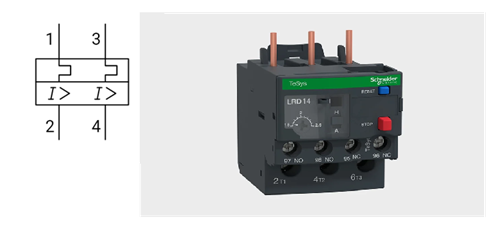
Thermal relays protect equipment from overheating by using a bimetallic strip that bends when heated by excessive current, triggering a trip mechanism to open contacts and cut power; the principle relies on two metals with different expansion rates bending the strip unevenly as current flows through its heating coil, with slower response times than magnetic relays but offering reliable overload protection for motors and circuits Working Principle
Key Features & Purpose
Thermal relays are protective devices primarily used to safeguard electric motors and other electrical equipment from damage due to prolonged overloads
Core Working Principle
The fundamental principle of a thermal relay is the thermal expansion of metals. It utilizes the heat generated by electrical current to actuate a mechanical switching mechanism.
Key Characteristics
Comparison of Thermal Relay Mechanisms
.
|
|
Solid-State/Digital Relays
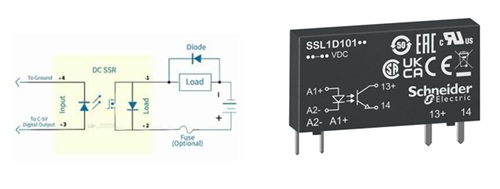
Solid-State Relays (SSRs) work by using a low-power input signal to activate an internal light source (like an LED) which triggers a photosensitive component, isolating the control circuit from the load circuit; this component then acts as a silent, fast-switching semiconductor (like a MOSFET or Triac) to switch high power to the load, offering durability, speed, and no moving parts, unlike traditional mechanical relays. Working Principle Breakdown
Key Features & Types
Solid-State Relays (SSRs) and Digital/Numerical Relays operate on different principles suited to their respective roles in power switching and system protection.
A Solid-State Relay is an electronic switching device that controls a high-power load using a low-power control signal without any moving parts. Its working principle is based on optical or magnetic coupling to achieve electrical isolation.
Digital or Numerical Relays are microprocessor-based devices used for power system protection and monitoring rather than simple on/off switching.
Comparison Summary for 2026
ds |

+(39) 347 051 5328
Italy - Kazakhstan


09.00am to 18.00pm
About
We offer the best and economical solutions, backed by 27+ years of experience and international standards knowledge, echnological changes, and industrial systems.
Our Services
Marketing Materials


Marketing Materials1


