
|
Constant Resistance (CR) mode
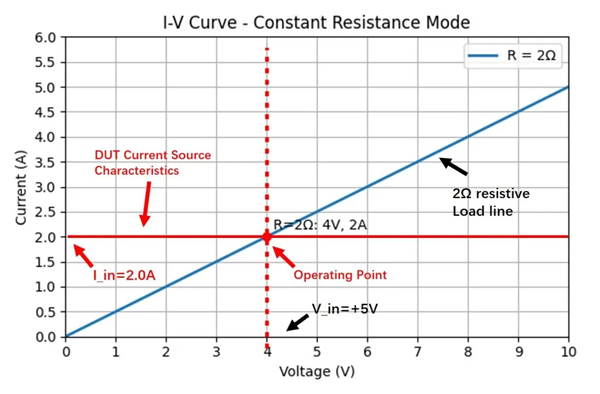
In electronics and testing, Constant Resistance (CR) mode is a setting on electronic loads or a method of discharging a battery where the load behaves like a fixed resistor (R = V / I ). Unlike Constant Current (CC) mode, where the amperage stays the same regardless of voltage drop, in CR mode, the current decreases proportionally as the battery voltage drops. Here is an overview of Constant Resistance in battery testing: What is Constant Resistance Mode?
Key Features and Applications
Advantages and Limitations
Difference Between CC and CR Modes
Note: In the context of batteries, "CR" is sometimes confused with "CR2032" (a 3-volt Lithium Manganese Dioxide battery). However, in testing, it refers to the operating mode of the equipment. Potential Confusions
For precise testing, engineers often use specialized DC Electronic Loads that can be programmed to Constant Resistance mode. |
|
Inverter-to-battery communication
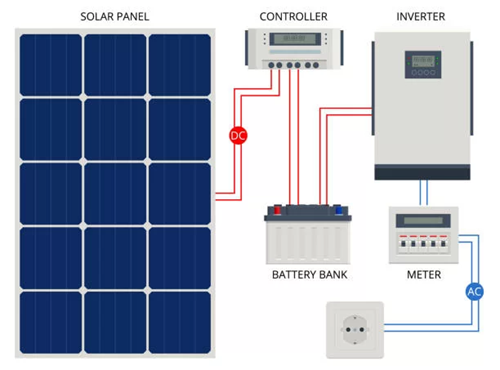
Inverter-to-battery communication enables real-time data exchange (voltage, current, State of Charge - SoC) via protocols like CAN bus or RS485 for safe, efficient charging. It establishes a closed-loop system, allowing the Battery Management System (BMS) to control the inverter, which protects lithium batteries from overcharging/discharging. Key Aspects of Inverter-Battery Communication
Common Communication Protocols & Ports
Key Functions of Communication
Common Communication Protocols
Systems typically use specific cables and protocols to "talk":
Setup Requirements
|
|
Voltage Balancing Battery mettere la foto cell_belance Battery voltage balancing equalizes the charge across individual cells in a battery pack to ensure all cells have the same State of Charge (SOC), preventing overcharging/undercharging, maximizing capacity, and extending lifespan. It is essential for lithium-ion systems and can be achieved through passive (dissipative) or active (transfer) methods. Key Aspects of Battery Balancing
Main Balancing Techniques There are two primary methods used to keep cells in sync:
Benefits
For most lithium-based systems like LiFePO4, balancing typically begins when cells reach their "top" voltage (e.g., above 3.4V per cell) during the charging cycle.
|
|
BMS Configuration BMS (Battery Management System) configuration involves setting up parameters like cell count, battery capacity, chemistry (e.g., LiFePO4), and safety thresholds (voltage, temperature, current). It ensures safe charging/discharging, balances cells, and defines communication protocols (CAN/RS485) to maximize battery life. Key Aspects of BMS Configuration
How to Configure a BMS Most modern BMS units (e.g., JK, Daly, Seplos) are configured via Bluetooth app or PC software.
Types of BMS Topologies
Common Configuration Settings When setting up a BMS (often via Bluetooth apps or CAN bus), you must define several critical limits:
Essential Tools
|
|
Temperature Cycling of battery Temperature cycling of batteries involves repeatedly exposing cells to high and low temperatures (e.g., to -40°C +72°C) to test safety, reliability, and lifespan. Extreme cold causes ion sluggishness and capacity loss, while high temperatures accelerate degradation, causing chemical reactions that increase capacity fade and internal resistance. Key Effects of Temperature Cycling
Temperature Cycling of battery
Testing Objectives
1. Temperature Cycling as a Stress Test
This is a controlled laboratory procedure used by manufacturers to ensure safety and reliability. The battery is placed in a Climatic Testing Chamber and subjected to repeated swings between extreme temperatures (e.g., -40°C to +70°C).
2. Thermal Effects During Electrical Cycling This refers to how temperature fluctuates naturally while you use the battery (charging and discharging).
Key Performance Impacts
|

+(39) 347 051 5328
Italy - Kazakhstan


09.00am to 18.00pm
About
We offer the best and economical solutions, backed by 27+ years of experience and international standards knowledge, echnological changes, and industrial systems.
Our Services
Marketing Materials


Marketing Materials1


