
|
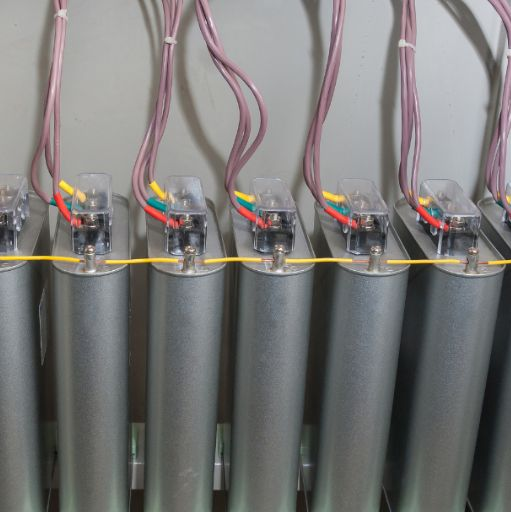
Capacitive Load Banks - Working Principle
Capacitive load banks simulate, test, and verify power systems by creating a leading power factor, supplying reactive power (kVAr) to counteract inductive loads. Used in UPS, data center, and telecommunications testing, they ensure system stability, correct power factors to near unity, and prevent over-excitation in generators. For more details click here Key Aspects of Capacitive Load Banks
Capacitive load banks are essential for ensuring the reliability of electronic, non-linear loads. A capacitive load bank is a specialized testing device that uses capacitors to simulate electrical loads with a leading power factor. Unlike standard resistive load banks that convert energy into heat, capacitive load banks store and release electrical energy in an electric field. Core Functionality
Common Applications Capacitive load banks are essential for testing modern infrastructure that handles non-linear or electronic loads.
Key Specifications
Comparison of Load Bank Types
For comprehensive validation, facilities often use Resistive-Reactive (Combined) load banks, which integrate all three elements to match a facility's actual electrical profile.
|
|
Inductive of Load Banks - Working Pinciple
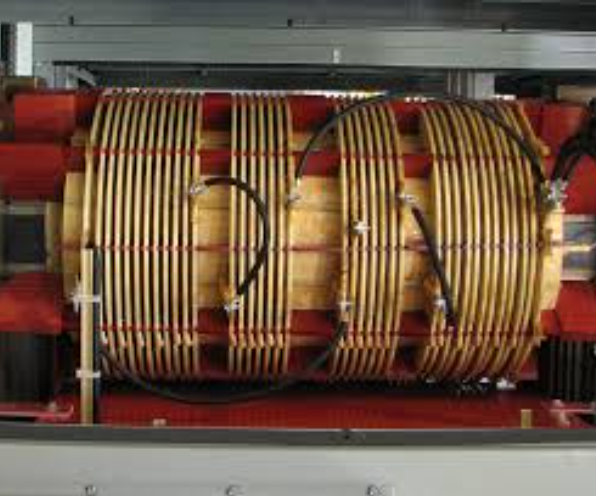
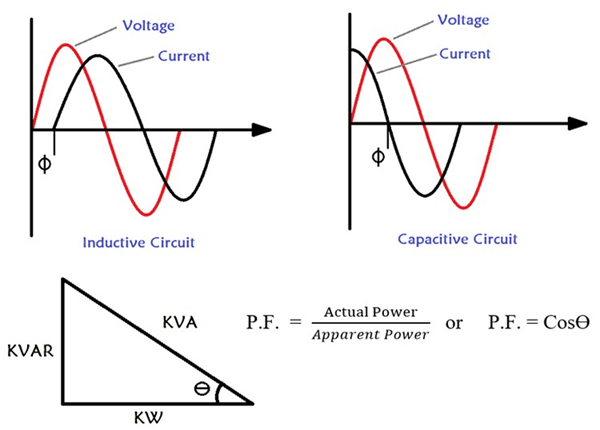
Inductive load banks are devices that simulate motor-driven or magnetic loads by introducing lagging power factor, typically used to test generators at full kVA ratings, often at 0.8 PF when combined with resistive units. They utilize reactive elements (iron-core coils) to create a phase difference, where current lags voltage. For more details click here Key Aspects of Inductive Load Banks
Inductive loads are generally paired with resistive loads in a ratio (e.g., 100 kW resistive with 75 kVAr inductive) to achieve the desired 0.8 PF test standard. For more details click here An inductive load bank is an electrical testing device that uses iron-core reactive elements (inductors) to simulate "lagging" power factor loads. Unlike resistive load banks that convert all energy into heat, inductive load banks draw reactive power (measured in kVAr) by building up magnetic fields. For more details click here Core Functionality
Resistive – Inductive Load Banks are load banks that contain both resistive (kW) and inductive (kVAr) load elements in the same cabinet. Thus, it provides both resistive and inductive loads at the same time for power sources such as Generator, UPS, Gas Turbine, whose operating loads are mixed (kW+kVAr) type, It offers the opportunity to test the devices at 100% kVA.
Note Combined type Load Banks contain both resistors and inductors that are used to provide load testing at a lagging power factor or to regulate the power factor. In this way, it provides the opportunity to test the generator at 100% kVA. Resistive-Reactive loads can simulate the operation of motor loads and electromagnetic devices within a power system. It can also provide a purely resistive load. Most gen-sets are designed and manufactured with a power factor of 0.8 power. The power Factor (Pf) of Resistive Load banks is 1.0. Therefore, it cannot fully provide the kVA value that the generator group can give. For example, a 1000 kVA generator set can only supply 800 kW of power to a purely resistive load bank. Therefore, a full load test of the motor can be made with a resistive load bank, but it can be tested up to a maximum of 80% of the rated current of the alternator. This means that the alternator and control system has not been tested to rated limits. Usage areas Mixed Type Load Banks have a wide usage area. The main areas of use are listed below.
General Features Resistive-Inductive Load Banks can be produced with various cabinet types and ventilation types in accordance with different needs. In order to get the right result, these issues should be considered when choosing a load bank If the Load Bank is to be used in a closed environment that will not be affected by environmental conditions, it can be preferred with the Indoor Type Cabinet with IP20 Protection class. Key Applications
Comparison with Other Load Banks
|
|
Resistive Load Banks - Working Principle
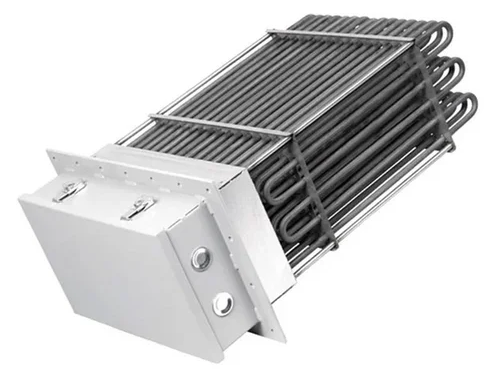
Resistive load banks are devices that simulate operational electrical loads by converting electrical energy into heat, primarily to test power sources like generators, UPS systems, and batteries at 100% rated kW. They use resistive elements (often sheathed stainless steel) to create a unity power factor (PF 1.0) load, making them ideal for removing engine carbon build-up.
Key Aspects of Resistive Load Banks
Advantages
Limitations
|
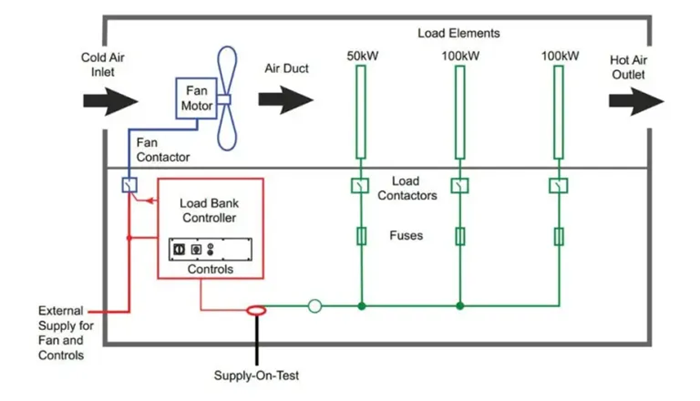
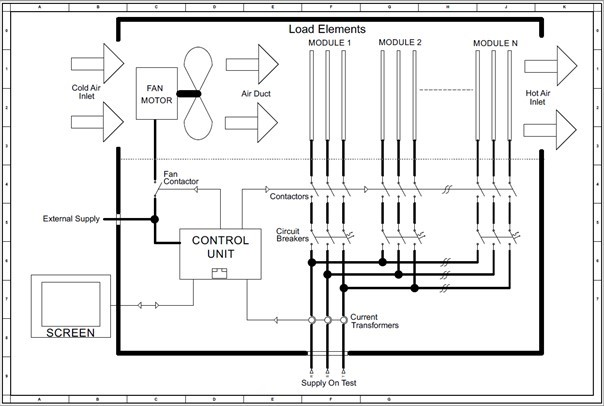
|
Constant power mode for a battery Constant power mode for a battery maintains a steady power output (P = VI) during discharge or charging by dynamically adjusting the current as the voltage changes. As the battery voltage drops during discharge, the system increases the current to keep power constant, offering a realistic simulation for electronic loads. Key Aspects of Constant Power Mode
In battery technology, Constant Power (CP) mode is an operating state where the power delivered (or received) remains fixed, regardless of the battery's fluctuating voltage. Key Characteristics
Why Use Constant Power Mode?
Summary of Differences
|
|
Constant current mode to measure total energy capacity of battery Using Constant Current (CC) mode is the standard, most accurate, and most commonly used method to measure the total energy capacity of a battery (in Ah or Wh). This method involves discharging a fully charged battery at a fixed current rate while monitoring voltage until a designated cut-off voltage is reached 1. Preparation & Setup
2. The Procedure
3. Calculating Total Capacity (Ah and Wh)
A. Capacity in Amp-Hours (Ah)
If the current is held constant throughout, use the time elapsed:
Capacity (Ah) = Current (A) x time (hours)
Example: A 500mA (0.5A) load running for 4 hours yields: (2000mAh). B. Total Energy in Watt-Hours (Wh) - More Accurate For better accuracy (since voltage drops during discharge), calculate the energy at each step and integrate over time.
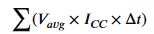
Practically, this is done by calculating the average voltage during small intervals:
4. Key Factors Affecting Results
Summary Table
In Constant Current (CC) mode, you determine a battery's energy capacity by discharging it at a fixed current until it reaches a safe cut-off voltage. While CC mode directly measures charge capacity (mAh), calculating total energy (Wh) requires tracking the falling voltage throughout the test. 5. Why CC Mode is Preferred?
What is the chemistry and nominal voltage of the battery you are testing? Knowing this helps determine the optimal discharge rate (C-rating) and cut-off voltage for your specific test 6. Equipment Options
|




+(39) 347 051 5328
Italy - Kazakhstan


09.00am to 18.00pm
About
We offer the best and economical solutions, backed by 27+ years of experience and international standards knowledge, echnological changes, and industrial systems.
Our Services
Marketing Materials


Marketing Materials1


