|
Bently nevada 3500/20 RACK INTERFACE MODULE
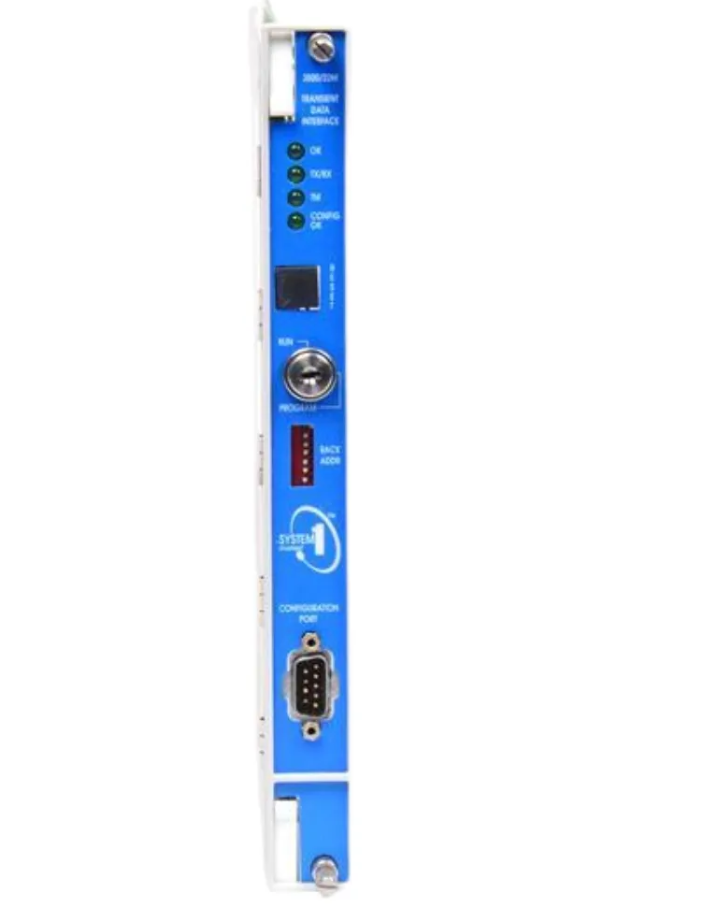
Bently nevada 3500/20 is a Rack Interface Module.The primary interface to the 3500 rack is the Rack Interface Module (RIM). It supports a proprietary protocol for configuring the rack and retrieving machinery data.
Manufacturer: Bently Nevada
Model Number: 3500/20 (complete di order choose last part number if require)
Ordering information: 125744-02
Product Type: Recip Rod Position Monitor
Description: Bently Nevada 3500/20-01-01-00 125744-02 Standard Rack Interface Module
price: $1500
Dimensions: 9.50 in x 0.96 in x 9.52 in
Weight: 0.91 kg (2.0 lb)
Series: 3500
Origin: United States (US)
Availability: In stock
Ordering Information
3500/20-AXX-BXX-CXX
A: Rack Interface Type
01 Standard RIM (Use for standard monitoring applications)
02 TMR RIM (Use only for application that requires a Triple Modular Redundant Configuration)
B: Type of I/O Module
01 I/O module with built-in modem
02 I/O module with RS232/RS422 interface
C: Agency Approval Option
00 None
01 CSA/NRTL/C
For more details see datasheet here
Spares
125744-02
Standard Rack Interface Module
125744-01
TMR Rack Interface Module
135031-01
RIM I/O Module with Modem Interface
125768-01
RIM I/O Module with RS232/RS422 Interface
125760-01
Data Manager I/O Module
Functional Description
Bently nevada 3500/20 is a Rack Interface Module.The primary interface to the 3500 rack is the Rack Interface Module (RIM). It supports a proprietary protocol for configuring the rack and retrieving machinery data. The RIM must be placed in rack slot 1. (next to the power supplies). Compatible Bently Nevada external communications processors such as TDXnet, TDIX, and DDIX are supported by the RIM. While the RIM performs some functions that are shared by the entire rack, it is not part of the critical monitoring path and has no effect on the overall monitoring system's proper, normal operation. Each rack requires one RIM.
Features
- A Nexus of Integration: At its core, the RIM serves as the primary interface to the 3500 rack, bridging the gap between the machinery's operational data and the control system. This module operates as a communication conduit, utilizing its proprietary protocol to efficiently configure the rack and extract crucial insights from the machinery it oversees.
2. Strategic Placement and Compatibility: The strategic placement of the RIM within the rack is critical. Nestled in the first rack slot (adjacent to the power supplies), it assumes a central position in the setup. This positioning maximizes its accessibility and ensures smooth communication with other components. Additionally, the RIM seamlessly accommodates Bently Nevada external communications processors, including TDXnet, TDIX, and DDIX, facilitating versatile connectivity options.
3. Non-Intrusive Role in Monitoring Path: The RIM, while pivotal, is not part of the critical monitoring path within the system. Its presence does not impact the system's overall operation or its monitoring efficiency. Instead, it operates as an intelligent coordinator, enhancing the efficiency and accessibility of data retrieval.
4. TMR Version for Triple Modular Redundancy: For applications demanding the highest levels of redundancy and reliability, the RIM offers a TMR (Triple Modular Redundant) version. This specialized iteration of the RIM goes beyond standard functions by implementing monitor channel comparison. This TMR RIM performs continuous comparisons of the outputs from three redundant monitors, ensuring that discrepancies beyond predefined thresholds are flagged, allowing for immediate corrective actions.
5. Empowering TMR Configuration: The TMR RIM's monitor channel comparison capability enhances the power of the system's TMR configuration. This monitoring approach provides an added layer of integrity by detecting variations in redundant monitor outputs. When the TMR RIM identifies inconsistencies, it records events, enabling swift identification of potential issues and preserving the system's reliability.
Product Attributes
1. Rack Interface Module (RIM) boasts a set of distinctive attributes that define its role, capabilities, and compatibility within the context of the system. These attributes collectively paint a comprehensive picture of the module's significance in orchestrating seamless communication and data retrieval.
2. Primary Connection to the 3500 Rack: At its core, the RIM serves as the principal connection point to the rack. This attribute underscores its pivotal role in channeling data between the machinery being monitored and the rack itself. Acting as the system's communication hub, the RIM forms the foundation upon which data flows and insights are derived.
3. Support for a Private Protocol: The RIM operates on a proprietary protocol, underscoring its specialized nature within the system. This private protocol is engineered to optimize communication efficiency, ensuring seamless configuration and data retrieval. This tailored protocol aligns with the system's unique requirements, enhancing the overall performance of the monitoring setup.
4. Strategic Placement Requirement: A crucial aspect of the RIM's deployment is its strategic placement within the rack. It is imperative that the RIM be placed in Slot 1, which is adjacent to the power supplies. This careful positioning is deliberate, enabling optimal communication pathways and efficient interactions with other components within the rack.
5. Compatibility with Communication Processors: One of the hallmarks of the RIM is its versatility in accommodating various communication processors. These include notable entities like TDXnet, TDIX, and DDIX. This attribute broadens the module's reach, allowing it to seamlessly integrate with diverse communication processors, enhancing connectivity options for different industrial setups.
|