|
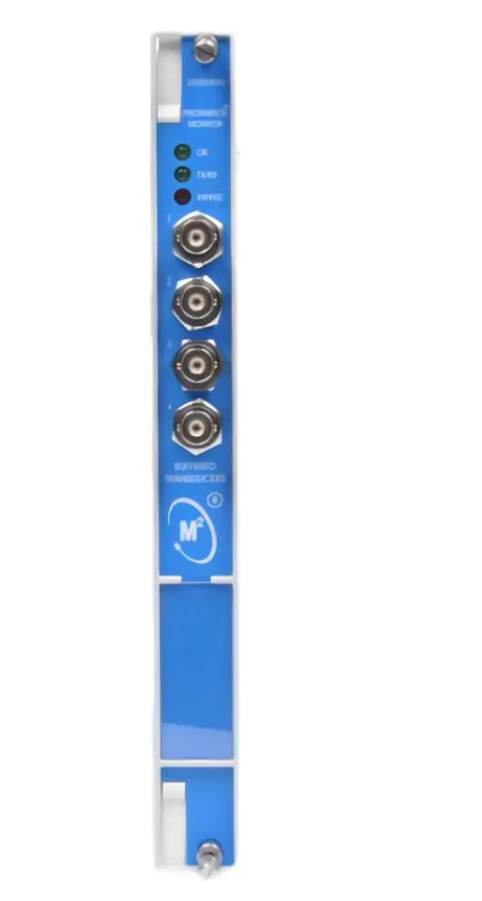
Bently nevada 3500/40M PROXIMITOR MONITOR MODULE
Bently nevada 3500/40 is a Proximitor Monitor Module.It is a Proximitor Monitor I/O Module manufactured and designed by Bently Nevada as part of the 3500 Series used to control the machinery condition monitoring system.
Manufacturer: Bently Nevada Model Number: 3500/40 (complete di order choose last part number if require) Product Type: Proximitor Monitor Module Description: Bently Nevada 3500/40M-01-00 176449-01 Proximitor Monitor price: $1200 Dimensions: 9.50 in x 0.96 in x 9.52 in Weight: 0.91 kg (2.0 lb) Series: 3500 Payment: T/T Origin: United States (US) shipping port: validate Availability: In stock
Ordering Information
For the detailed listing of country and product-specific approvals, refer to the Approvals Quick Reference Guide (108M1756) available from Bently.com. Proximitor Monitor3500/40M - AA-BB
A: I/O Module Type 01 Proximitor I/O Module with Internal Termination 02 Proximitor I/O Module with External Terminations 03 Proximitor I/O Module with Internal Barriers and Internal Terminations
B: Hazardous Area Approval Option 00 None 01 CSA / NRTL / C (Class 1, Division 2) 02 ATEX / IECEx / CSA (Class 1, Zone 2)
For more details see datasheet here
Spares
176449-01 3500/40M Proximitor Monitor 125680-01 Proximitor I/O Module with Internal Terminations 126615-01 Proximiotr I/O Module with Extrnal Terminations 135489-04 Proximitor I/O Module with Internal Barriers and Internal Terminations 149716-01 TMR Proximitor I/O Module with External Terminations
Functional Description
Bently nevada 3500/40 is a Proximitor Monitor Module.It is a Proximitor Monitor I/O Module manufactured and designed by Bently Nevada as part of the 3500 Series used to control the machinery condition monitoring system. The monitors that accept input from proximity transducers made by Bently Nevada, condition the signal to produce different vibration and position measures, and compare the conditioned signals with user-programmable alarms. The Radial Vibration, Thrust Position, Differential Expansion, Eccentricity, and REBAM functions can all be programmed into each channel using the 3500 Rack Configuration Software. The Proximitor Monitor I/O Module is designed to provide the necessary inputs and outputs for connecting proximity probes and monitoring their signals. It typically includes multiple channels to accommodate multiple probes and can interface with various types of proximity probes, such as eddy current probes and capacitive probes. The GE / Bently Nevada Proximitor Monitors are 4-channel monitors that accept input from proximity transducers made by Bently Nevada, condition the signal to produce different vibration and position measures, and compare the conditioned signals with user-programmable alarms. The Radial Vibration, Thrust Position, Differential Expansion, Eccentricity, and REBAM functions can all be programmed into each channel using the 3500 Rack Configuration Software. The Proximitor Monitor I/O Module is designed to provide the necessary inputs and outputs for connecting proximity probes and monitoring their signals. It typically includes multiple channels to accommodate multiple probes and can interface with various types of proximity probes, such as eddy current probes and capacitive probes.
Features
- Proximity Probe Inputs: The module typically provides multiple channels for connecting proximity probes. These inputs are designed to accommodate different types of probes, such as eddy current probes and capacitive probes.
2. Signal Conditioning: The module includes signal conditioning circuits to amplify, filter, and process the signals from the proximity probes. This ensures accurate and reliable measurements of vibration and position. 3. Measurement Parameters: The module may offer various measurement parameters, such as displacement, velocity, and acceleration, depending on the type of proximity probes being used. It allows for monitoring different aspects of machinery performance. 4. Digital and Analog Outputs: The module provides both digital and analog outputs to interface with monitoring systems or control devices. Digital outputs may include relays or discrete alarms for triggering alerts or shutdowns based on predefined thresholds. Analog outputs can provide continuous voltage or current signals representing the measured parameters. 5. Communication Interfaces: Some Proximitor Monitor I/O Modules may include communication interfaces, such as RS-485, Ethernet, or Modbus, allowing for remote monitoring and integration with a larger control or data acquisition system.
Intrinsic Safety Barriers or Galvanic Isolators
- Internal Intrinsic Safety Barriers: Internal intrinsic safety barriers emerge as a preferred choice for handling hazardous conditions, given their array of advantages.
2. Cost Efficiency: Internal barriers prove cost-effective by eliminating the need for extra external components. This streamlined approach translates to considerable cost savings, enhancing budget-friendliness without compromising safety measures. 3. Space Optimization: With internal barriers, the necessity for extra cabinet space is eliminated. This efficient use of existing system layout becomes particularly valuable in settings where space limitations are a concern. Minimizing the footprint required for safety measures enhances overall space efficiency. 4. Simplified Wiring: A standout benefit of internal barriers is the reduction of additional wiring requirements. Pre-wired connections between monitors and barriers mitigate the risks associated with manual wiring, thus enhancing safety and reliability by minimizing potential errors. 5. Enhanced Safety: Internal barriers contribute to heightened safety by virtue of their pre-wired connections and reduced risk of wiring errors. This fortified safety aspect ensures that hazardous environments are appropriately managed and monitored with a reduced likelihood of complications stemming from incorrect wiring. 6. External Intrinsic Safety Barriers: While internal barriers offer notable advantages, external intrinsic safety barriers also hold relevance in specific contexts. 7. Adaptation to Existing Systems: External barriers become more suitable when dealing with existing setups or unique requirements. They can be seamlessly integrated into systems with specific configurations or constraints, providing the needed adaptability. 8. System Flexibility: External barriers bring a level of flexibility by allowing optimal positioning within the broader system design. This adaptability proves beneficial in scenarios where the system's architecture necessitates a decentralized approach for safety measures.
|