
Camlock Coupling/Fitting and Gaskets
Camlock gaskets (also called cam and groove gaskets) are engineered to stop leakage while undergoing a variety of compression levels. Global O-Ring and Seal offers camlock gasket seals in Buna (Nitrile), Viton, EPDM, Silicone, FEP/PFA Encapsulated, and more!
If you have any questions or would like to request a quote, please give us a call, or submit our Product Inquiry Form with your specifications. We will respond to your request within one business day.
Camlock Fittings (Cam-and groove couplings) work by utilizing a simple lever-arm coupling system that allows for quick installation and removal. To connect a camlock fitting, begin with the female fitting's arms raised to the sides. Then, fit the male adapter into the female coupler end. Close both handles at the same time to engage the gasket and seal the two halves together. Closing the handles simultaneously (rather than one at a time) ensures an even and leak-proof seal.
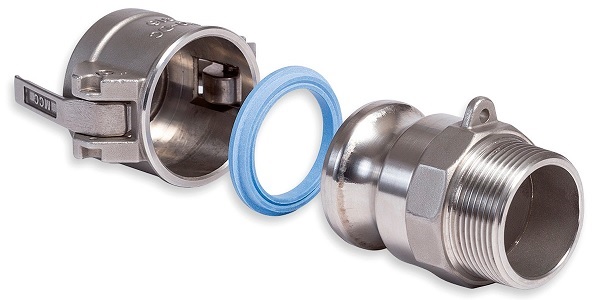
How do Camlock fittings work?
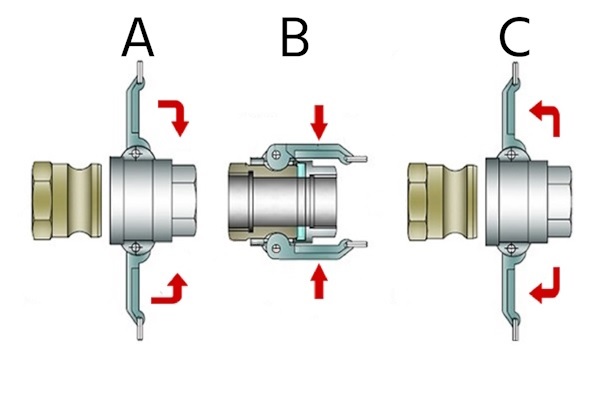
The assembly of a Camlock coupling consists of two pieces: a male plug and a female coupler. Figure on side shows the components and process for connecting and disconnecting Camlock couplings.
- The coupling handle should be extended outward, and the correct male plug should be placed into the female coupler (Figure labeled A).
- The two halves should be firmly locked together by closing both handles simultaneously (Figure labeled B). Closing both handles simultaneously ensures that the grooved plug is consistently pushed down onto the seal, guaranteeing a leak-proof assembly for the safe transfer of liquids.
- Ensure that the camlock hose assembly is de-pressurized before reversing the process to disconnect the fitting (Figure labeled C).
Camlock fitting types
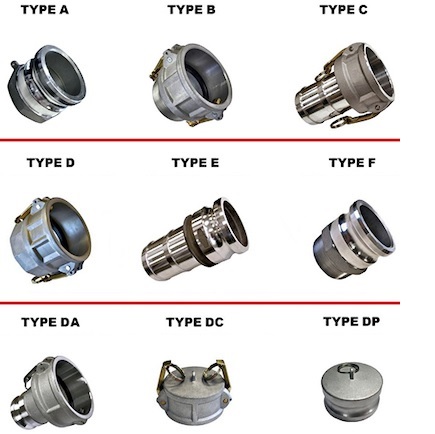
There are several types of camlock fitting, all described below
Camlock couplings are identified by their type designations, which are listed below while the image shows a visual reference for the various coupling types.
- Type A: Plug with female thread
- Type B: Coupler with male thread
- Type B-AS: Coupler with weld end
- Type C: Coupler with hose tail
- Type D: Coupler with female thread
- Type E: Plug with hose tail
- Type F: Plug with male thread
- Type F-AS: Plugs with weld connection
- Type DC: Dust cap for plugs
- Type DP: Dust plug for couplers
- Type DA: Female coupler with male camlock adapter
In Our shop
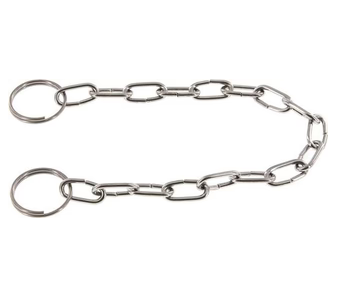
Camlock Coupling Chain - Available for all sizes of connection
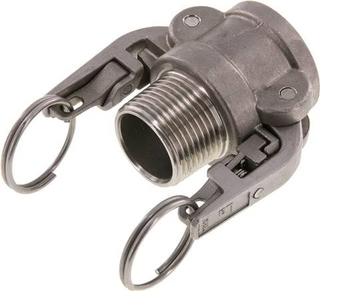
Safety Camlock Couplings (with internal seal) NPT male connector
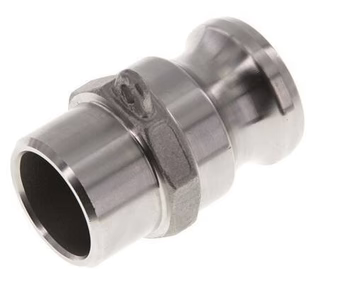
Type F-AS - Camlock Coupling Plugs With Weld Connection
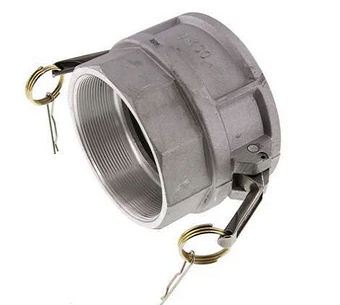
Type D - Camlock Coupling Sockets With Female Thread
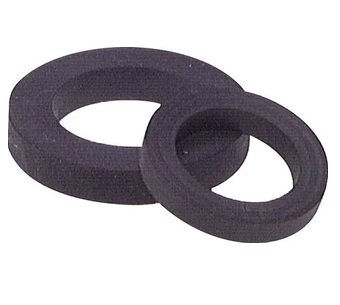
Replacement Seals For Camlock Couplings Camlock Coupling Chain
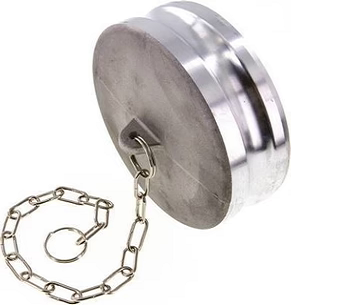
Type DP - Camlock Coupling Caps For Plug (with internal seal)
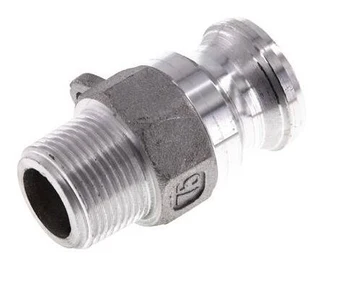
Type F - Camlock Coupling Plugs With Male Thread
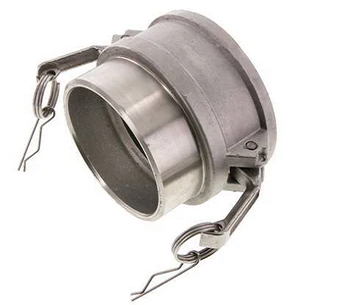
Type B-AS - Camlock Coupling Sockets With Weld Connection
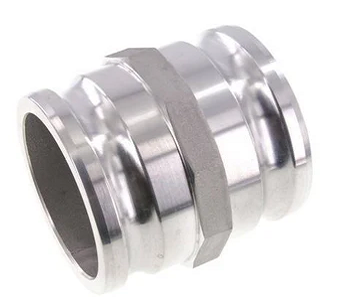
Camlock Coupling Connectors For Socket (To joint two connection)
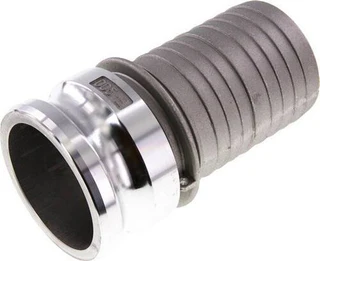
Type E - Camlock Coupling Plugs With Hose Pillar
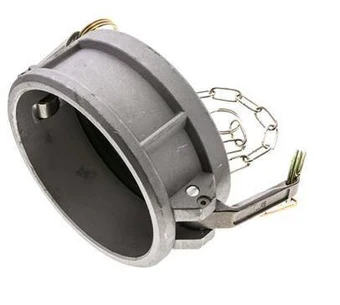
Type DC - Camlock Coupling Caps For Socket (available with restriction)
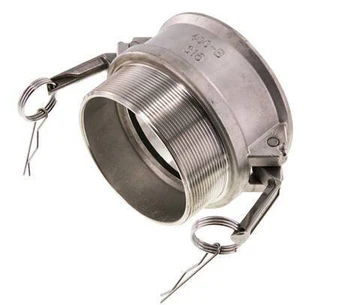
Type B - Camlock Coupling Sockets With Male Thread
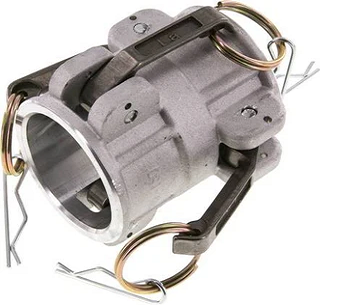
Camlock Coupling Connectors For Plug (with internal seal)
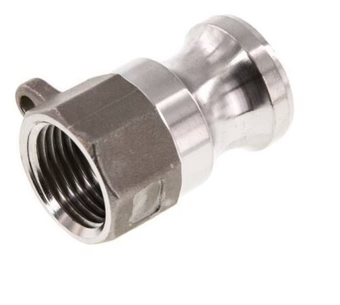
Type A - Camlock Coupling Plugs With Female Thread
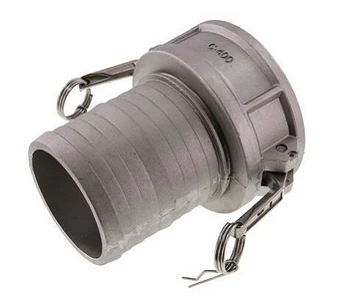
Type C - Camlock Coupling Sockets With Hose Pillar
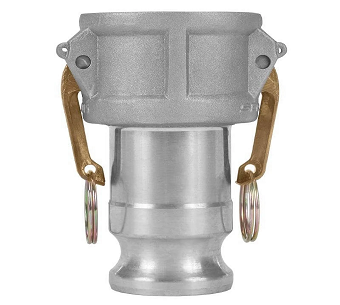
Type DA - Cam and Groove Hose Fitting, Reducer
Selection criteria
Before purchasing, various factors should be considered to get the correct fitting for the application. Below is a list of the primary selection criteria for Camlock couplings.
Camlock couplings and plugs have slightly different sizes, female couplers are therefore measured on the inside (A), while male plugs are measured on the outside (B). For more details see the figure on the side
Camlock coupling sizes are determined by their nominal size, where the male and female couplings have slightly different sizes for coupling purposes. The male plug (Figure above labeled B) is measured on the outside, while the female coupler is measured on the inside (Figure above labeled A).
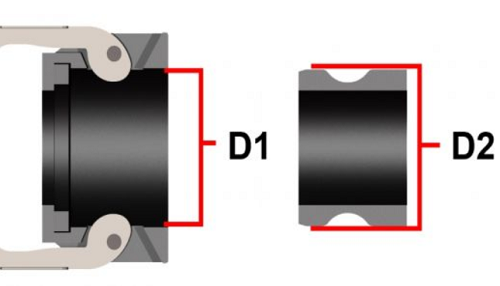
Camlock fitting size chart
| Nominal size (inch) | A (mm/inch) | B (mm/inch) |
| 3/4 | 32.4 / 1.28 | 32.1 / 1.26 |
| 1 | 37.3 / 1.47 | 36.7 / 1.44 |
| 1 1/4 | 46.0 / 1.81 | 45.5 / 1.79 |
| 1 1/2 | 54.0 / 2.13 | 53.4 / 2.10 |
| 2 | 63.8 / 2.51 | 63.0 / 2.48 |
| 3 | 92.2 / 3.63 | 91.5 / 3.60 |
| 4 | 120.3 / 4.74 | 119.5 / 4.70 |
Temperature
The temperature specifications of the coupling are determined by the material chosen. For example, 70 °C (158 °F) is the maximum temperature that polypropylene can handle, at which pressures must be reduced by 40%. When stainless steel is used, the operating temperature ranges from -150 °F to 500 °F (-101 °C to 260 °C). Due to these differences, it pays to know the application's exact details and working temperatures. Remember that the minimum and maximum operating temperature depends on various factors besides the material the Camlock coupling is made of. These include, but are not limited to the operating pressure, media used, outside factors like weather, etc.
Material
The table below shows the advantages and disadvantages of each material and how they can be used for various applications.
|
Item |
Characteristic |
Advantage |
Disadvantage |
Application |
|
Stainless Steel |
Stainless camlock fittings are corrosion-resistant
Compatible with various media Long-term durability |
Clean inner wall
Thermodynamic resistance High-strength |
High cost |
Acids, alkali, and highly corrosive areas |
|
PP |
Low density
Works for Acid, alkali, and organic solutions Chemically stable Anti-aging |
Leak-proof
Lightweight Low price Easy operation |
Low strength
Easy to deform |
Acidic and alkaline environments
Transmission of liquids in the chemical industry Agricultural irrigation applications |
|
Nylon |
Good heat resistance
Higher density than PP Resistant to changing humidity |
Leak-proof
Lightweight Cost effective Easy to work with |
Low strength
Easy to deform |
Acidic and alkaline environments
Transmission of liquids in the chemical industry Agricultural irrigation applications |
|
Brass |
Electrical conductivity
Seawater resistant |
Easy to assemble |
High cost |
Salty water and any media except for acid and alkali |
|
Aluminum Alloy |
Low density, high intensity
Aluminum camlock fittings have good plasticity Electrical and thermal conductivity |
Cost effective |
Corrosion resistance is poor relative to stainless steel
Susceptible to mildew and oxidation |
Freshwater mixtures |
Coatings
Camlock fittings are specially coated to protect them from highly aggressive chemical agents. This is because some standard materials, like stainless steel, cannot withstand those situations. For example:
- >ECTFE (ethylene chlorotrifluoroethylene): Couplers coated in ECTFE demonstrate excellent electrical insulation, fire, and corrosion resistance, and can withstand temperatures up to 150 °C. These couplings have been designed to resist highly concentrated and aggressive chemicals.
- >PFA (Perfluoroalkoxy alkanes): PFAs are particularly well suited for food and pharmaceutical industries because of their high-temperature resistance.
- >PTFE (Polytetrafluoroethylene/ Teflon): These coatings can withstand temperatures up to 260 °C and are as effective as PFA coated couplings for food-grade applications.
- >PVDF (Polyvinylidene difluoride): The coatings are wear-resistant and are also suitable for food industry applications. They are resistant to highly concentrated and aggressive chemicals and have the advantage of high temperature resistance up to 260 °C.
Maximum operating pressure
For the maximum operating pressure ratings for Camlock couplings, see the below table. The pressure rating is the pressure at ambient temperature.
| Nominal couplings size/ material | 1/2" | 3/4" | 1" | 1 1/4" | 1 1/2" | 2" | 2 1/2" | 3" | 4" | 5" – 6" | 8" |
| Aluminum PSI | 150 | 250 | 250 | 250 | 250 | 250 | 150 | 125 | 100 | 75 | 150 |
| Aluminum Bar | 10.34 | 17.23 | 17.23 | 17.23 | 17.23 | 17.23 | 10.34 | 8.61 | 6.89 | 5.17 | 10.34 |
| SS 316 PSI | 150 | 250 | 250 | 250 | 250 | 250 | 225 | 200 | 100 | 75 | - |
| SS 316 Bar | 10.34 | 17.23 | 17.23 | 17.23 | 17.23 | 17.23 | 15.51 | 13.78 | 6.89 | 5.17 | - |
| Brass PSI | 250 | 250 | 250 | 250 | 250 | 250 | 150 | 125 | 100 | 75 | 50 |
| Brass Bar | 17.23 | 17.23 | 17.23 | 17.23 | 17.23 | 17.23 | 10.34 | 8.61 | 6.89 | 5.17 | 3.44 |
| PP PSI | 75 | 100 | 100 | 100 | 100 | 100 | - | 50 | 50 | - | - |
| PP Bar | 5.17 | 6.89 | 6.89 | 6.89 | 6.89 | 6.89 | - | 3.44 | 3.44 | - | - |
| Nylon PSI | - | 100 | 100 | 100 | 100 | 100 | - | 50 | 50 | - | - |
| Nylon Bar | - | 6.89 | 6.89 | 6.89 | 6.89 | 6.89 | - | 3.44 | 3.44 | - | - |
Gaskets & seals
All metal Camlock couplings and polypropylene Camlock fittings are supplied & fitted with either a NBR, EPDM, or a PTFE (teflon) seal. Different sealing compounds are available depending on the media being conveyed through the couplings. There are replacement seals available made of the following materials:
- FKM (FPM)
- CSM (Hypalon)
- Teflon PTFE/NBR compound
- Teflon PTFE/FPM compound
For applications requiring more exotic sealing solutions, chemical encapsulated seals are available made of silicone or FEP.
Recommendations
This is a quick connector type, and as for all quick connectors, must be inspected periodically (mandatory). Below our recommendations
- Always follow the design pressure which the fitting was built
- Use fluids according to the characteristics of the fitting material
- Never modify the connection according to your experience. The fitting has been already build and tested based on ENGs
- Under pressure the fittings must be locked through the "Camlock Coupling Chain"
- Depressurize Before Disconnecting: Always ensure that the system is fully depressurized before attempting to disconnect the fittings to prevent accidents.
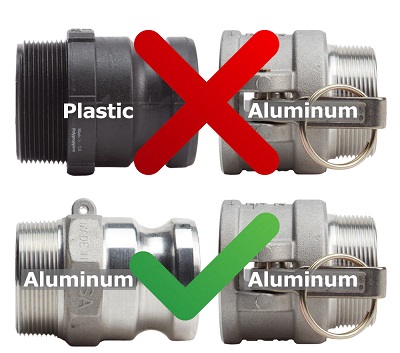
- Never mix the material between fittings
- Correct Usage: Use camlock fittings within their designed pressure and temperature ranges. Exceeding these limits can lead to fitting failure and safety hazards.
- Never mix the materials between fitting as shows in figure below
Question and Answer: Submit Your Question Below!
For Business: For any questions regarding Camlock connectors, please fill out our feedback below.
Our Partners







QC & Certificates
Our mature strict quality control team will check the products before shipment, including quality, prints, package, instruction manual and Certificate: ISO9001:2008, ISO/TS16949:2009
Safe Packaging
Our package is according to the seaworthy Packing Way in International Trade. We use good quality Poly bag and Master Carton for items. About more details, please send enquiry to us.
Free Sample in 5 Days
After confirming sample model and design, we can send the samples by your courier account like FedEx and DHL etc. About the samples details, please send inquiry for more .

+(39) 347 051 5328
Italy - Kazakhstan


09.00am to 18.00pm
About
We offer the best and economical solutions, backed by 27+ years of experience and international standards knowledge, echnological changes, and industrial systems.
Our Services
Marketing Materials


Marketing Materials1


