
V Ring Series
The V Seal (also known as a V Ring) finds extensive applications in diverse settings, primarily serving rotating shafts. Operating independently, they effectively shield various bearing types from contaminants, ensuring reliable retention of lubricants. Additionally, they frequently function as secondary seals, providing extra protection to primary seals in environments with high levels of contamination.
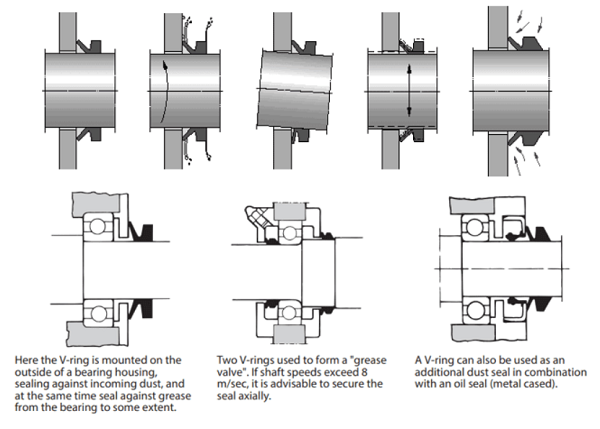
Installed on shafts, V-rings feature a thin, tapered lip that seals against a counterface perpendicular to the shaft. With an interference fit on the shaft, they rotate with it, serving as effective flingers. V-rings exhibit a remarkable ability to tolerate angular misalignment between the shaft and counterface. Even in scenarios where the shaft is out-of-round or rotates eccentrically, V-rings deliver dependable sealing. The allowable displacement of the V-ring relative to its counterface determines the permissible axial displacement of the shaft.
Constructed entirely from elastomers without fabric or metal reinforcement, V-rings are user-friendly and easy to install. Their flexibility allows for stretching and, depending on size, effortless placement over components such as flanges, pulleys, or even housings. This feature proves invaluable, particularly when replacing a seal.
In simple terms, a V-Ring is a durable rubber seal designed for shafts, serving to prevent the intrusion of dirt, moisture, and undesired elements into oil seals, housing, or specified areas. Simultaneously, it retains lubricants by stretching tightly over the shaft, with its flexible lip lightly sealing against the counterface at a right angle to the shaft.
Operating effectively independently, the V-Ring showcases optimal performance when used in conjunction with rotary shaft seals, contributing to the prolonged lifespan of bearings, oil seals, and shafts. Gamma Seals offer similar functionality to V-Rings but come with the added safeguard of a protective metal case.
How do V Ring work?
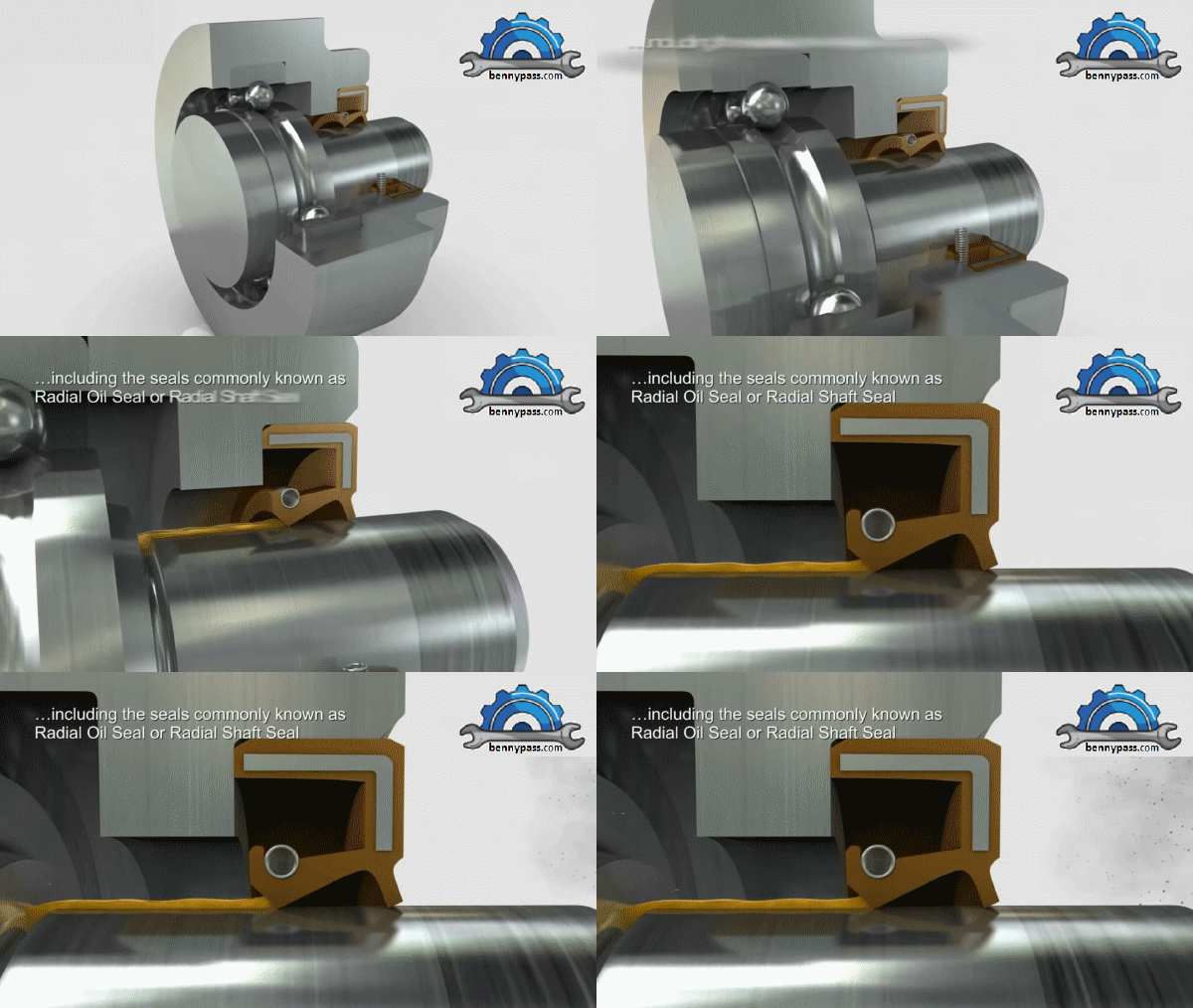
A V-ring comprises a seal body, a flexible conical-shaped sealing lip, and an integral, resilient “hinge”. Once stretched, it is directly installed on the shaft, where the inherent tension of the seal body holds it in place. This allows it to rotate with the shaft, creating an axial seal against a stationary counterface.
The counterface may take various forms, including the end face of a bearing, a washer, stamping, bearing housing, or even the metal case of a radial shaft seal.
The flexible sealing lip applies a contact pressure against the counterface, which is relatively low but sufficient for maintaining the sealing function. In low-speed applications, the light contact pressure even permits the seal to run dry, resulting in minimal torque drag or heat build-up. The contact pressure varies based on the fitted width.
The flexibility of the lip and hinge ensures effective sealing, even in applications with significant end play and shaft misalignment.
Due to centrifugal force, the contact pressure of the lip decreases as speed increases. This minimises friction losses and heat, enhancing wear resistance and extending the service life. Power loss peaks at a shaft speed of approximately 12 m/s (2,360 ft/min) and gradually reduces up to 20 m/s (3,900 ft/min), where it eventually decreases to zero. At this point, the V-ring transforms into a gap-type seal and deflector.
Applications of V-Rings
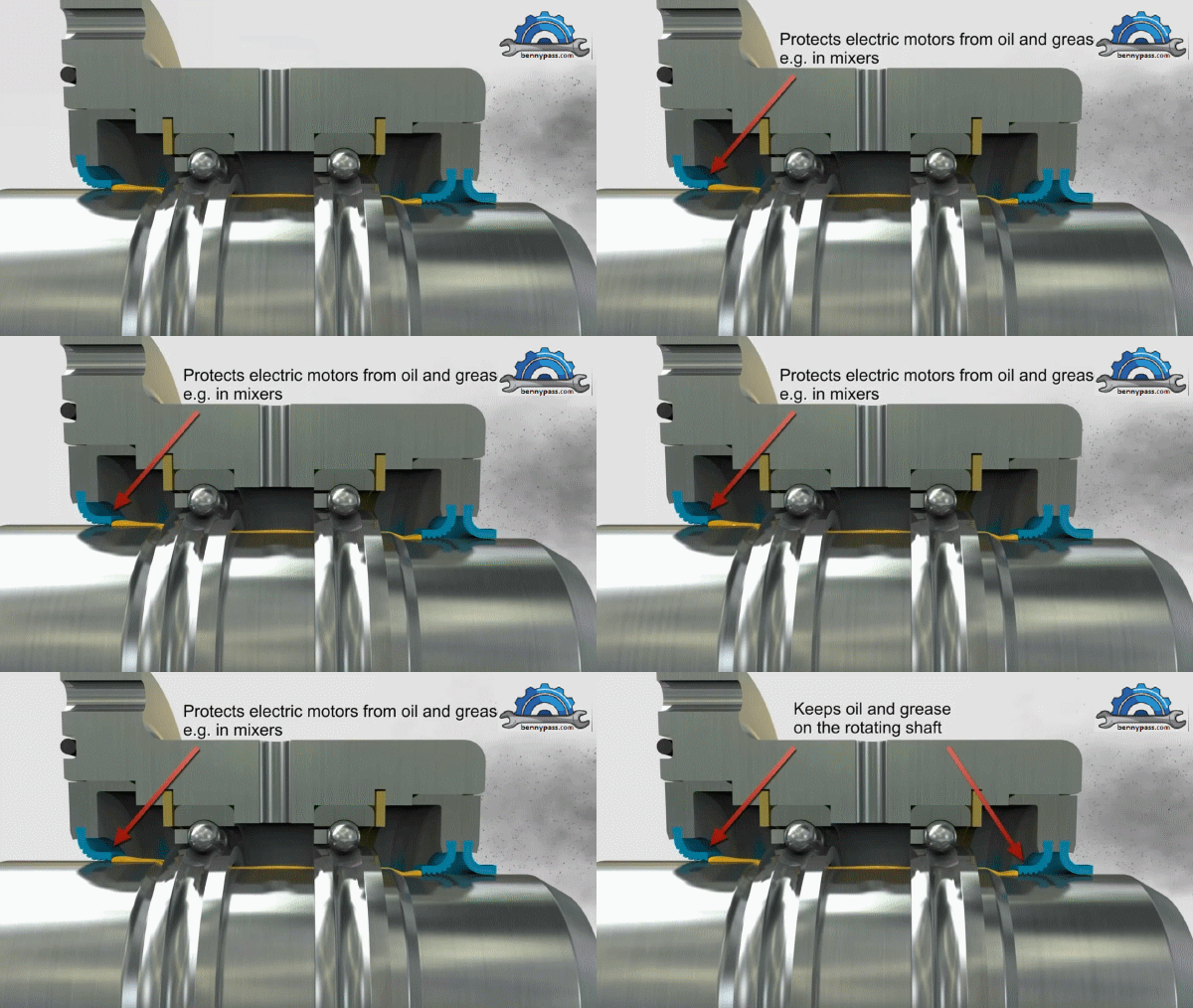
V-Rings are mainly used in combination with other types of seals such as shaft seals and they are used as an upstream sealing element in bearing. V-Rings are used frequently in following:
Applications of V-Rings
- Drive engineering
- General engineering
- Plant construction
- Electric motors
- Gears
- Agricultural equipment
- Bushing blocks
- Rolling mills
Function and Working Principle of V-Rings
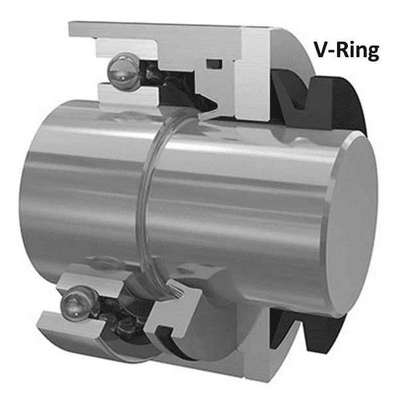
The V-ring seal is meticulously fitted onto the shaft, employing a snug undersized fit that allows it to rotate seamlessly along with the shaft's movements. Its ingenious design ensures that the flexible sealing lip maintains a flush contact with the sealing surface, adeptly compensating for any tolerances or angular deviations that may be present.
This flexible sealing lip serves as a formidable barrier, effectively thwarting the ingress of liquids while providing robust protection against external dust and contaminants. By forming a tight seal, the V-ring seal not only safeguards the integrity of the machinery's internal components but also enhances operational efficiency and longevity.
V-rings are made entirely of elastomers without fabric or metal reinforcement and are therefore easy to install. They can be stretched and, depending on size, pushed over other components like flanges, pulleys or even housings. This is a very valuable feature, especially when replacing a seal.
V-Rings Installation
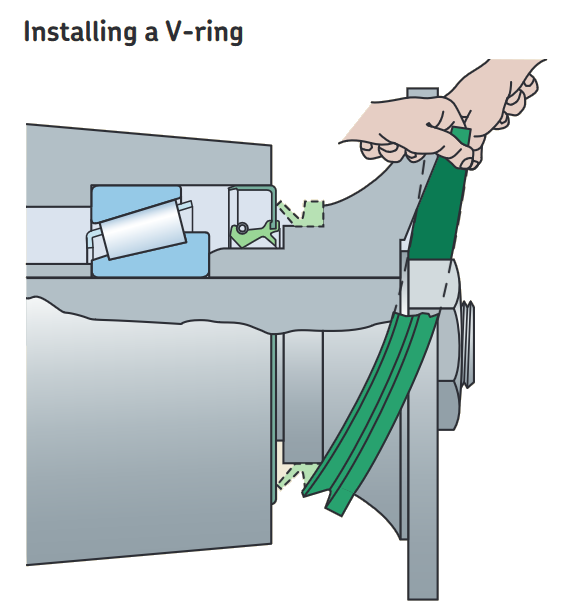
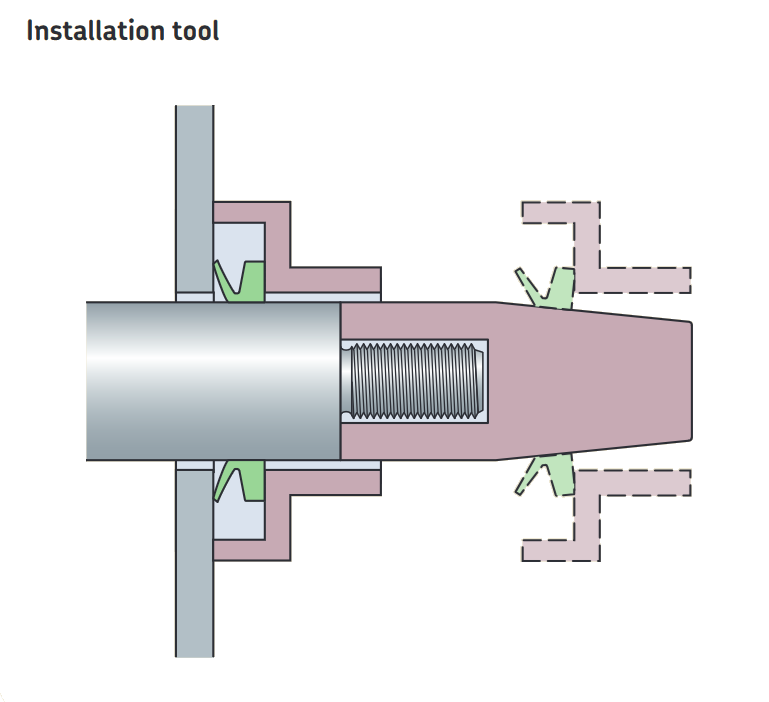
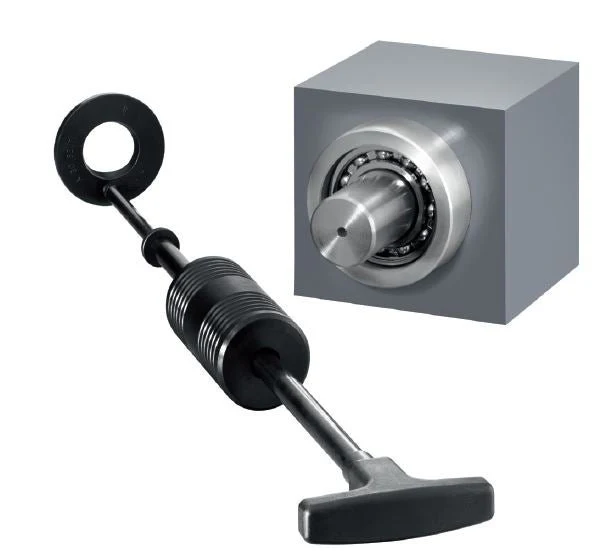
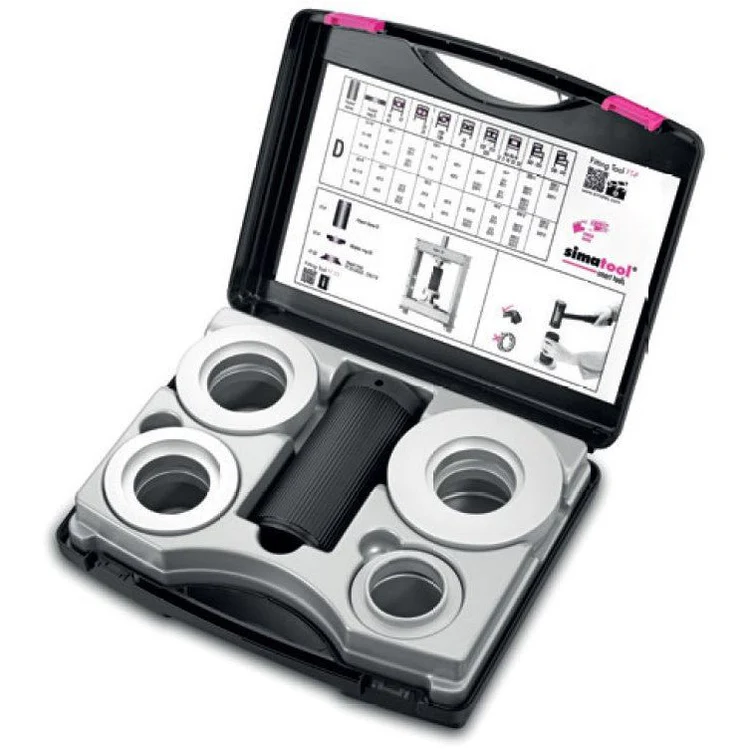
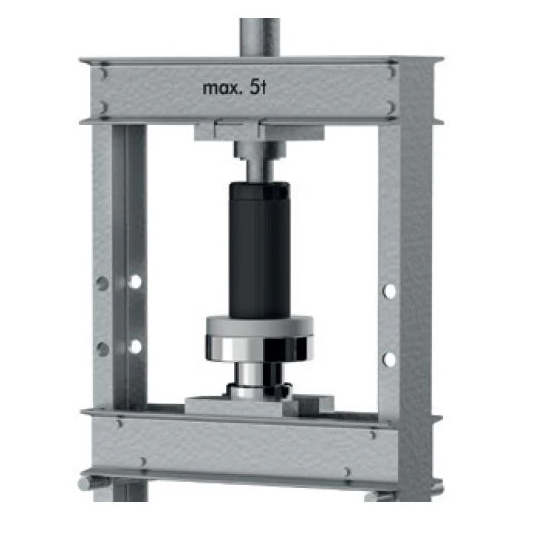
V-rings are elastic and can be stretched and pushed over other components, which facilitates the installation (fig. 5). When several V-rings are to be installed, a simple tool († fig. 6) can be used to push the seals to their position at a predetermined distance from the counterface. V-rings can also be cut and rejoined in the field. The general installation guidelines include the following:
- Clean the V-ring, counterface and shaft.
- Make sure that the shaft is dry and free from grease or oil, particularly when installing a V-ring without axial support.
- Lubricate the lip of the V-ring with a thin film of grease or silicone oil.
- In applications where friction must be reduced to a minimum, the counterface should be coated with a low-friction agent. Do not apply
grease to the lip. - Check that the V-ring is installed with a uniform stretch around the shaft
- The V-ring ought to be expanded uniformly all over the circumference. It may be helpful, especially where large dimensions are concerned, to slide a round blunt auxiliary tool (made of POM or wood) between V-ring and shaft and to let it rotate several times around the shaft.
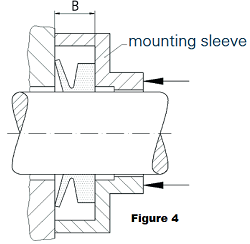
- It is important to uniformly keep the distance B after the installation. For more dettails see Figure 4 below
Shaft requirements
Sharp edges, nicks and burrs on the shaft must be avoided to prevent damage to the V-ring during installation. V-rings rotate with the shaft and only require a moderate surface roughness value. As a general guideline, the value should not exceed Ra 6,3 μm (252 μin.). When sealing fluids or exposed to fine, solid contaminants, the V-ring requires a surface roughness value of maximum Ra 3,2 μm (128 μin.). A V-ring is stretched when installed and fits all shaft diameters within the ranges listed in the product tables.
User benefits
- Improved sealing system performance
- Reduction in maintenance and failures caused
- by contamination
- More reliable system performance
- Increased bearing service life
- Increased uptime and productivity
- Cost-effective solution
- Optimised bearing protection
V-Ring material available
|
Type of Rubber |
Material |
Characteristics |
|
Nitrile |
NBR |
For general use |
|
Nitrile |
NBR |
Low friction |
|
Nitrile |
NBR |
Resistanct Ozone |
|
Fluorinated |
VITON (FKM) |
Very high temperature and chemical resistance |
|
Ethylene Propylene |
EPDM |
Good weather and ozone resistance, used with special chemicals such as acetone, am-monium carbonate and benzaldehyde |
|
Chloroprene |
NEOP |
For applications in the presence of ozone |
|
Hydrogenated Nitrile |
HNBR |
Hypoid oils at high temp. |
|
Silicone Rubber |
SILICONE |
It has excellent heat resistance, cold resistance, ozone resistance and atmospheric aging resistance. Has good electrical insulation properties. |
Construction types/designs
|
Model |
Style |
Dimensional range in |
Remarks/comments |
|
|
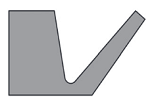
VA |
2.7 - 1970 |
most commonly used standard design |
|
|
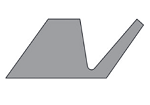
VS |
5 - 195 |
the same design as VR-A10 in the lip area, complemented by a conically extended retaining part, thus providing a better seat on the shaft |
|
|
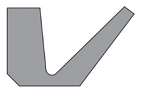
VL |
105 - 600 |
small profile geometry for compact installation conditions uniform profile for all diameters |
V Ring Size Charts
Find your Item: Choose your V-Ring seal. For any other option please write in the comment
Advance V-Ring Seals
ADVANTAGES
- diverse fields of application
- no high requirements as regards the shaft and housing designs low friction
- high circumferential speeds are possible as a result of reduced friction
- relatively insusceptible to coaxiality and radial eccentricity
- long service life
- easy installatio
Common applications
- Industrial electrical
- Industrial gearboxes
- Off-highway machinery
- Material handling equipment
- Mining and construction equipment
- Steel manufacturing equipment
- Pulp and paper processing equipment
- Marine industry machinery
- Wind turbines
V-Rings Feature
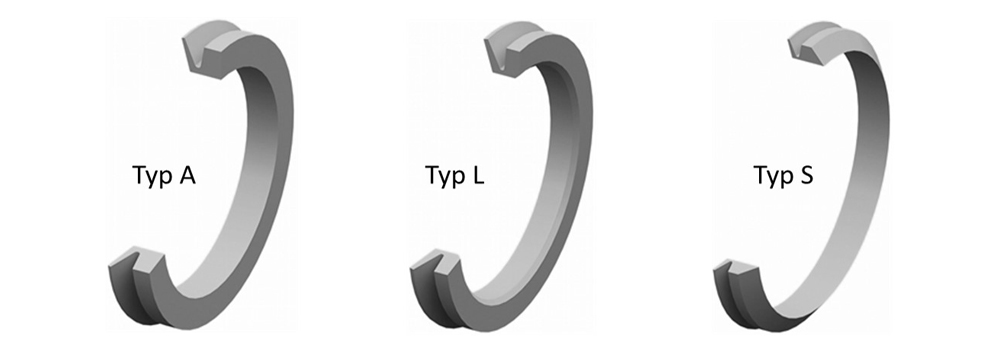
Type VA Series
V-ring type VA with straight back serves as a pressureless axial rod seal with a very small mounting length, which is clamped on the shaft.
The flexible sealing lip seals a counter face at a right angle to the shaft preventing dirt, dust and splash to enter the construction. The type VA is designed for heavy use or is applied in situations where larger axial tolerances are required. This profile is delivered for shafts from Ø 450 to Ø 2010 mm
Type VS Series
V-ring type VS with bevel back serves as a pressureless, axial rod seal which is clamped on a shaft. The flexible sealing lip seals a counterface at a right angle to the shaft, preventing dirt, dust and splash to enter the construction.
Type VL Series
V-ring type VL with straight back serves as a pressureless axial rod seal with a very small mounting length, which is clamped on the shaft.
The flexible sealing lip seals a counterface at a right angle to the shaft preventing dirt, dust and splash to enter the construction.
Our Partners






QC & Certificates
Our mature strict quality control team will check the products before shipment, including quality, prints, package, instruction manual and Certificate: ISO9001:2008, ISO/TS16949:2009
Safe Packaging
Our package is according to the seaworthy Packing Way in International Trade. We use good quality Poly bag and Master Carton for items. About more details, please send enquiry to us.
Free Sample in 5 Days
After confirming sample model and design, we can send the samples by your courier account like FedEx and DHL etc. About the samples details, please send inquiry for more .

+(39) 347 051 5328
Italy - Kazakhstan


09.00am to 18.00pm
About
We offer the best and economical solutions, backed by 27+ years of experience and international standards knowledge, echnological changes, and industrial systems.
Our Services
Marketing Materials


Marketing Materials1


