
Wind turbines
What is a wind turbine?
A wind turbine, or wind generator or wind turbine generator, is a device that converts the kinetic energy of wind (a natural and renewable source) into electricity.
Whereas a ventilator or fan uses electricity to create wind, a wind turbine does the opposite: it harnesses the wind to make electricity.
And, the taller the turbine, the stronger the wind, as there are fewer obstacles in its path.
The turbine’s blades, which are like the propellors of an airplane or helicopter, use the aerodynamic force of the wind to turn a rotor, which spins a generator. This process produces electricity, which is usually fed into the grid.
The wind turbines that transfer electricity to the grid are either based on land (onshore) or at sea (offshore).
Conglomerations of wind turbines are known as wind farms.
Horizontal-axis wind turbines
Horizontal-axis wind turbines (HAWTs) are the most common and efficient type of wind turbine. They typically have three blades and operate "upwind", which means that the blades face into the wind. This is because the head of the HAWT can pivot, thanks to the yaw system.
The main components (such as the generator) are located at the top of the turbine.
Vertical-axis wind turbines
As the name suggests, vertical-axis wind turbines (VAWTs) have a vertical rotor shaft, and their appearance is very different from that of the more traditional HAWT.
VAWTs are omnidirectional, and so they don’t need to be adjusted in order to face the wind: this can be an asset in locations where the wind direction is very variable. They are, however, relatively rare as they are less efficient in terms of air resistance. The main components are located at the base of the turbine.
Wind Turbine’s main components
- The foundation: This is a large, heavy structural block of concrete in the ground that supports the entire turbine and the forces acting on it. In offshore turbines, the foundation is underwater.
- The tower: The tower is usually made of steel, although wood (which is generally considered less harmful to the environment) can also be used. The tower usually has three sections and is assembled on-site. Its height varies, but it is generally the same as the diameter of the circle that the blades create when they spin. The tower also contains the power cables that connect the nacelle to the transformer on the ground.
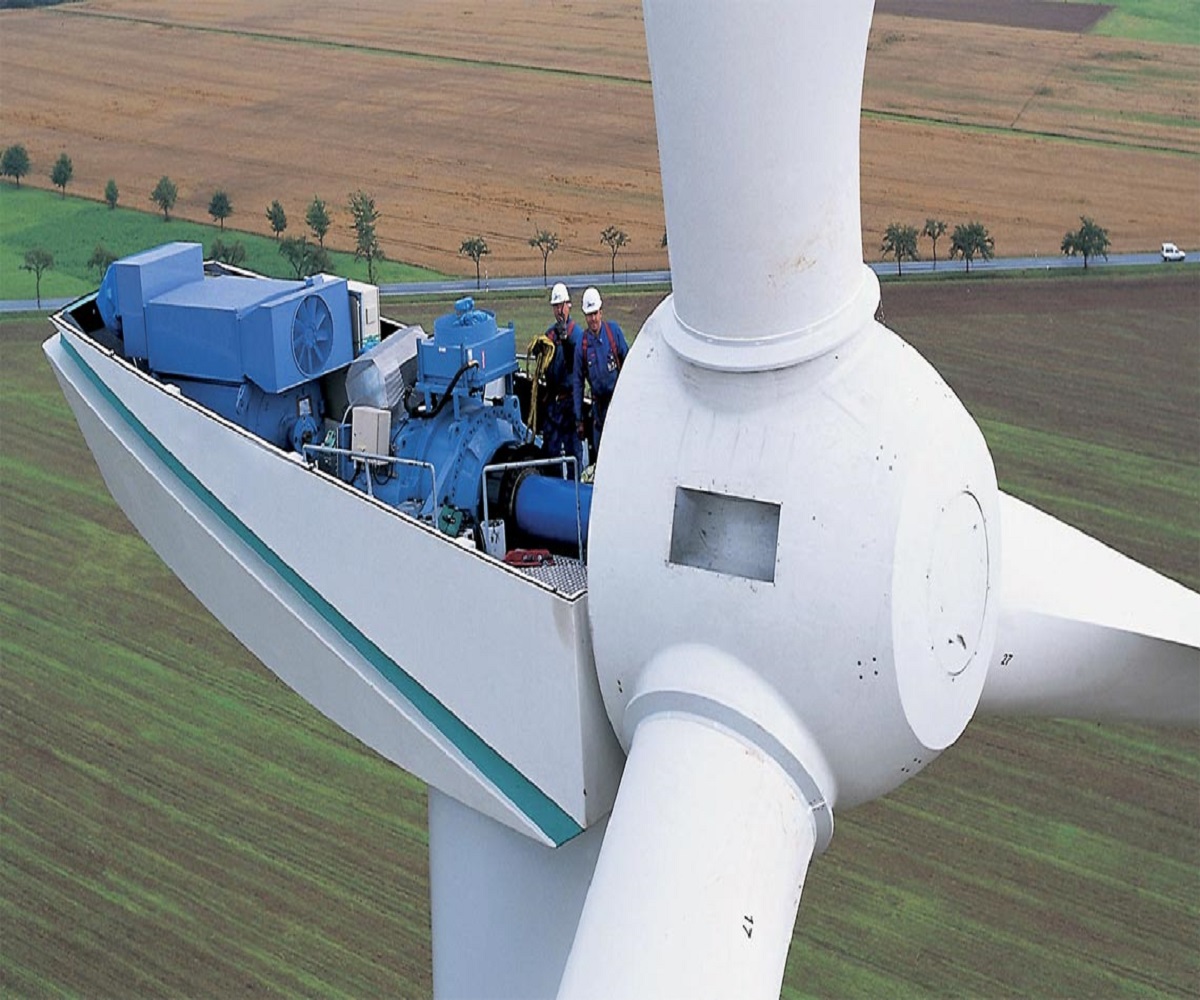
- The nacelle: The nacelle is located on top of the tower and can turn 360° on its own axis, depending on the direction of the wind. It is named after the part of the wing of an airplane that contains the jet engines. It houses the key mechanical elements: the gear box and generator.
- The rotor and hub: Rotors with two blades are cheaper and faster than three-blade rotors, but they are also noisier and they vibrate.
As with the propellors on airplane, the hub is the nose that points forward at the center: the blades are attached to it, and it is in turn connected to the mechanical parts in the nacelle, which is located behind it. - The blades: These are located on top of the turbine. The average length is 170 feet (52 meters). Wind causes the air pressure on one side of the blade to decrease and the difference from the other side creates both lift and drag: when the lift is stronger than the drag, the rotor will spin.
For more details visit our website

+(39) 347 051 5328
Italy - Kazakhstan


09.00am to 18.00pm
About
We offer the best and economical solutions, backed by 27+ years of experience and international standards knowledge, echnological changes, and industrial systems.
Our Services
Marketing Materials


Marketing Materials1


