
Crude Oil Treatment
Why Crude Oil Treatment is Required Each crude oil must be treated in order to make the product competitive with the standards and suitable for sale. Normally, according to law, Crude Oils shall be with following characteristics:
Based on the required product and based on the reservoir fluid, as shown before, the crude oil contains numerous foreign substances which require removal or reduction at the same value as shown here below:
Separation The purpose of this initial crude oil treatment is to separate the gas and water from the oil with the maximum possible oil recovery. The separation is mainly performed with sudden changes in the flow direction and speed reductions. These performances, which occur in equipment called separators, allow their separation with different specific weights of the products.
Crude Oil Dehydration and desalination The water present in the crude oil cannot be always removed from the separators, often a fair amount of water is present in the form of an emulsion. Basically, there are three methods to break this emulsion and thus obtain the dehydration of the crude oil. With these methods, desalination is also obtained, in fact, the salt content in the crude oil is generally a direct consequence of the water content which is salty.
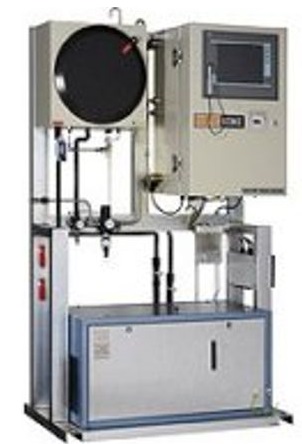
Desulfurization For selling the Crude Oil correctly, the value of H2S deve necessariamente contenere un quantitativo di H2S fissato in 70 ppm massimo. The simple separation process is often not sufficient to guarantee this value; this means that a specific treatment is required which is called desulphurisation or softening of the oil must be carried out. The softening of the oil is obtained by backwashing (stripping) with sweet gas, in fact, the hydrogen sulphide, being a gas, is dragged along by the stream of sweet gas, thus reducing its presence in the oil. With this method, will be obtained an oil with an H2S content of about 20 +/- 3O ppm is obtained. Stabilization Oil stabilization means removing the more volatile substances, i.e. the lighter hydrocarbons such as methane, ethane, propane and butane. The stability of crude oil is measured with a system called R.V.P (Reid Vapour Pressure) which represents the pressure developed by a sample of oil heated to 37.89°C (100°F). Figure C below shows an R.V.P analyzer
Italian standards establish that the oil is considered stabilized if it has an R.V.P. maximum of 1 kg/cm2. This result can be achieved by placing a series of separators that work at decreasing pressures to release all the volatile products by exploiting the pressure drops. For some types of oil, this method may not be sufficient. In this case, it is necessary to use a stabilization column equipped with bottom heating and reflux. The column works like a distillation column, allowing one to get a product which respects the required parameters.
|


+(39) 347 051 5328
Italy - Kazakhstan


09.00am to 18.00pm
About
We offer the best and economical solutions, backed by 27+ years of experience and international standards knowledge, echnological changes, and industrial systems.
Our Services
Marketing Materials


Marketing Materials1


