|
Limit Switches/Sensors: Inputs for automation sequences - Working Principle
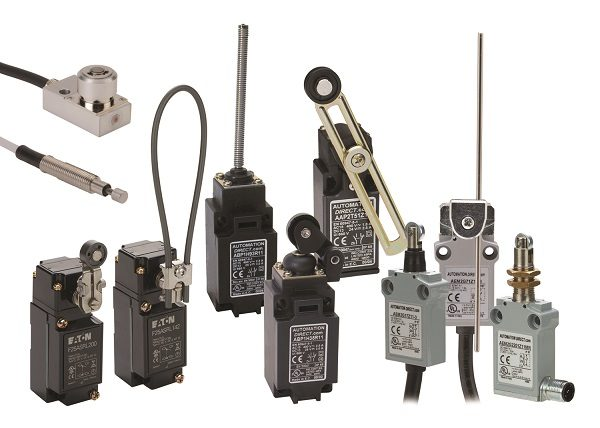
Limit switches and sensors serve as critical, often foundational, inputs for automation sequences, providing real-time feedback on the physical position or presence of objects to PLCs (Programmable Logic Controllers) or relay systems. While modern proximity sensors offer non-contact detection, mechanical limit switches are preferred in heavy-duty environments for their ruggedness, high current handling, and reliability.
Working Principle of a Limit Switch
A limit switch operates on the principle of mechanical, physical contact. It acts as a rugged "on/off" button that a moving machine part presses.
- Actuation: A moving component (like a conveyor item, robotic arm, or hydraulic cylinder) contacts the actuator (lever, roller, or plunger).
- Mechanical Transfer: The actuator transfers this physical force to an internal mechanism.
- Contact Change (Switching): The internal electrical contacts change state, moving from Normally Open (NO) to closed, or Normally Closed (NC) to open.
- Signal Output: This change in state sends a digital signal (ON or OFF) to the control system (PLC).
- Reset: A spring mechanism returns the actuator to its original position once the object moves away.
Note: Many industrial limit switches use "snap action" to ensure the contacts change state instantly regardless of how slowly the object moves, reducing arcing.
Key Components
- Actuator: The part that touches the object (e.g., roller, lever, plunger, whisker).
- Operating Head: Houses the mechanism that transfers movement from the actuator to the contacts.
- Switch Body (Contact Block): Contains the electrical contacts (NO/NC).
- Terminals: Where wires connect the switch to the controller.
Types of Limit Switches
- Roller Lever: Commonly used in conveyors for detecting items moving in a straight line.
- Plunger: Ideal for vertical, high-precision, short-travel positioning.
- Rotary/Whisker: Used for rotating machinery or detecting delicate items.
- Non-Contact (Proximity Sensors): These replace traditional switches in high-speed or dirty environments, using magnetic, capacitive, or optical methods to detect objects without touching them.
Function in Automation Sequences
Limit switches are essential for:
- Safety Interlocks: Ensuring machines stop if a safety guard is opened or if a part moves beyond a safe boundary.
- Position Control: Detecting the exact position of robotic arms or machine tools (e.g., CNC X, Y, Z axes).
- Counting and Sorting: Detecting, counting, or routing items on a conveyor line.
- Sequence Timing: Triggering the next action (e.g., stopping a conveyer, then starting a drill)
Advantages in Industrial Environments
Limit switches are favored because they provide:
- Direct Physical Confirmation: Unaffected by object color, material, or ambient light.
- High Reliability: Rugged construction allows them to withstand heavy vibration, dust, and moisture.
- High Current Handling: Capable of switching higher currents compared to many proximity sensors.
Working Principle: Step-by-Step
- Mechanical Interaction: A moving component (the "target") makes physical contact with the switch’s actuator (e.g., a lever, roller, or plunger).
- Actuator Displacement: The force from the target moves the actuator to a predefined "limit" or operating point.
- Snap-Action Triggering: Inside the housing, a spring-loaded snap-action mechanism rapidly shifts the state of the electrical contacts. This speed prevents electrical arcing and ensures a clean signal.
- Signal Output: This mechanical shift either closes a "Normally Open" (NO) circuit or opens a "Normally Closed" (NC) circuit.
- Automation Input: This change in electrical state is sent as a digital signal to a Programmable Logic Controller (PLC) or relay.
- Sequence Execution: The controller uses this input to trigger the next step in an automation sequence, such as stopping a motor, counting a part, or reversing a robotic arm.
- Automatic Reset: Once the target moves away, an internal return spring pushes the actuator back to its original "resting" state.
Common Actuator Types
| Actuator Type |
Typical Use Case |
| Plunger |
Short-travel, high-precision linear positioning. |
| Roller Lever |
Conveyor belts where objects slide past at an angle. |
| Whisker |
Detecting lightweight or oddly shaped objects. |
| Rotary |
Monitoring the number of rotations in cranes or hoists |
Core Functions in Automation
- Safety Interlocking: Prevents a machine from starting if a safety guard is open.
- Overtravel Prevention: Acts as an emergency stop if a component moves beyond its safe mechanical limit.
- Position Feedback: Confirms a part has reached a specific station before the next operation begins.
|




