
|
Earth/Ground Fault Relay
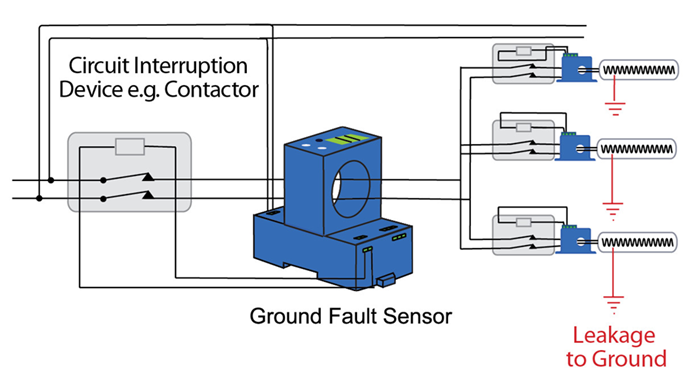
Earth/Ground Fault motor relay protection uses specialized relays to detect current leaking from a motor's phase conductor to its frame (ground), indicating insulation failure or damage, and quickly trips the circuit breaker to prevent equipment damage, electric shock, and fires, by monitoring zero-sequence current or voltage deviations and acting based on calculated settings for sensitivity and coordination. These relays provide critical safety and reliability, especially in systems with solid, resistance, or resonant grounding, using features like low-set (sensitive) and high-set (fast) stages, and can be time-delayed for selectivity. How It Works
This video explains the basic principle of an earth fault relay: Key Components & Settings
Watch this video to see how ground fault relay settings are calculated: Types of Protection Schemes
Why It's Important
his video explains the importance of ground fault protection for 3-phase motors: Earth/Ground fault motor relay protection is a critical safety system designed to detect unintended electrical paths between a motor's live conductors and the earth. These faults, often caused by insulation breakdown, moisture, or cable damage, account for approximately 98% of all electrical faults. Core Operating Principles Protection relays primarily use current sensing to identify imbalances between phase conductors. Normal Operation: The vector sum of current in all three phases is zero (I1+I2+I3=0).Fault Condition: Current "leaks" to ground, causing a non-zero residual current. The relay detects this imbalance and sends a trip signal to the circuit breaker. Primary Detection Methods
Specialized Protection Types
Key Challenges in Motor Protection
|
|
Short-circuit protection for motor relays
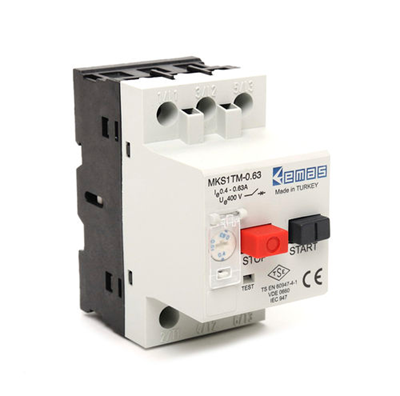
Short-circuit protection for motor relays involves using devices like fuses, circuit breakers (MCB (Miniature Circuit Breaker) / MCCB (Molded Case Circuit Breaker)), or dedicated motor protection relays (MPRs - motor protection relays) to instantly cut power during a low-resistance fault, preventing massive current surges that damage windings, and protecting against overloads, phase loss, and ground faults, ensuring safety and reliability by monitoring electrical parameters and tripping when preset limits are exceeded, sometimes with time delays for coordination Miniature Circuit Breaker (MCB)
Molded Case Circuit Breaker (MCCB)
Key Similarities
Circuit breakers (MCB and MCCB) are automated electrical switches designed to protect circuits and equipment from damage caused by overloads and short circuits. They function by "tripping"—automatically interrupting the flow of electricity when they detect an abnormal current level. MCB (Miniature Circuit Breaker) MCBs are compact devices used primarily for low-voltage, low-current applications in residential and light commercial settings.
MCCB (Molded Case Circuit Breaker) MCCBs are larger, more robust devices designed for higher power requirements in industrial and heavy commercial environments.
Summary of Key Differences (2026)
Note: Both devices are resettable after a trip, unlike traditional fuses which must be replaced after they blow.
|
|
Minimum and Maximum Voltage Relays
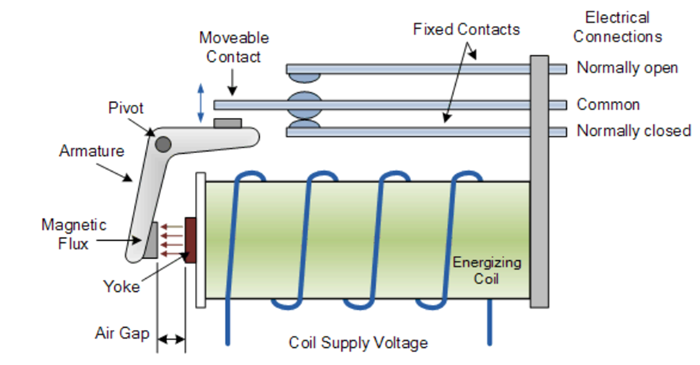
Minimum and maximum voltage relays work by using an electromagnetic coil to sense voltage, triggering a switch to trip a circuit breaker when voltage goes too high (overvoltage) or too low (under-voltage) from a preset safe range, protecting equipment from damage by quickly disconnecting power, with features like trip delays to avoid nuisance trips from temporary fluctuations. Working Principle
Minimum Voltage (Under-Voltage) Relay
Maximum Voltage (Over-Voltage) Relay
Key Features
Minimum and maximum voltage relays—commonly known as
under-voltage and over-voltage relays—act as protective sensors that monitor an electrical system's voltage and trigger a circuit breaker to disconnect power if levels fall outside a safe operating range. Working Principle The core mechanism of these relays is based on magnetic induction or microprocessor-based electronic monitoring.
Key Differences
|
|
Current relays are protective devices
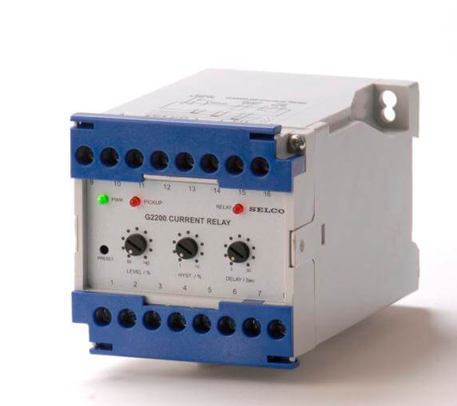
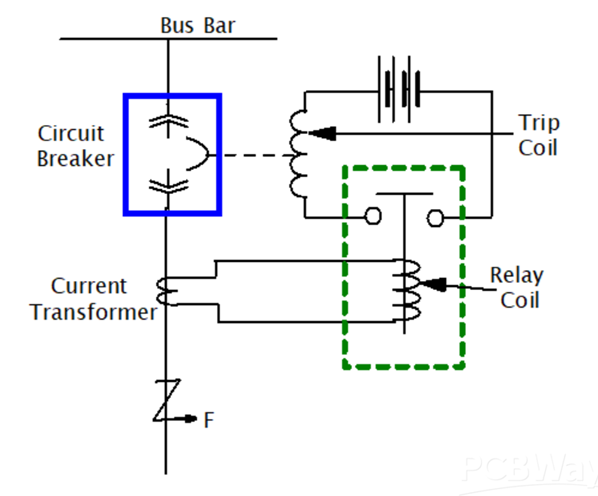
Current relays are protective devices that monitor electrical current for over/under-current conditions, acting as sensors to switch circuits, protect equipment (like motors in HVAC/machinery), or assist in motor startup by detecting high current draws to engage start windings, then disengaging them as the motor speeds up. They're vital for industrial safety, preventing damage from faults like short circuits or overloads by opening circuits when thresholds are exceeded.
How They Work
Key Types & Functions
Common Applications
Current relays are automatic electrical switches that monitor and control current flow in a circuit to provide protection, automation, and electrical isolation for equipment. They work by using a low-power control signal to activate a switching mechanism that manages a higher-power load circuit. Function and Operation A current relay functions as a protective and control device by constantly monitoring the electrical current in a circuit.
Types of Current Relays Current relays are classified based on their operation, construction, and function:
Common Applications Current relays are essential components in various settings, from home appliances to heavy industry:
|
|
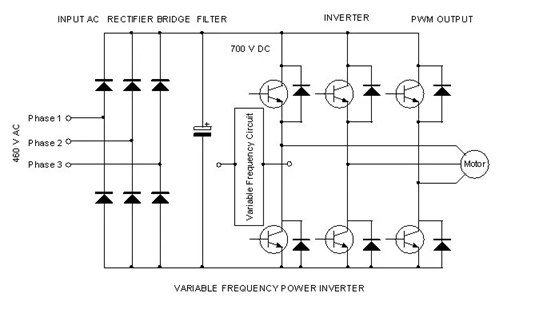
VFD (Variable Frequency Drive) A VFD Motor Manager controls electric motor speed by converting fixed AC power to adjustable frequency/voltage, using three stages: Rectification (AC to DC), a DC Bus (smoothing/storing), and Inversion (DC to variable frequency/voltage AC via IGBTs and Pulse Width Modulation (PWM), allowing precise speed/torque control, smoother starts, and energy savings by matching power to load requirements.
Here's a breakdown of the working principle
Key Benefits
A Variable Frequency Drive (VFD), also commonly known as a motor manager or motor controller, works by converting fixed-frequency utility power into variable-frequency and variable-voltage output to precisely control an AC motor's speed and torque. Core Working Principle: The Three-Stage Journey The VFD operates through three primary power conversion stages managed by a central microprocessor.
Key Control Parameters To manage the motor effectively, the VFD maintains specific relationships between electrical signals:
Integrated Management Features Modern VFD "Motor Managers" do more than just change speed; they provide comprehensive system protection and optimization:
How it works in three Step AC - DC- AC
Key benefits
Also known as
Common applications
|

+(39) 347 051 5328
Italy - Kazakhstan


09.00am to 18.00pm
About
We offer the best and economical solutions, backed by 27+ years of experience and international standards knowledge, echnological changes, and industrial systems.
Our Services
Marketing Materials


Marketing Materials1


